Results by title
932 books match the query 'Genres & Styles' and 23 start with g
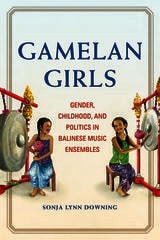
Gamelan Girls
Gender, Childhood, and Politics in Balinese Music EnsemblesSonja Lynn Downing
University of Illinois Press, 2019
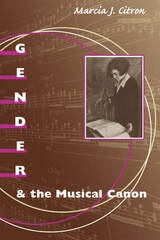
Gender and the Musical Canon
Marcia J. Citron
University of Illinois Press, 2000
A classic in gender studies in music
Marcia J. Citron's comprehensive, balanced work lays a broad foundation for the study of women composers and their music. Drawing on a diverse body of feminist and interdisciplinary theory, Citron shows how the western art canon is not intellectually pure but the result of a complex mixture of attitudes, practices, and interests that often go unacknowledged and unchallenged.
Winner of the Pauline Alderman Prize from the International Alliance of Women in Music, Gender and the Musical Canon explores important elements of canon formation, such as notions of creativity, professionalism, and reception. Citron surveys the institutions of power, from performing organizations and the academy to critics and the publishing and recording industries, that affect what goes into the canon and what is kept out. She also documents the nurturing role played by women, including mothers, in cultivating female composers. In a new introduction, she assesses the book's reception by composers and critics, especially the reactions to her controversial reading of Cécile Chaminade's sonata for piano.
A key volume in establishing how the concepts and assumptions that form the western art music canon affect female composers and their music, Gender and the Musical Canon also reveals how these dynamics underpin many of the major issues that affect musicology as a discipline.

Gender, Race and Religion in Video Game Music
Thomas B. Yee
Intellect Books, 2024
This book provides semiotically focused analyses and interpretations of video game music, focusing specifically on the musical representation of three demographic diversity traits. Adopting a narratologist orientation to supplement existing ludological scholarship, these analyses apply music semiotics to crucial modern-day issues such as the representation of gender, race, and religion in video games.
An original and welcome contribution to the field, it considers musical meaning in relation to the aspects of gender, race, and religion. This book will help readers develop language and context in which to consider video game music in terms of society and representation and will encourage future research in these critical areas. Containing twenty-five detailed analytical case studies of musical representation in video game music, the book sets out theoretical and conceptual frameworks beneficial for interpreting musical meaning from video game soundtracks. Though players and commentators may be tempted to view a game’s soundtrack as mere background music, this research demonstrates video game music’s social relevance as a major factor impacting players’ cultural attitudes, values, and beliefs.
Part I explores immersion, interactivity, and interpretation in video game music, proposing a theory of interpretative interactivity to account for players’ semiotic agency in dialogue with their ludic agency. Part II explores musical gender representation in a trajectory from conventional gender construction, alternative femininities and masculinities, and the potential for nonbinary representational possibilities. Part III explores the musical representation of nationality, culture, and race, proposing the concept of racialized fantasy and applying frameworks from race scholarship to connect media representations of race to real-world racial justice movements. Part IV examines religion, introducing the concept of sonic iconography to connect theological meanings to the use of sacred music in video game music.
Genre in Popular Music
Fabian Holt
University of Chicago Press, 2007
The popularity of the motion picture soundtrack O Brother, Where Art Thou? brought an extraordinary amount of attention to bluegrass, but it also drew its share of criticism from some aficionados who felt the album’s inclusion of more modern tracks misrepresented the genre. This soundtrack, these purists argued, wasn’t bluegrass, but “roots music,” a new and, indeed, more overarching category concocted by journalists and marketers. Why is it that popular music genres like these and others are so passionately contested? And how is it that these genres emerge, coalesce, change, and die out?
In Genre in Popular Music, Fabian Holt provides new understanding as to why we debate music categories, and why those terms are unstable and always shifting. To tackle the full complexity of genres in popular music, Holt embarks on a wide-ranging and ambitious collection of case studies. Here he examines not only the different reactions to O Brother, but also the impact of rock and roll’s explosion in the 1950s and 1960s on country music and jazz, and how the jazz and indie music scenes in Chicago have intermingled to expand the borders of their respective genres. Throughout, Holt finds that genres are an integral part of musical culture—fundamental both to musical practice and experience and to the social organization of musical life.
Gentleman Troubadours and Andean Pop Stars
Huayno Music, Media Work, and Ethnic Imaginaries in Urban PeruJoshua Tucker
University of Chicago Press, 2013
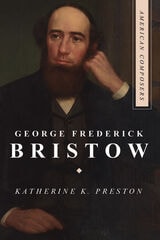
George Frederick Bristow
Katherine K. Preston
University of Illinois Press, 2020
Vivid and richly detailed, George Frederick Bristow enriches our perceptions of musical life in nineteenth-century America.
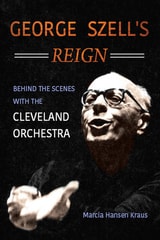
George Szell's Reign
Behind the Scenes with the Cleveland OrchestraMarcia Hansen Kraus
University of Illinois Press, 2019
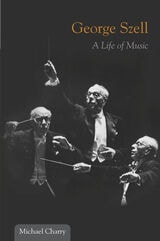
George Szell
A Life of MusicMichael Charry
University of Illinois Press, 2014
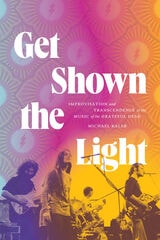
Get Shown the Light
Improvisation and Transcendence in the Music of the Grateful DeadMichael Kaler
Duke University Press, 2023

Giovanna d'Arco
Dramma lirico in Four Acts by Temistocle SoleraGiuseppe Verdi
University of Chicago Press, 2009
This critical edition of Giovanna d’Arco, the first publication in full score, is based on the composer’s autograph score preserved in the archives of Verdi’s publisher, Casa Ricordi. It restores the opera’s original text, which had been heavily censored, and accurately reflects Verdi’s colorful and elaborate musical setting. Editor Alberto Rizzuti’s introduction discusses the opera’s origins, sources, and performance questions, while the critical commentary details editorial problems and solutions.
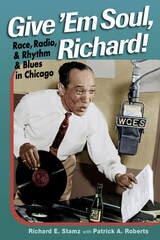
Give 'Em Soul, Richard!
Race, Radio, and Rhythm and Blues in ChicagoRichard E. Stamz with Patrick A. Roberts, Foreword by Robert Pruter
University of Illinois Press, 2010
As either observer or participant, radio deejay and political activist Richard E. Stamz witnessed every significant period in the history of blues and jazz in the last century. From performing first-hand as a minstrel in the 1920s to broadcasting Negro League baseball games in a converted 1934 Chrysler to breaking into Chicago radio and activist politics and hosting his own television variety show, the remarkable story of his life also is a window into milestones of African American history throughout the twentieth century.
Dominating the airwaves with his radio show "Open the Door, Richard" on WGES in Chicago, Stamz cultivated friendships with countless music legends, including Willie Dixon, Sonny Boy Williamson, Little Walter, Howlin' Wolf, Memphis Slim, and Leonard Chess. The pioneering Chicago broadcaster and activist known as "The Crown Prince of Soul" died in 2007 at the age of 101, but not before he related the details of his life and career to college professor Patrick A. Roberts. Give 'Em Soul, Richard! surrounds Stamz's memories of race records, juke joints, and political action in Chicago's Englewood neighborhood with insights on the larger historical trends that were unfolding around him in radio and American history.
Narrated by Stamz, this entertaining and insightful chronicle includes commentary by Roberts as well as reflections on the unlikely friendship and collaboration between a black radio legend and a white academic that resulted in one of the few existing first-hand accounts of Chicago's post-war radio scene.
Glitter Up the Dark
How Pop Music Broke the BinaryBy Sasha Geffen
University of Texas Press, 2020
Why has music so often served as an accomplice to transcendent expressions of gender? Why did the query "is he musical?" become code, in the twentieth century, for "is he gay?" Why is music so inherently queer? For Sasha Geffen, the answers lie, in part, in music’s intrinsic quality of subliminal expression, which, through paradox and contradiction, allows rigid gender roles to fall away in a sensual and ambiguous exchange between performer and listener. Glitter Up the Dark traces the history of this gender fluidity in pop music from the early twentieth century to the present day.
Starting with early blues and the Beatles and continuing with performers such as David Bowie, Prince, Missy Elliot, and Frank Ocean, Geffen explores how artists have used music, fashion, language, and technology to break out of the confines mandated by gender essentialism and establish the voice as the primary expression of gender transgression. From glam rock and punk to disco, techno, and hip-hop, music helped set the stage for today’s conversations about trans rights and recognition of nonbinary and third-gender identities. Glitter Up the Dark takes a long look back at the path that led here.

Go Ahead in the Rain
Notes to A Tribe Called QuestBy Hanif Abdurraqib
University of Texas Press, 2019
A New York Times Best Seller
2019 National Book Award Longlist, Nonfiction
2019 Kirkus Book Prize Finalist, Nonfiction
A February IndieNext Pick
Named A Most Anticipated Book of 2019 by Buzzfeed, Nylon, The A. V. Club, CBC Books, and The Rumpus, and a Winter's Most Anticipated Book by Vanity Fair and The Week
Starred Reviews: Kirkus and Booklist
"Warm, immediate and intensely personal."—New York Times
How does one pay homage to A Tribe Called Quest? The seminal rap group brought jazz into the genre, resurrecting timeless rhythms to create masterpieces such as The Low End Theory and Midnight Marauders. Seventeen years after their last album, they resurrected themselves with an intense, socially conscious record, We Got It from Here . . . Thank You 4 Your Service, which arrived when fans needed it most, in the aftermath of the 2016 election. Poet and essayist Hanif Abdurraqib digs into the group’s history and draws from his own experience to reflect on how its distinctive sound resonated among fans like himself. The result is as ambitious and genre-bending as the rap group itself.
Abdurraqib traces the Tribe's creative career, from their early days as part of the Afrocentric rap collective known as the Native Tongues, through their first three classic albums, to their eventual breakup and long hiatus. Their work is placed in the context of the broader rap landscape of the 1990s, one upended by sampling laws that forced a reinvention in production methods, the East Coast–West Coast rivalry that threatened to destroy the genre, and some record labels’ shift from focusing on groups to individual MCs. Throughout the narrative Abdurraqib connects the music and cultural history to their street-level impact. Whether he’s remembering The Source magazine cover announcing the Tribe’s 1998 breakup or writing personal letters to the group after bandmate Phife Dawg’s death, Abdurraqib seeks the deeper truths of A Tribe Called Quest; truths that—like the low end, the bass—are not simply heard in the head, but felt in the chest.
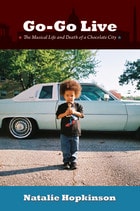
Go-Go Live
The Musical Life and Death of a Chocolate CityNatalie Hopkinson
Duke University Press, 2012
Go-Go Live is a social history of black Washington told through its go-go music and culture. Encompassing dance moves, nightclubs, and fashion, as well as the voices of artists, fans, business owners, and politicians, Natalie Hopkinson's Washington-based narrative reflects the broader history of race in urban America in the second half of the twentieth century and the early twenty-first. In the 1990s, the middle class that had left the city for the suburbs in the postwar years began to return. Gentrification drove up property values and pushed go-go into D.C.'s suburbs. The Chocolate City is in decline, but its heart, D.C.'s distinctive go-go musical culture, continues to beat. On any given night, there's live go-go in the D.C. metro area.
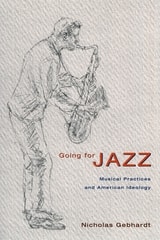
Going for Jazz
Musical Practices and American IdeologyNicholas Gebhardt
University of Chicago Press, 2001
Weaving together a range of seemingly disparate topics, from Frederick Jackson Turner's frontier thesis to the invention of bebop, from Jean Baudrillard's Seduction to the Cold War atomic regime, Gebhardt addresses the meaning and value of jazz in the political economy of American society. In Going for Jazz, jazz musicians assume dynamic and dramatic social positions that demand a more conspicuous place for music in our understanding of the social world.
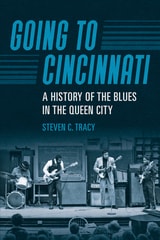
Going to Cincinnati
A History of the Blues in the Queen CitySteven C. Tracy
University of Illinois Press, 2025
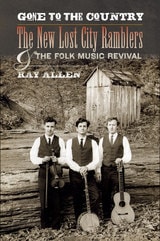
Gone to the Country
The New Lost City Ramblers and the Folk Music RevivalRay Allen
University of Illinois Press, 2010
Ray Allen interweaves biography, history, and music criticism to follow the band from its New York roots to their involvement with the commercial folk music boom. Allen details their struggle to establish themselves amid critical debates about traditionalism brought on by their brand of folk revivalism. He explores how the Ramblers ascribed notions of cultural authenticity to certain musical practices and performers and how the trio served as a link between southern folk music and northern urban audiences who had little previous exposure to rural roots styles. Highlighting the role of tradition in the social upheaval of mid-century America, Gone to the Country draws on extensive interviews and personal correspondence with band members and digs deep into the Ramblers' rich trove of recordings.
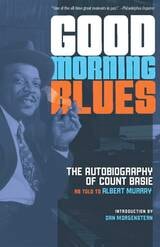
Good Morning Blues
The Autobiography of Count BasieCount Basie
University of Minnesota Press, 2016
Count Basie was one of America’s pre-eminent and influential jazz pianists, bandleaders, and composers, known for such classics as “Jumpin’ at the Woodside,” “Goin’ to Chicago Blues,” “Sent for You Yesterday and Here You Come Today,” and “One O’Clock Jump.” In Good Morning Blues, Basie recounts his life story to Albert Murray, from his childhood years playing ragtime with his own pickup band at dances and pig roasts, to his years in New York City in search of opportunity, to rollicking anecdotes of Basie’s encounters with Fats Waller, Frank Sinatra, Fred Astaire, Sammy Davis Jr., Quincy Jones, Billie Holliday, and Tony Bennett. In this classic of jazz autobiography that was ten years in the making, Albert Murray brings the voice of Count Basie to the printed page in what is both testimony and tribute to an incredibly rich life.
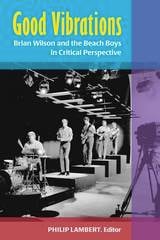
Good Vibrations
Brian Wilson and the Beach Boys in Critical PerspectivePhilip Lambert, Editor
University of Michigan Press, 2016
The book joins a growing body of literature on the popular music of the 1960s, in general, and on Brian Wilson and the Beach Boys in particular. But Good Vibrations extends the investigation further and deeper than it has gone before, not only offering new understanding and insights into individual songs and albums, but also providing close examination of compositional techniques and reflections on the group’s place in American popular culture.
Grace Notes for a Year
Stories of Hope, Humor and Hubris from the World of Classical MusicNorman Gilliland
University of Wisconsin Press, 2003
This irresistible collection of stories is perfect for anyone interested in a fresh perspective on what it means to be a human being who creates art. Grace Notes for a Year sheds light on the fragile and perilous process of inspiration, composition, and performance required to create classical music, whether the final product is a masterpiece or a mess. Each page of the book corresponds to a different day of the year and features a true story about a famous figure in musical history. These delightful anecdotes—inspirational, informative, and often hilarious—disprove the myth of the artist as untouchable. Instead, Norman Gilliland exposes in them human vulnerability we can all relate to. From Beethoven to Wagner, these artists suffered from poverty, spent lazy days in bed, had scandalous love affairs, and often failed in their creative endeavors as often as they succeeded.

Gringos Get Rich
Anti-Americanism in Chilean MusicEunice Rojas
University of Alabama Press, 2024
Documents counterimperialism in Chilean music since the 1960s
Gringos Get Rich: Anti-Americanism in Chilean Music examines anti-Americanism in Latin America as manifested in Chilean music in recent history. From a folk-based movement in the 1960s and early 1970s to underground punk rock groups during the Pinochet regime, to socially conscious hip-hop artists of postdictatorship Chile, Chilean music has followed several left-leaning transnational musical trends to grapple with Chile’s fluctuating relationship with the United States. Eunice Rojas’s innovative analysis introduces US readers to a wide swath of Chilean musicians and their powerful protest songs and provides a representative and long view of the negative influences of the United States in Latin America.
Much of the criticism of the United States in Chile’s music centers on the perception of the United States as a heavy-handed source of capitalist imperialism that is exploitative of and threatening to Chile’s poor and working-class public and to Chilean cultural independence and integrity. Rojas incorporates Antonio Gramsci’s theories about the difficulties of struggles for cultural power within elitist capitalist systems to explore anti-Americanism and anti-capitalist music. Ultimately, Rojas shows how the music from various genres, time periods, and political systems attempts to act as a counterhegemonic alternative to Chile’s political, cultural, and economic status quo.
Rojas’s insight is timely with recent political trends toward the right in the Americas. There is also increased interest in and acceptance of popular song lyrics as literary texts. The book will appeal to Latin Americanists, ethnomusicologists, scholars of popular culture and international relations, students, and general readers.
.
Grit, Noise, and Revolution
The Birth of Detroit Rock 'n' RollDavid A. Carson
University of Michigan Press, 2011
---Marshall Crenshaw
From the early days of John Lee Hooker to the heyday of Motown and beyond, Detroit has enjoyed a long reputation as one of the crucibles of American pop music. In Grit, Noise, and Revolution, David Carson turns the spotlight on those hard-rocking, long-haired musicians-influenced by Detroit's R&B heritage-who ultimately helped change the face of rock 'n' roll.
Carson tells the story of some of the great garage-inspired, blue-collar Motor City rock 'n' roll bands that exemplified the Detroit rock sound: The MC5, Iggy Pop and the Stooges, Mitch Ryder and the Detroit Wheels, SRC, the Bob Seger System, Ted Nugent and the Amboy Dukes, and Grand Funk Railroad.
An indispensable guide for rock aficionados, Grit, Noise, and Revolution features stories of these groundbreaking groups and is the first book to survey Detroit music of the 1960s and 70s-a pivotal era in rock music history.
Guitars, Bars, and Motown Superstars
Dennis Coffey
University of Michigan Press, 2009
---Edwin Starr
"There can never be enough stories told from the vantage point of Motown's fabled Snake Pit, from one of the journeyman musicians working behind the scenes. Guitars, Bars, and Motown Superstars also shows just how frenetic and creative the Detroit music scene was in the '60s and '70s. But it's Dennis Coffey's personal story that's most gripping: the journey from Motown, to Billboard's Top Ten, to working the line at Chevrolet."
---Susan Whitall, Detroit News; author of Women of Motown
Under Berry Gordy, Motown was a place where studio musicians usually stood in the shadows, unlike the solo stars whose names appeared on the albums. Gordy held a tight rein on his musicians, forbidding them from playing for other record companies and denying them credit on his records.
In Guitars, Bars, and Motown Superstars, author and guitarist Dennis Coffey tells how he slipped Gordy's draconian rules and went on to success as both a Motown musician and a million-selling solo artist. He offers a fascinating backstage look at the Detroit, L.A., and New York music scenes in the '60s and '70s, with side trips to the smoky clubs and funky studios where the Motown sound was born.
Coffey is credited with creating a lot of that sound, including the famous guitar intro to the Temptations' classic "Cloud Nine." He played on hundreds of Motown albums, and introduced such innovations as the Wah Wah pedal into the Motown recording studio.
Guitars, Bars, and Motown Superstars is an entertaining and amusing memoir of one of the most dynamic and influential periods in contemporary pop culture, and a unique insight into the ups and downs of the studio guitar-for-hire. It's also a look at the dizzying rags-to-riches-and-back-again career of a rock musician who went from million-seller with a house in the Hollywood Hills, and ultimately back to his roots in the Detroit area. A must for fans of Motown, rock, and you-are-there pop-culture history.