Results by title
230 books match the query 'Government relations' and 4 start with g
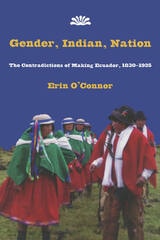
Gender, Indian, Nation
The Contradictions of Making Ecuador, 1830–1925Erin O'Connor
University of Arizona Press, 2007
O’Connor begins her investigations by examining the multilayered links between gender and Indian-state relations in nineteenth-century Ecuador. Disentangling issues of class and culture from issues of gender, she uncovers overlapping, conflicting, and ever-evolving patriarchies within both indigenous communities and the nation’s governing bodies. She finds that gender influenced sociopolitical behavior in a variety of ways, mediating interethnic struggles and negotiations that ultimately created the modern nation. Her deep research into primary sources—including congressional debates, ministerial reports, court cases, and hacienda records—allows a richer, more complex, and better informed national history to emerge.
Examining gender during Ecuadorian state building from “above” and “below,” O’Connor uncovers significant processes of interaction and agency during a critical period in the nation’s history. On a larger scale, her work suggests the importance of gender as a shaping force in the formation of nation-states in general while it questions recountings of historical events that fail to demonstrate an awareness of the centrality of gender in the unfolding of those events.
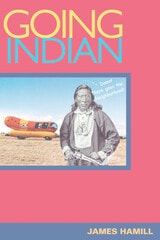
Going Indian
James Hamill
University of Illinois Press, 2006
Going Indian explores Indian (as opposed to tribal) ethnic identity among Native American people in Oklahoma through their telling, in their own words, of how they became Indian and what being Indian means to them today. Divided into four parts, the book features Oklahoma Indians' constructions of their histories and their view of today's native populations, their experiences with forced removals and Indian educational institutions, the meaning they place on blood quantum and ancestry in relation to Indian identity, and their practice of religion in Native churches.
James Hamill makes extensive use of the Indian Pioneer and Doris Duke material at the University of Oklahoma's Western History Library to assemble these narratives, using interviews collected between 1937-38 and 1967-70, as well as interviews he conducted from 2000 to 2001. While most books on Native American people in Oklahoma focus on tribes and their histories, Hamill instead explores the use of Indian symbolism across a wide field of experience to reveal what they thought and what they think about these various issues, and how these have influenced and affected their self-perceptions over time.
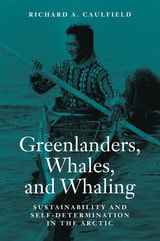
Greenlanders, Whales, and Whaling
Sustainability and Self-Determination in the ArcticRichard A. Caulfield
Dartmouth College Press, 2000
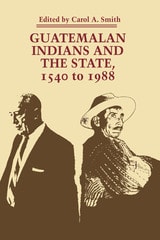
Guatemalan Indians and the State
1540 to 1988Edited by Carol A. Smith
University of Texas Press, 1990
Violence in Central America, especially when directed against Indian populations, is not a new phenomenon. Yet few studies of the region have focused specifi cally on the relationship between Indians and the state, a relationship that may hold the key to understanding these conflicts. In this volume, noted historians and anthropologists pool their considerable expertise to analyze the situation in Guatemala, working from the premise that the Indian/state relationship is the single most important determinant of Guatemala’s distinctive history and social order. In chapters by such respected scholars as Robert Cormack, Ralph Lee Woodward, Christopher Lutz, Richard Adams, and Arturo Arias, the history of Indian activism in Guatemala unfolds. The authors reveal that the insistence of Guatemalan Indians on maintaining their distinctive cultural practices and traditions in the face of state attempts to eradicate them appears to have fostered the development of an increasingly oppressive state.
This historical insight into the forces that shaped modern Guatemala provides a context for understanding the extraordinary level of violence that enveloped the Indians of the western highlands in the 1980s, the continued massive assault on traditional religious and secular culture, the movement from a militarized state to a militarized civil society, and the major transformations taking place in Guatemala’s traditional export-oriented economy. In this sense, Guatemalan Indians and the State, 1540 to 1988 provides a revisionist social history of Guatemala.