56 books match the query 'Great Basin' and 6 start with g
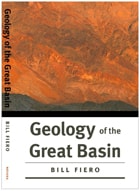
cover of Geology of the Great Basin

Geology of the Great Basin

Bill Fiero

University of Nevada Press, 2009

Geology of the Great Basin is the essential introduction to the geology of this physically complex, ever-changing region. Written in a clear, succinct style and generously illustrated with photographs, diagrams, and maps, the book describes the fundamentals of geologic processes, then discusses the physical attributes and geologic history of the Great Basin. The author also offers readers information about specific sites where significant geologic features can be observed. The book, first published in 1986, is now available in a new, easier-to-handle paperback edition that will make it more convenient for classroom use and for readers who want to carry it with them in their car or backpack.
[more]
cover of Giant Sloths and Sabertooth Cats: Extinct Mammals and the Archaeology of the Ice Age Great Basin

Giant Sloths and Sabertooth Cats

Extinct Mammals and the Archaeology of the Ice Age Great Basin

Donald K. Grayson

University of Utah Press, 2016

As the Ice Age came to an end, North America lost a stunning variety of animals. Mammoths, mastodon, llamas, ground-dwelling sloths the size of elephants, beavers the size of bears, pronghorn antelope the size of poodles, and carnivores to chase them—sabertooth cats, dire wolves, American lions and cheetahs; these and many more were gone by 10,000 years ago. Giant Sloths and Sabertooth Cats surveys all these animals, with a particular focus on the Great Basin. The book also explores the major attempts to explain the extinctions. Because some believe that they were due to the activities of human hunters, the author also reviews the archaeological evidence left by the earliest known human occupants of the Great Basin, showing that people were here at the same time and in the same places as many of the extinct animals. 
 
Were these animals abundant in the Great Basin? A detailed analysis of the distinctive assemblages of plants that now live in this region leads to a surprising, and perhaps controversial, conclusion about those abundances. 
 
If you are interested in Ice Age mammals or in the Ice Age archaeology of North America, if you are interested in the natural history of the Great Basin or the ways in which the plants of today’s landscapes might be used to understand the deeper past, you will be fascinated by this book.  
[more]
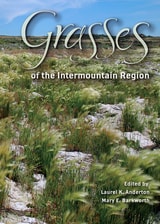
cover of Grasses of the Intermountain Region

Grasses of the Intermountain Region

Laurel K. Anderton and Mary E. Barkworth

Utah State University Press, 2009
Grasses of the Intermountain Region is a modification of the two grass volumes of the Flora of North America (FNA). It is designed for identifying members of the Poaceae in the region between the Sierra Nevada and Rocky Mountains, and is intended for use by botanists working with the grasses in this intermountain region of North America. The reduction in number of taxa included from FNA has reduced the length of the keys and made it possible to include, in a single volume, descriptions and illustrations for all taxa treated as well as provide distribution maps for species that are established in the area. Another difference from the FNA volumes is that the maps in this volume show only records from IMR and adjacent areas rather than the full North America range of the taxa.
[more]
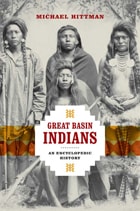
cover of Great Basin Indians: An Encyclopedic History

Great Basin Indians

An Encyclopedic History

Michael Hittman

University of Nevada Press, 2024

The Native American inhabitants of North America’s Great Basin have a long, eventful history and rich cultures. Great Basin Indians: An Encyclopedic History covers all aspects of their world. The book is organized in an encyclopedic format to allow full discussion of many diverse topics, including geography, religion, significant individuals, the impact of Euro-American settlement, wars, tribes and intertribal relations, reservations, federal policies regarding Native Americans, scholarly theories regarding their prehistory, and others. Author Michael Hittman employs a vast range of archival and secondary sources as well as interviews, and he addresses the fruits of such recent methodologies as DNA analysis and gender studies that offer new insights into the lives and history of these enduring inhabitants of one of North America’s most challenging environments.

Great Basin Indians is an essential resource for any reader interested in the Native peoples of the American West and in western history in general.  
[more]
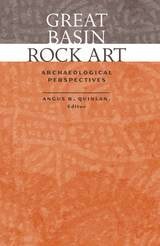
cover of Great Basin Rock Art: Archaeological Perspectives

Great Basin Rock Art

Archaeological Perspectives

Angus R. Quinlan

University of Nevada Press, 2007

Rock art is one of humankind’s most ancient forms of artistic expression, and one of its most enigmatic. For centuries, scholars and other observers have struggled to interpret the meaning of the mysterious figures incised or painted on natural rocks and to understand their role in the lives of their long-vanished creators. The Great Basin of the American West is especially rich in rock art, but until recently North American archaeologists have largely ignored these most visible monuments left by early Native Americans and have given little attention to the terrain surrounding them. In Great Basin Rock Art, twelve respected rock art researchers examine a number of significant sites from the dual perspectives of settlement archaeology and contemporary Native American interpretations of the role of rock art in their cultural past. The authors demonstrate how modern archaeological methodology and interpretations are providing a rich physical and cultural context for these ancient and hitherto puzzling artifacts. They offer exciting new insights into the lives of North America’s first inhabitants. This is essential reading for anyone interested in the petroglyphs of the American West and in the history of the Great Basin and its original peoples.

[more]
cover of Guide To The Trees Of Utah

Guide To The Trees Of Utah

Michael Kuhns

Utah State University Press, 1998

For any tree enthusiast, be it homeowner, landscaper, recreationist, traveler, or student, who has needed a comprehensive, user-friendly guide to the trees of Utah and the Intermountain West, this new guide is the answer.

Tree specialist Michael Kuhns, through extensive research, has compiled a comprehensive list of virtually every native and introduced tree species from the eastern slope of the Rockies westward to the Sierra Nevada, and from north-central Oregon, the Salmon River region, and Yellowstone southward to the Grand Canyon and northern New Mexico. Included in the guide are simple and easy-to-use identification and classification keys, which are accompanied by hundreds of illustrations that introduce basic information on tree anatomy, climate/hardiness zones, and the individual species.

Accessible and informative, this book is a welcome addition to the library of any reader wanting basic information on the vast inventory of trees in this region.

[more]