Results by title
406 books match the query 'Greece' and 10 start with g

Gambling Life
DEALING IN CONTINGENCY IN A GREEK CITYThomas M. Malaby
University of Illinois Press, 2003
Backgammon cafés, card clubs, and hidden gambling rooms in the city of Chania provide the context for Thomas M. Malaby to examine the ways in which people confront uncertainty in their lives. He shows how the dynamics of gambling -- risk, fate, uncertainty, and luck -- are reflected in other aspects of gamblers’ lives from courtship and mortality to state bureaucracy and national identity.
By moving beyond risk and fate as unexamined analytical categories, Malaby presents a new model for research concerning indeterminacy, seeing it as arising from stochastic, performative, and other sources. Gambling Life questions the longstanding valorization of order and pattern in the social sciences.

Garden of Egypt
Irrigation, Society, and the State in the Premodern FayyumBrendan Haug
University of Michigan Press, 2024
2025 American Society of Papyrologists Book Prize Winner
Garden of Egypt: Irrigation, Society, and the State in the Premodern Fayyūm is the first environmental history of Egypt’s Fayyūm depression. The volume studies human relationships with flowing water, from the third century BCE to the thirteenth century CE. Until the arrival of modern perennial irrigation in the nineteenth century, the Fayyūm was the only region of premodern Egypt to be irrigated by a network of artificial canals. By linking large numbers of rural communities together in shared dependence on this public irrigation infrastructure, canalization introduced to Egypt a radically new way of interacting both with the water of the Nile and with fellow farmers. Drawing upon ancient Greek papyri, medieval Arabic literature, and modern comparative evidence, this book explores the ways in which the Nile’s water, local farmers, and state power together continually reshaped this irrigated landscape over more than thirteen centuries. Following human/water relationships through both space and time further helps to erode disciplinary boundaries and bring multiple periods of Egyptian history into contact with one another.
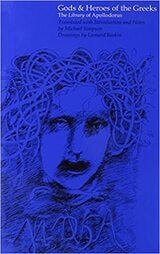
Gods and Heroes of the Greeks
The "Library" of ApollodorusMichael Simpson
University of Massachusetts Press, 1976
The immortal characters of Greek mythology enact their dramas, conflicts, and passions in the Library of Apollodorus. Probably composed in the first century A.D., it is the only Greek handbook of mythology to survive antiquity, and is a major source of our knowledge of Greek myths.
Beginning with the birth of the gods and ending with the death of Odysseus, the Library traces the destinies of such great mythic figures as Prometheus, Oedipus, Heracles, Daedalus, and the heroes of the Trojan War. Sir James G. Frazer called the Library “an accurate record of what the Greeks in general believed about the origin an early history of the world and their race.”
Michael Simpson’s new translation captures the fine simplicity and straightforwardness of the original. Leonard Baskin’s drawings throw a unique contemporary light on this ancient world.
Graceful Errors
Pindar and the Performance of PraiseHilary Mackie
University of Michigan Press, 2003
Reading Pindar's poems with their public performance in mind, Hilary Mackie suggests that the poet was forced to tread a precarious path: weighing the interests of various groups of audience members against one another, balancing praise of the victorious athlete with praise of the deeds of mythic heroes, and catering at the same time to an uncertain future. Mackie's new approach illuminates apparent contradictions in the poet's pronouncements by bringing to the fore the variety of messages conveyed in his wishes and prayers. Her innovative examination of the moment-to-moment dynamic between Pindar and his audience shows that the poet's performance often contained one message for the victor and his family, and quite another for the gods.
Graceful Errors significantly changes our perspective on Pindar's work, providing a lucid appreciation of Pindaric poetry that takes into account the oral context of these poems' performance. It will be of interest not only to classicists but also to scholars and students interested in oral performance, the social function of poetry, and the role and status of poets in traditional cultures, whether ancient or modern.
Hilary Mackie is Associate Professor of Classics at Rice University.
Greece in the Bronze Age
Emily Townsend Vermeule
University of Chicago Press, 1964
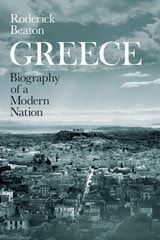
Greece
Biography of a Modern NationRoderick Beaton
University of Chicago Press, 2019
Opening with the birth of the Greek nation-state, which emerged from encounters between Christian Europe and the Ottoman Empire, Roderick Beaton carries his story into the present moment and Greece’s contentious post-recession relationship with the rest of the European Union. Through close examination of how Greeks have understood their shared identity, Beaton reveals a centuries-old tension over the Greek sense of self. How does Greece illuminate the difference between a geographically bounded state and the shared history and culture that make up a nation?
A magisterial look at the development of a national identity through history, Greece: Biography of a Modern Nation is singular in its approach. By treating modern Greece as a biographical subject, a living entity in its own right, Beaton encourages us to take a fresh look at a people and culture long celebrated for their past, even as they strive to build a future as part of the modern West.
Greek Inscriptions
Ancient ScriptsPeter Liddel
J. Paul Getty Trust, The, 2025
Ancient Greek inscriptions are crucially important in understanding the cultures of Greece and the Mediterranean in antiquity. They provide glimpses of the behavior of the people of the time, including clues about their mindsets and aspirations. These public records combine word and image in a multitude of ways and are rich in the insights they offer.
The inscriptions examined in this volume come from a range of objects on metal or stone that include laws, decrees, accounts and inventories, honorific texts, dedications to deities, and funerary epitaphs. They give a broad view of interstate relations, historical narratives, and the political administration of various city-states while also providing new perspectives on concepts such as democracy, citizenship, gender, ethnicity, religion, and the supernatural. Peter Liddel emphasizes the physical form of the texts alongside their importance in understanding ancient Greek culture. Accessible and insightful, Greek Inscriptions both highlights the significance and history of these artifacts and examines their reception in the modern world.
Greek Prostitutes in the Ancient Mediterranean, 800 BCE–200 CE
Allison Glazebrook
University of Wisconsin Press, 2011
Greek Prostitutes in the Ancient Mediterranean, 800 BCE–200 CE challenges the often-romanticized view of the prostitute as an urbane and liberated courtesan by examining the social and economic realities of the sex industry in Greco-Roman culture. Departing from the conventional focus on elite society, these essays consider the Greek prostitute as displaced foreigner, slave, and member of an urban underclass.
The contributors draw on a wide range of material and textual evidence to discuss portrayals of prostitutes on painted vases and in the literary tradition, their roles at symposia (Greek drinking parties), and their place in the everyday life of the polis. Reassessing many assumptions about the people who provided and purchased sexual services, this volume yields a new look at gender, sexuality, urbanism, and economy in the ancient Mediterranean world.
Greek Sport and Social Status
By Mark Golden
University of Texas Press, 2008
From the ancient Olympic games to the World Series and the World Cup, athletic achievement has always conferred social status. In this collection of essays, a noted authority on ancient sport discusses how Greek sport has been used to claim and enhance social status, both in antiquity and in modern times.
Mark Golden explores a variety of ways in which sport provided a route to social status. In the first essay, he explains how elite horsemen and athletes tried to ignore the important roles that jockeys, drivers, and trainers played in their victories, as well as how female owners tried to rank their equestrian achievements above those of men and other women. In the next essay, Golden looks at the varied contributions that slaves made to sport, despite its use as a marker of free, Greek status. In the third essay, he evaluates the claims made by gladiators in the Greek east that they be regarded as high-status athletes and asserts that gladiatorial spectacle is much more like Greek sport than scholars today usually admit. In the final essay, Golden critiques the accepted accounts of ancient and modern Olympic history, arguing that attempts to raise the status of the modern games by stressing their links to the ancient ones are misleading. He concludes that the contemporary movement to call a truce in world conflicts during the Olympics is likewise based on misunderstandings of ancient Greek traditions.
Grief and the Hero
The Futility of Longing in the IliadEmily P. Austin
University of Michigan Press, 2021
Grief and the Hero examines Achilles’ experience of the futility of grief in the context of the Iliad’s study of anger. No action can undo his friend Patroklos’ death, but the experience of death drives him to behave as though he can achieve something restorative. Rather than assuming that grief gives rise to anger, as most scholars have done, Grief and the Hero pays close attention to the poem’s representation of the origin of these emotions. In the Iliad, only Achilles’ grief for Patroklos is joined with the word pothê, “longing”; no other grief in the poem is described with this term. The Iliad depicts Achilles’ grief as the rupture of shared life—an insight that generates a new way of reading the epic. Achilles’ anguish drives him to extremes, oscillating between self-isolation and seeking communal expressions of grief; between weeping abundantly and relentlessly pursuing battle; between varied threats of mutilation, deeds of vengeance, and other vows. Yet his yearning for life shared with Patroklos is the common denominator. Here lies the profound insight of the Iliad. All of Achilles’ grief-driven deeds arise from his longing for life with Patroklos, and thus all of these deeds are, in a deep sense, futile. He yearns for something unattainable—undoing the reality of death. Grief and the Hero will appeal not only to scholars and students of Homer but to all humanists. Loss, longing, and even revenge touch many human lives, and the insights of the Iliad have broad resonance.