Results by title
783 books match the query 'History & Theory' and 10 start with g
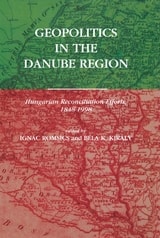
Geopolitics in the Danube Region
Hungarian Reconciliation Efforts, 1848–1998Ignác Romsics
Central European University Press, 1998
Central and Eastern Europe has a long history of, on the one hand, ethnic conflicts and, on the other, of a revolutionary tradition against expansionism. Both have their roots in the geographical situation and ethnic composition of the region. All these problems have surfaced at times when the political status quo has been upset for some reason, such as after the two world wars and after the collapse of the Soviet Union.
Both great powers bordering the Danube region-Germany and Russia-have strived to develop their own versions of confederations (Mitteleuropa and Pan-Slavic movements). Also, politicians and intellectuals of the countries affected have proposed various theories, and made initiatives for different forms of closer or looser confederative formations.
This book examines the reasons for the failure of these initiatives, these reasons including such factors as ethnically-motivated political antagonism, and the lack of economic complementarity. Contributing valuable information on the problems of political and economic integration, which should not be forgotten in a period when the countries of the region are looking towards the European Union, expecting-realistically or not-the solution of their various conflicts.

Globalization and Its Discontents
The Rise of Postmodern SocialismsEdited by Roger Burbach, Boris Kagarlitsky, and Orlando Nunez
Pluto Press, 1997
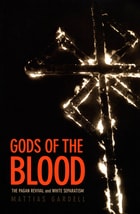
Gods of the Blood
The Pagan Revival and White SeparatismMattias Gardell
Duke University Press, 2003
Gods of the Blood details the trends that have converged to fuel militant paganism in the United States: anti-government sentiments inflamed by such events as Ruby Ridge and Waco, the rise of the white power music industry (including whitenoise, dark ambient, and hatecore), the extraordinary reach of modern communications technologies, and feelings of economic and cultural marginalization in the face of globalization and increasing racial and ethnic diversity of the American population. Gardell elucidates how racist pagan beliefs are formed out of various combinations of conspiracy theories, anti-Semitism, warrior ideology, populism, beliefs in racial separatism, Klandom, skinhead culture, and tenets of national socialism. He shows how these convictions are further animated by an array of thought selectively derived from thinkers including Nietzche, historian Oswald Spengler, Carl Jung, and racist mystics. Scrupulously attentive to the complexities of racist paganism as it is lived and practiced, Gods of the Blood is a fascinating, disturbing, and important portrait of the virulent undercurrents of certain kinds of violence in America today.
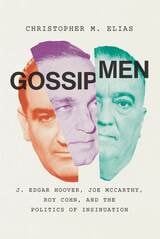
Gossip Men
J. Edgar Hoover, Joe McCarthy, Roy Cohn, and the Politics of InsinuationChristopher M. Elias
University of Chicago Press, 2021
By using gossip as a lens to examine profound issues of state security and institutional power, Elias thoroughly transforms our understanding of the development of modern American political culture.
Gossip Men
J. Edgar Hoover, Joe McCarthy, Roy Cohn, and the Politics of InsinuationChristopher M. Elias
University of Chicago Press, 2021
This is an auto-narrated audiobook edition of this book.
J. Edgar Hoover, Joseph McCarthy, and Roy Cohn were titanic figures in midcentury America, wielding national power in government and the legal system through intimidation and insinuation. Hoover’s FBI thrived on secrecy, threats, and illegal surveillance, while McCarthy and Cohn will forever be associated with the infamous anticommunist smear campaign of the early 1950s, which culminated in McCarthy’s public disgrace during televised Senate hearings. In Gossip Men, Christopher M. Elias takes a probing look at these tarnished figures to reveal a host of startling new connections among gender, sexuality, and national security in twentieth-century American politics. Elias illustrates how these three men solidified their power through the skillful use of deliberately misleading techniques like implication, hyperbole, and photographic manipulation. Just as provocatively, he shows that the American people of the 1950s were particularly primed to accept these coded threats because they were already familiar with such tactics from widely popular gossip magazines.
By using gossip as a lens to examine profound issues of state security and institutional power, Elias thoroughly transforms our understanding of the development of modern American political culture.

Government and Politics in Hungary
András Körösényi
Central European University Press, 1999
Government of the Shadows
Parapolitics and Criminal SovereigntyEric Wilson
Pluto Press, 2009
Government of the Shadows analyses the concept of clandestine government. It explores how covert political activity and transnational organised crime are linked -- and how they ultimately work to the advantage of state and corporate power.
The book shows that legitimate government is now routinely accompanied by extra-governmental covert operations. Using a variety of case studies, from the mafia in Italy to programmes for food and reconstruction in Iraq, the contributors illustrate that para-political structures are not 'deviant', but central to the operation of global governments.
The creation of this truly parallel world-economy, the source of huge political and economic potential, entices states to undertake new forms of regulation, either through their own intelligence agencies, or through the more shadowy world of criminal cartels.
Gramsci in the World
Roberto M. Dainotto and Fredric Jameson, editors
Duke University Press, 2020
Contributors. Alberto Burgio, Cesare Casarino, Maria Elisa Cevasco, Kate Crehan, Roberto M. Dainotto, Michael Denning, Harry Harootunian, Fredric Jameson, R. A. Judy, Patrizia Manduchi, Andrea Scapolo, Peter D. Thomas, Catherine Walsh, Pu Wang, Cosimo Zene
Great Expectations and Interwar Realities
Cultural Diplomacy in Horthy's HungaryZsolt Nagy
Central European University Press, 2017
Great Negotiations
Agreements that Changed the Modern WorldFredrik Stanton
Westholme Publishing, 2010
Lessons in Diplomacy from Colonial America to the Cold War
"In a time when negotiations, both great and small, continue to shape our world, this book provides an excellent opportunity to learn from the past and understand the present.”—Kofi Annan, Nobel Peace Prize Winner and former Secretary General of the United Nations
“A thought-provoking, informative book, highly recommended for all readers interested in international affairs.”—Library Journal
“For anyone with an interest in diplomacy and political history, Stanton's book is both entertaining and informative.” —Foreign Policy Watch
“Every professional concerned with dispute resolution and every student of negotiation has much to learn from Fredrik Stanton's lively stories of eight history-shaping negotiations.”—Robert H. Mnookin, Chair Program on Negotiation, Harvard Law School
“An excellent introduction into some of the great triumphs and failures of modern diplomacy.”—Seattle Post-Intelligencer
“An interesting, informative study well worth reading and pondering.” —American Diplomacy
“Stanton deftly illustrates that the power of haggling can easily rival that of any army or warhead.”—Roll Call
“Exhaustive research and careful thought have enabled Stanton to employ an extraordinary writing talent to produce a contribution to history and a source of enjoyable reading.”—New York Law Journal
“Stanton brings back to life both famous and some long forgotten personalities in the history of major American, European, and Asian negotiations. He persuasively makes his case for the importance of negotiators and negotiations both when wars can be kept from beginning and when wars end. He weaves in deft descriptions of the personal strengths and foibles of negotiators and homes in on the ability of the best to improvise when maneuvering on unfamiliar terrain.” —Ambassador Richard W. Murphy, Council on Foreign Relations
Words as much as weapons have shaped the course of history. Whether to avert, resolve, assist, or secure the outcome of a conflict, diplomacy in the modern age has had great triumphs and bitter failures, from the Cuban Missile Crisis in 1962, which narrowly spared humanity from a nuclear Armageddon, to the Treaty of Versailles after World War I, which created problems that still confront us today. Drawing on primary sources, transcripts, and interviews, Great Negotiations: Agreements that Changed the Modern World tells the stories of eight key episodes in modern diplomacy. From Benjamin Franklin securing crucial French support for the American revolution to Reagan and Gorbachev laying the groundwork to eliminate an entire class of nuclear weapons, Fredrik Stanton explains what each party brought to the negotiating table, the stakes, the obstacles to success, and how they were overcome.