Results by title
433 books match the query 'Immigrants' and 8 start with g

Gastrodiplomacy
Chinese Exclusion and the Ascent of Chinese Restaurants in New York City, 1870–1943Heather Ruth Lee
University of Chicago Press, 2027
Traces how Chinese migrants challenged racialization and disenfranchisement by establishing Chinese restaurants during the Gilded Age.
In Gastrodiplomacy, Heather Ruth Lee dives deep into not just the history of Chinese restaurants in early twentieth-century New York City but the delicate, inchoate, and constantly evolving dynamics among their owners, workers, and their predominantly white clientele. Lee argues that the stylistic and capitalist choices made by restaurateurs (“gastrodiplomats”) had outsized political effects on paternalistic white diners (“gastroliberals”) who patronized their establishments, particularly when it came to racial relations in cities that were growing and diversifying. Lee is not starry-eyed—satisfying white tongues and stomachs didn’t lead to an urban utopia of peace, harmony, and brotherhood—but she shows the great and subtle influences of Chinese migrants on American urban space, culture, and metropolitan identity in a defining time.
In Lee’s capable and compelling telling, the Chinese restaurant becomes a distinctive locus for the negotiation of political power, cultural influence, urban identity, and more. Gastrodiplomacy reveals much about burgeoning and increasingly cosmopolitan American cities, as well as about their dynamic relationships with the fluidities of the American character.
Gatherings In Diaspora
Religious Communities and the New Immigrationedited by Stephen R. Warner and Judith G. Wittner
Temple University Press, 1998
This book explores and analyzes the diverse religious communities of post-1965 diasporas: Christians, Hews, Muslims, Hindus, Rastafarians, and practitioners of Vodou, from countries such as China, Guatemala, Haiti, India, Iran, Jamaica, Korea, and Mexico. The contributors explore how, to a greater or lesser extent, immigrants and their offspring adapt their religious institutions to American conditions, often interacting with religious communities already established. The religious institutions they build, adapt, remodel, and adopt become worlds unto themselves, congregations, where new relations are forged within the community -- between men and women, parents and children, recent arrival and those longer settled.

Generous Betrayal
Politics of Culture in the New EuropeUnni Wikan
University of Chicago Press, 2002
Comparing her native Norway to Western Europe and the United States, Wikan focuses on people caught in turmoil, how institutions function, and the ways in which public opinion is shaped and state policies determined. Contradictions arise between policies of respect for minority cultures, welfare, and freedom, but the goal is the same: to create a society committed to both social justice and respect for human rights.
Writing with power and grace, Wikan makes a plea for a renewed moral vitality and human empathy that can pave the way for more effective social policies and create change.
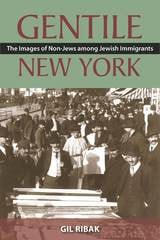
Gentile New York
The Images of Non-Jews among Jewish ImmigrantsRibak, Gil
Rutgers University Press, 2012
The very question of “what do Jews think about the goyim” has fascinated Jews and Gentiles, anti-Semites and philo-Semites alike. Much has been written about immigrant Jews in nineteenth- and twentieth-century New York City, but Gil Ribak’s critical look at the origins of Jewish liberalism in America provides a more complicated and nuanced picture of the Americanization process.
Gentile New York examines these newcomers’ evolving feelings toward non-Jews through four critical decades in the American Jewish experience. Ribak considers how they perceived Gentiles in general as well as such different groups as “Yankees” (a common term for WASPs in many Yiddish sources), Germans, Irish, Italians, Poles, and African Americans. As they discovered the complexity of America’s racial relations, the immigrants found themselves at odds with “white” American values or behavior and were drawn instead into cooperative relationships with other minorities. Sparked with many previously unknown anecdotes, quotations, and events, Ribak’s research relies on an impressive number of memoirs, autobiographies, novels, newspapers, and journals culled from both sides of the Atlantic.

Georges Woke Up Laughing
Long-Distance Nationalism and the Search for HomeNina Glick Schiller and Georges Eugene Fouron
Duke University Press, 2001
According to a long-standing myth, once emigrants leave their homelands—particularly if they emigrate to the United States—they sever old nationalistic ties, assimilate, and happily live the American dream. In fact, many migrants remain intimately and integrally tied to their ancestral homeland, sometimes even after they become legal citizens of another country. In Georges Woke Up Laughing the authors reveal the realities and dilemmas that underlie the efforts of long-distance nationalists to redefine citizenship, race, nationality, and political loyalty. Through discussions of the history and economics that link the United States with countries around the world, Glick Schiller and Fouron highlight the forces that shape emigrants’ experiences of government and citizenship and create a transborder citizenry. Arguing that governments of many countries today have almost no power to implement policies that will assist their citizens, the authors provide insights into the ongoing sociological, anthropological, and political effects of globalization.
Georges Woke up Laughing will entertain and inform those who are concerned about the rights of people and the power of their governments within the globalizing economy.
“In my dream I was young and in Haiti with my friends, laughing, joking, and having a wonderful time. I was walking down the main street of my hometown of Aux Cayes. The sun was shining, the streets were clean, and the port was bustling with ships. At first I was laughing because of the feeling of happiness that stayed with me, even after I woke up. I tried to explain my wonderful dream to my wife, Rolande. Then I laughed again but this time not from joy. I had been dreaming of a Haiti that never was.”—from Georges Woke Up Laughing
Germans in Illinois
Miranda E. Wilkerson and Heather Richmond
Southern Illinois University Press, 2019
The promise of cheap land and fertile soil in rural areas and emerging industries in cities attracted three major waves of German-speaking immigrants to Illinois in search of freedom and economic opportunities. Before long the state was dotted with German churches, schools, cultural institutions, and place names. German churches served not only as meeting places but also as a means of keeping language and culture alive. Names of Illinois cities and towns of German origin include New Baden, Darmstadt, Bismarck, and Hamburg. In Chicago, many streets, parks, and buildings bear German names, including Altgeld Street, Germania Place, Humboldt Park, and Goethe Elementary School. Some of the most lively and ubiquitous organizations, such as Sängerbunde, or singer societies, and the Turnverein, or Turner Society, also preserved a bit of the Fatherland.
Exploring the complex and ever-evolving German American identity in the growing diversity of Illinois’s linguistic and ethnic landscape, this book contextualizes their experiences and corrects widely held assumptions about assimilation and cultural identity. Federal census data, photographs, lively biographical sketches, and newly created maps bring the complex story of German immigration to life. The generously illustrated volume also features detailed notes, suggestions for further reading, and an annotated list of books, journal articles, and other sources of information.
Germans in Michigan
Jeremy W. Kilar
Michigan State University Press, 2002
Germans are the largest ancestral group in Michigan, representing over 2.6 million descendants or 22% of the state’s population. Yet, unlike other immigrant groups, Germans have not retained their linguistic and cultural traditions as part of a distinct ethnic identity. The Bavarian villages of Frankenmuth and Gaylord stand as testaments to the once proud and vigorous German communities that dotted both rural and urban Michigan landscapes. Jeremy W. Kilar explores the social forces that transformed Germans from inward-looking immigrants to citizens in the cultural mainstream. Germans in Michigan is a story of assimilation and renewal and as such reveals the complexities of Americanization and immigration as social forces.
Global Philadelphia
Immigrant Communities Old and NewEdited by Ayumi Takenaka and Mary Johnson Osirim
Temple University Press, 2010
The racial and ethnic composition of Philadelphia continues to diversify as a new wave of immigrants—largely from Asia and Latin America—reshape the city’s demographic landscape. Moreover, in a globalized economy, immigration is the key to a city’s survival and competitiveness. The contributors to Global Philadelphia examine how Philadelphia has affected its immigrants’ lives, and how these immigrants, in turn, have shaped Philadelphia.
Providing a detailed historical, ethnographic, and sociological look at Philadelphia’s immigrant communities, this volume examines the social and economic dynamics of various ethnic populations. Significantly, the contributors make comparisons to and connections between the traditional immigrant groups—Germans, Italians, the Irish, Jews, Puerto Ricans, and Chinese—and newer arrivals, such as Cambodians, Haitians, Indians, Mexicans, and African immigrants of various nationalities.
While their experiences vary, Global Philadelphia focuses on some of the critical features that face all immigrant groups—intra-group diversity, the role of institutions, and ties to the homeland. Taken together, these essays provide a richer understanding of the processes and implications of contemporary immigration to the area.