Results by title
73 books match the query 'Indians of Central America' and 3 start with g
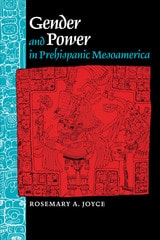
Gender and Power in Prehispanic Mesoamerica
By Rosemary A. Joyce
University of Texas Press, 2001
Gender was a fluid potential, not a fixed category, before the Spaniards came to Mesoamerica. Childhood training and ritual shaped, but did not set, adult gender, which could encompass third genders and alternative sexualities as well as "male" and "female." At the height of the Classic period, Maya rulers presented themselves as embodying the entire range of gender possibilities, from male through female, by wearing blended costumes and playing male and female roles in state ceremonies.
This landmark book offers the first comprehensive description and analysis of gender and power relations in prehispanic Mesoamerica from the Formative Period Olmec world (ca. 1500-500 BC) through the Postclassic Maya and Aztec societies of the sixteenth century AD. Using approaches from contemporary gender theory, Rosemary Joyce explores how Mesoamericans created human images to represent idealized notions of what it meant to be male and female and to depict proper gender roles. She then juxtaposes these images with archaeological evidence from burials, house sites, and body ornaments, which reveals that real gender roles were more fluid and variable than the stereotyped images suggest.
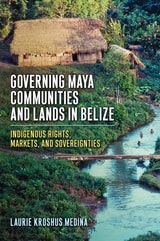
Governing Maya Communities and Lands in Belize
Indigenous Rights, Markets, and SovereigntiesLaurie Kroshus Medina
Rutgers University Press, 2024
Guatemalan Indians and the State
1540 to 1988Edited by Carol A. Smith
University of Texas Press, 1990
Violence in Central America, especially when directed against Indian populations, is not a new phenomenon. Yet few studies of the region have focused specifi cally on the relationship between Indians and the state, a relationship that may hold the key to understanding these conflicts. In this volume, noted historians and anthropologists pool their considerable expertise to analyze the situation in Guatemala, working from the premise that the Indian/state relationship is the single most important determinant of Guatemala’s distinctive history and social order. In chapters by such respected scholars as Robert Cormack, Ralph Lee Woodward, Christopher Lutz, Richard Adams, and Arturo Arias, the history of Indian activism in Guatemala unfolds. The authors reveal that the insistence of Guatemalan Indians on maintaining their distinctive cultural practices and traditions in the face of state attempts to eradicate them appears to have fostered the development of an increasingly oppressive state.
This historical insight into the forces that shaped modern Guatemala provides a context for understanding the extraordinary level of violence that enveloped the Indians of the western highlands in the 1980s, the continued massive assault on traditional religious and secular culture, the movement from a militarized state to a militarized civil society, and the major transformations taking place in Guatemala’s traditional export-oriented economy. In this sense, Guatemalan Indians and the State, 1540 to 1988 provides a revisionist social history of Guatemala.