Results by title
174 books match the query 'Indigenous peoples' and 4 start with g
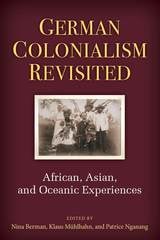
German Colonialism Revisited
African, Asian, and Oceanic ExperiencesNina Berman, Klaus Mühlhahn, and Patrice Nganang, editors
University of Michigan Press, 2018
German Colonialism Revisited brings together military historians, art historians, literary scholars, cultural theorists, and linguists to address a range of issues surrounding colonized African, Asian, and Oceanic people’s creative reactions to and interactions with German colonialism. This scholarship sheds new light on local power dynamics; agency; and economic, cultural, and social networks that preceded and, as some now argue, ultimately structured German colonial rule. Going beyond issues of resistance, these essays present colonialism as a shared event from which both the colonized and the colonizers emerged changed.
Giving Back
Research and Reciprocity in Indigenous SettingsR. D. K. Herman
Oregon State University Press, 2018
Over the past several decades—and especially since the evolution of feminist methodologies, participatory research, and the post-colonial turn in the 1990s—there have been calls for research to be less exploitative, but also for researchers and for the research itself to give something back. Giving Back: Research and Reciprocity in Indigenous Settings addresses the need for reciprocity in the research process, especially (though not exclusively) in regard to Indigenous Communities.
The twelve case studies in this volume demonstrate that giving back can happen through the research itself – through the careful framing of questions, co-production of knowledge, and dissemination of results – but also through the day-to-day actions and attitudes of researchers that inevitably occur in the field. It can range from everyday give and take, to the sharing of research materials, to larger and longer-term engagements.
As practitioners of community-based research gain greater awareness of these issues, scholars and institutions need guidance and strategies for ensuring reciprocity in the research process. This volume presents a variety of situations from a wide range of research contexts, discussing what has and hasn’t worked, and exploring what issues remain.
Global Indigenous Health
Reconciling the Past, Engaging the Present, Animating the FutureEdited by Robert Henry, Amanda LaVallee, Nancy Van Styvendale, and Robert Alexander Innes
University of Arizona Press, 2018
Building on Indigenous knowledge systems of health and critical decolonial theories, the volume’s contributors—who are academic and community researchers from Canada, the United States, Sweden, and New Zealand—weave a narrative to explore issues of Indigenous health within four broad themes: ethics and history, environmental and ecological health, impacts of colonial violence on kinship, and Indigenous knowledge and health activism. Chapters also explore how Indigenous peoples are responding to both the health crises in their communities and the ways for non-Indigenous people to engage in building positive health outcomes with Indigenous communities.
Global Indigenous Health is unique and timely as it deals with the historical and ongoing traumas associated with colonization and colonialism, understanding Indigenous concepts of health and healing, and ways of moving forward for health equity.
Contributors:
Sharon Leslie Acoose
Seth Adema
Peter Butt
John E. Charlton
Colleen Anne Dell
Debra Dell
Paul DePasquale
Judy A. Dow
C. Randy Duncan
Carina Fiedeldey-Van Dijk
Barbara Fornssler
Chelsea Gabel
Eleanor Louise Hadden
Laura Hall
Robert Henry
Carol Hopkins
Robert Alexander Innes
Simon Lambert
Amanda LaVallee
Josh Levy
Rachel Loewen Walker
David B. MacDonald
Peter Menzies
Christopher Mushquash
David Mykota
Nancy Poole
Alicia Powell
Ioana Radu
Margo Rowan
Mark F. Ruml
Caroline L. Tait
Lisa Tatonetti
Margaretha Uttjek
Nancy Van Styvendale
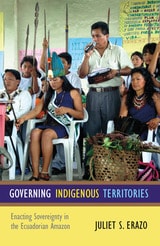
Governing Indigenous Territories
Enacting Sovereignty in the Ecuadorian AmazonJuliet S. Erazo
Duke University Press, 2013