Results by title
366 books match the query 'International' and 17 start with g
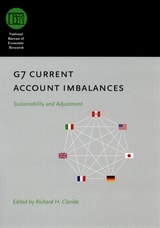
G7 Current Account Imbalances
Sustainability and AdjustmentEdited by Richard H. Clarida
University of Chicago Press, 2007
The current account deficit of the United States is more than six percent of its gross domestic product—an all-time high. And the rest of the world, including other G7 countries such as Japan and Germany, must collectively run current account surpluses to finance this deficit. How long can such unevenness between imports and exports be sustained, and what form might their eventual reconciliation take? Putting forth scenarios ranging from a gradual correction to a crash landing for the dollar, G7 Current Account Imbalances brings together economists from around the globe to consider the origins, status, and future of those disparities.
An esteemed group of collaborators here examines the role of the bursting of the dot-com bubble, the history of previous episodes of current account adjustments, and the possibility of the Euro surpassing the dollar as the leading international reserve currency. Though there are areas of broad agreement—that the imbalances will ultimately decline and that currency revaluations will be part of the solution—many areas of contention remain regarding both the dangers of imbalances and the possible forms of adjustment.
This volume will be of tremendous value to economists, politicians, and business leaders alike as they look to the future of the G7 economies.
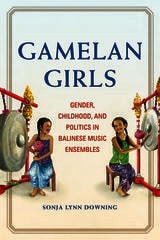
Gamelan Girls
Gender, Childhood, and Politics in Balinese Music EnsemblesSonja Lynn Downing
University of Illinois Press, 2019
Generational Accounting around the World
Edited by Alan J. Auerbach, Laurence J. Kotlikoff, and Willi Leibfritz
University of Chicago Press, 1999
Combining the latest and most extensive country-by-country generational analyses with a comprehensive review of generational accounting's innovative methodology, these papers are a consummate resource for economists, political scientists, and policy makers concerned with fiscal health and responsibility.
Genocide Studies
Pathways AheadJeffrey S. Bachman
Rutgers University Press, 2025

Germany and the Politics of Europe's Money
Karl Kaltenthaler
Duke University Press, 1998
Moving away from state-centered and Marxist approaches to the study of the European monetary integration process, Karl Kaltenthaler offers a new analytical framework to assess the dynamics within and among the participating countries. Using official and unofficial documents as well as interviews with players ranging from presidents of the Bundesbank to functionaries in the trade unions, Kaltenthaler argues that the number of decision makers negotiating policy and their accountability to interest groups, political parties, government ministries, and Germany’s central bank have made Germany’s fluctuations in policy inevitable. Germany and the Politics of Europe’s Money examines twenty years of German policy through an analysis of four key episodes: the creation of the European Monetary System, the creation of the Franco-German Economic and Financial Council, the establishment of policy toward the European Monetary Union, and the institutional transformation of the EMS in the 1990s. It thus brings a new understanding to Germany’s dynamic policies and the political forces behind them.
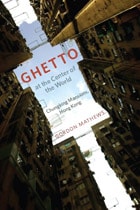
Ghetto at the Center of the World
Chungking Mansions, Hong KongGordon Mathews
University of Chicago Press, 2011
But as Ghetto at the Center of the World shows us, a trip to Chungking Mansions reveals a far less glamorous side of globalization. A world away from the gleaming headquarters of multinational corporations, Chungking Mansions is emblematic of the way globalization actually works for most of the world’s people. Gordon Mathews’s intimate portrayal of the building’s polyethnic residents lays bare their intricate connections to the international circulation of goods, money, and ideas. We come to understand the day-to-day realities of globalization through the stories of entrepreneurs from Africa carting cell phones in their luggage to sell back home and temporary workers from South Asia struggling to earn money to bring to their families. And we see that this so-called ghetto—which inspires fear in many of Hong Kong’s other residents, despite its low crime rate—is not a place of darkness and desperation but a beacon of hope.
Gordon Mathews’s compendium of riveting stories enthralls and instructs in equal measure, making Ghetto at the Center of the World not just a fascinating tour of a singular place but also a peek into the future of life on our shrinking planet.
Global Cinderellas
Migrant Domestics and Newly Rich Employers in TaiwanPei-Chia Lan
Duke University Press, 2006
Lan demonstrates how economic disparities, immigration policies, race, ethnicity, and gender intersect in the relationship between the migrant workers and their Taiwanese employers. The employers are eager to flex their recently acquired financial muscle; many are first-generation career women as well as first-generation employers. The domestics are recruited from abroad as contract and “guest” workers; restrictive immigration policies prohibit them from seeking permanent residence or transferring from one employer to another. They care for Taiwanese families’ children, often having left their own behind. Throughout Global Cinderellas, Lan pays particular attention to how the women she studied identify themselves in relation to “others”—whether they be of different classes, nationalities, ethnicities, or education levels. In so doing, she offers a framework for thinking about how migrant workers and their employers understand themselves in the midst of dynamic transnational labor flows.
Global Corporate Citizenship
Anuradha Dayal-Gulati and Mark Finn
Northwestern University Press, 2006
Global Corporate Citizenship looks at issues of corporate responsibility globally, not just at multinational corporations operating worldwide, but at companies in developing countries facing important challenges within their own countries.
Featuring impressive original field research by Kellogg School of Management graduate students in the Global Initiatives in Management program, individual sections of the book are dedicated to issues of corporate citizenship in a wide range of countries including China, Vietnam, Thailand, Argentina, and South Africa. An introduction by Kellogg professor Daniel Diermeier sets the book in context as corporations come to terms with the complex issues facing the significance and limits of global corporate citizenship.

Global Pharmaceuticals
Ethics, Markets, PracticesAdriana Petryna, Andrew Lakoff, and Arthur Kleinman, eds.
Duke University Press, 2006
Whether considering how American drug companies seek to create a market for antidepressants in Japan, how Brazil has created a model HIV/AIDS prevention and treatment program, or how the urban poor in Delhi understand and access healthcare, these essays illuminate the roles of corporations, governments, NGOs, and individuals in relation to global pharmaceuticals. Some essays show how individual and communal identities are affected by the marketing and availability of medications. Among these are an exploration of how the pharmaceutical industry shapes popular and expert understandings of mental illness in North America and Great Britain. There is also an examination of the agonizing choices facing Ugandan families trying to finance AIDS treatment. Several essays explore the inner workings of the emerging international pharmaceutical regime. One looks at the expanding quest for clinical research subjects; another at the entwining of science and business interests in the Argentine market for psychotropic medications. By bringing the moral calculations involved in the production and distribution of pharmaceuticals into stark relief, this collection charts urgent new territory for social scientific research.
Contributors. Kalman Applbaum, João Biehl, Ranendra K. Das, Veena Das, David Healy, Arthur Kleinman, Betty Kyaddondo, Andrew Lakoff, Anne Lovell, Lotte Meinert, Adriana Petryna, Michael A. Whyte, Susan Reynolds Whyte
Global Rivalries
Standards Wars and the Transnational Cotton TradeAmy A. Quark
University of Chicago Press, 2013
Nowhere is the conflict over rule setting more evident than in the simmering “standards wars” over the rules that define quality and enable the adjudication of disputes. In Global Rivalries, Amy A. Quark explores the questions of how rules are made, who makes them, and how they are enforced, using the lens of cotton—a simple commodity that has become a poignant symbol of both the crisis of Western rule making power and the potential for powerful new rivals to supplant it. Quark traces the strategies for influencing rule making processes employed not only by national governments but also by transnational corporations, fiber scientists, and trade associations from around the globe. Quark analyzes the efficacy of their approaches and the implications for more marginal actors in the cotton trade, including producers in West Africa.
Globalisation and Legal Theory
William Twining
Northwestern University Press, 2001
Globalization and Poverty
Edited by Ann Harrison
University of Chicago Press, 2007
Over the past two decades, the percentage of the world’s population living on less than a dollar a day has been cut in half. How much of that improvement is because of—or in spite of—globalization? While anti-globalization activists mount loud critiques and the media report breathlessly on globalization’s perils and promises, economists have largely remained silent, in part because of an entrenched institutional divide between those who study poverty and those who study trade and finance.
Globalization and Poverty bridges that gap, bringing together experts on both international trade and poverty to provide a detailed view of the effects of globalization on the poor in developing nations, answering such questions as: Do lower import tariffs improve the lives of the poor? Has increased financial integration led to more or less poverty? How have the poor fared during various currency crises? Does food aid hurt or help the poor?
Poverty, the contributors show here, has been used as a popular and convenient catchphrase by parties on both sides of the globalization debate to further their respective arguments. Globalization and Poverty provides the more nuanced understanding necessary to move that debate beyond the slogans.
Globalization in Historical Perspective
Edited by Michael D. Bordo, Alan M. Taylor, and Jeffrey G. Williamson
University of Chicago Press, 2003
This volume collects eleven papers doing exactly that and more. The first group of essays explores how the process of globalization can be measured in terms of the long-term integration of different markets-from the markets for goods and commodities to those for labor and capital, and from the sixteenth century to the present. The second set of contributions places this knowledge in a wider context, examining some of the trends and questions that have emerged as markets converge and diverge: the roles of technology and geography are both considered, along with the controversial issues of globalization's effects on inequality and social justice and the roles of political institutions in responding to them. The final group of essays addresses the international financial systems that play such a large part in guiding the process of globalization, considering the influence of exchange rate regimes, financial development, financial crises, and the architecture of the international financial system itself.
This volume reveals a much larger picture of the process of globalization, one that stretches from the establishment of a global economic system during the nineteenth century through the disruptions of two world wars and the Great Depression into the present day. The keen analysis, insight, and wisdom in this volume will have something to offer a wide range of readers interested in this important issue.
Globalization in an Age of Crisis
Multilateral Economic Cooperation in the Twenty-First CenturyEdited by Robert C. Feenstra and Alan M. Taylor
University of Chicago Press, 2013
Prompted by these questions, Robert C. Feenstra and Alan M. Taylor have brought together top researchers with policy makers and practitioners whose contributions consider the ways in which the global economic order might address the challenges of globalization that have arisen over the last two decades and that have been intensified by the recent crisis. Chapters in this volume consider the critical linkages between issues, including exchange rates, global imbalances, and financial regulation, and plumb the political and economic outcomes of past policies for what they might tell us about the future of the global economic cooperation.
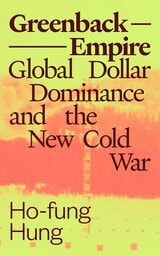
Greenback Empire
Global Dollar Dominance and the New Cold WarHo-fung Hung
University of Chicago Press, 2026
A critical history of the US dollar’s dominance in the world economy—and what has kept China’s currency from overtaking it.
The dollar is the primary currency of the world economy. With China now rivaling the United States on the world stage, a critical question hangs in the balance: will the Chinese renminbi challenge the status of the dollar and, in doing so, deprive America of its “exorbitant privilege”?
In GreenbackEmpire, Ho-fung Hung offers a powerful account of why, even as American shares of global production, ownership, and trade continue to decline, its currency has retained the support of governments and investors around the world. For six decades, Hung shows, the dominance of the dollar has rested on the security umbrella that the US offers to the world’s wealthiest countries—including oil producers. To these countries, support for the value of the dollar is tantamount to maintaining US protection. While China has become a serious geopolitical and economic rival to the US, the Chinese state’s airtight control of its financial system has delayed the free trading of the renminbi, limiting the currency’s internationalization. In short, the same strategy that engineered growth in China’s economy is restraining its currency's rise in opposition to the dollar. Hung’s Greenback Empire is an essential history of the dollar’s prowess, indispensable for understanding the future of the global monetary system.

Gringos Get Rich
Anti-Americanism in Chilean MusicEunice Rojas
University of Alabama Press, 2024
Documents counterimperialism in Chilean music since the 1960s
Gringos Get Rich: Anti-Americanism in Chilean Music examines anti-Americanism in Latin America as manifested in Chilean music in recent history. From a folk-based movement in the 1960s and early 1970s to underground punk rock groups during the Pinochet regime, to socially conscious hip-hop artists of postdictatorship Chile, Chilean music has followed several left-leaning transnational musical trends to grapple with Chile’s fluctuating relationship with the United States. Eunice Rojas’s innovative analysis introduces US readers to a wide swath of Chilean musicians and their powerful protest songs and provides a representative and long view of the negative influences of the United States in Latin America.
Much of the criticism of the United States in Chile’s music centers on the perception of the United States as a heavy-handed source of capitalist imperialism that is exploitative of and threatening to Chile’s poor and working-class public and to Chilean cultural independence and integrity. Rojas incorporates Antonio Gramsci’s theories about the difficulties of struggles for cultural power within elitist capitalist systems to explore anti-Americanism and anti-capitalist music. Ultimately, Rojas shows how the music from various genres, time periods, and political systems attempts to act as a counterhegemonic alternative to Chile’s political, cultural, and economic status quo.
Rojas’s insight is timely with recent political trends toward the right in the Americas. There is also increased interest in and acceptance of popular song lyrics as literary texts. The book will appeal to Latin Americanists, ethnomusicologists, scholars of popular culture and international relations, students, and general readers.
.
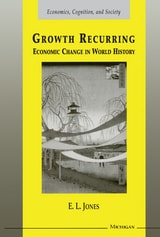
Growth Recurring
Economic Change in World HistoryE.L. Jones
University of Michigan Press, 2000
Eric Jones has written a substantial new introduction for this edition, which includes discussions of early evidence of growth episodes and the relation of these points to the Industrial Revolution, and the relevance of the East Asian "miracle" to his thesis.