Results by title
167 books match the query 'Iowa' and 3 start with g
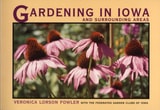
Gardening in Iowa and Surrounding Areas
Veronica Lorson Fowler
University of Iowa Press, 1997
On the East Coast, so the story goes, newcomers are asked where they come from; on the West Coast they are asked what they do for a living; in Iowa people ask them, “How's your garden doing?” Maybe this is not a true story, but it does epitomize the importance of gardening for Iowans, blessed as they are with the rich glacial soil so hospitable to corn and soybeans. Rural and urban Iowans alike start planning next summer's garden in midwinter, when their plots are still snow-covered and deep-frozen; by state fair time their trees, shrubs, vegetables—including the ubiquitous zucchini—and flowers are thriving. Veronica Fowler's month-by-month guide to gardening in Iowa is a concise, valuable resource for all novice and experienced gardeners.
Beginning in January, Fowler presents a monthly checklist to allow gardeners to prioritize seasonal tasks. Her winter chapters focus on garden design, cold-weather gardening, and starting plants from seeds; in spring she moves into soil preparation, shopping for plants, wildflower and rose cultivation, and lawn care basics; summer brings landscaping, flowers for cutting, and organic gardening; and fall involves cold frames, winter-harvest vegetables, forcing bulbs and perennials, trees and shrubs, and ground covers and vines best suited for Iowa's climate as well as information on mail-order suppliers, gardens to visit, where to go for help, and garden club memberships. Tips from some of the more than two thousand members of the Federated Garden Clubs of Iowa round out this plentiful harvest of useful advice.
On a day in February when the wind chill is, well, chilling and the forecast calls for more of the same, the arrival of the first garden catalog of the season brings warmth to any gardener. Veronica Fowler's accessible, information-packed book will become part of every gardener's life both indoors and out.
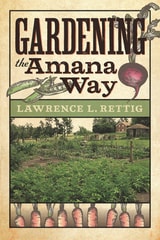
Gardening the Amana Way
Lawrence L. Rettig
University of Iowa Press, 2013
Each of the seven villages in Amana relied on the food prepared in its communal kitchens, and each kitchen depended on its communal garden for most of the dishes served (the kitchens in Rettig’s hometown produced more than four hundred gallons of sauerkraut in 1900). Rettig begins by describing the evolution of communal gardening in old Amana, focusing especially on planting, harvesting, and storing vegetables from asparagus to egg lettuce to turnips. With the passing of the old order in 1932, the number of the society’s large vegetable gardens and orchards dwindled, but Larry Rettig and his wife, Wilma, still grow some of the colonies’ heirloom varieties in their fourth-generation South Amana vegetable garden. In 1980 they founded a seed bank to preserve them for future generations.
Rettig’s chapters on modern vegetable and flower gardening in today’s Amana Colonies showcase his Cottage-in-the-Meadow Gardens, now listed with the Smithsonian in its Archives of American Gardens. Old intermingles with new across his gardens: heirloom lettuce keeps company with the latest cucumber variety, a hundred-year-old rose arches over the newest daylilies and heucheras, and ancient grapevines intertwine with newly planted wisteria, all adding up to a rich array of colorful plantings.
Rettig extends his gardening advice into the kitchen and workroom. He shares family recipes for any number of traditional dishes, including radish salad, dumpling soup, Amana pickled ham, apple bread, eleven-minute meat loaf, and strawberry rhubarb pie. Moving into the workroom, he shows us how to make hammered botanical prints, Della Robbia centerpieces, holiday wreaths, a gnome home, and a waterless fountain. Touring his gardens, with their historic and unusual plants, will make gardeners everywhere want to reproduce the groupings and varieties that surround Larry and Wilma Rettig’s 1900 red brick house.
Green, Fair, and Prosperous
Paths to Sustainable IowaCharles Connerly
University of Iowa Press, 2020
At the center of what was once the tallgrass prairie, Iowa has stood out for clearing the land and becoming one of the most productive agricultural states in the nation. But its success is challenged by multiple issues including but not limited to a decline in union representation of meatpacking workers; lack of demographic diversity; the advent of job-replacing mechanization; growing income inequality; negative contributions to and effects of climate change and environmental hazards.
To become green, fair, and prosperous, Connerly argues that Iowa must reckon with its past and the fact that its farm economy continues to pollute waterways, while remaining utterly unprepared for climate change. Iowa must recognize ways in which it can bolster its residents’ standard of living and move away from its demographic tradition of whiteness. For development to be sustainable, society must balance it with environmental protection and social justice. Connerly provides a crucial roadmap for how Iowans can move forward and achieve this balance.