104 books match the query 'Japanese' and 3 start with g
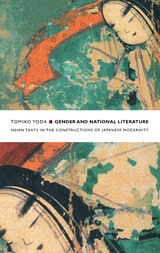
cover of Gender and National Literature: Heian Texts in the Constructions of Japanese Modernity

Gender and National Literature

Heian Texts in the Constructions of Japanese Modernity

Tomiko Yoda

Duke University Press, 2004

Boldly challenging traditional understandings of Heian literature, Tomiko Yoda reveals the connections between gender, nationalism, and cultural representation evident in prevailing interpretations of classic Heian texts. Renowned for the wealth and sophistication of women’s writing, the literature of the Heian period (794–1192) has long been considered central to the Japanese literary canon and Japanese national identity. Yoda historicizes claims about the inherent femininity of this literature by revisiting key moments in the history of Japanese literary scholarship from the eighteenth century to the present. She argues that by foregrounding women’s voices in Heian literature, the discipline has repeatedly enacted the problematic modernizing gesture in which the “feminine” is recognized, canceled, and then contained within a national framework articulated in masculine terms.

Moving back and forth between a critique of modern discourses on Heian literature and close analyses of the Heian texts themselves, Yoda sheds light on some of the most persistent interpretive models underwriting Japanese literary studies, particularly the modern paradigm of a masculine national subject. She proposes new directions for disciplinary critique and suggests that historicized understandings of premodern texts offer significant insights into contemporary feminist theories of subjectivity and agency.
[more]
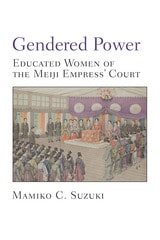
cover of Gendered Power: Educated Women of the Meiji Empress' Court

Gendered Power

Educated Women of the Meiji Empress' Court

Mamiko C. Suzuki

University of Michigan Press, 2019
Gendered Power sheds light on the sources of power for three prominent women of the Meiji period: Meiji Empress Haruko; public speaker, poet, and diarist Nakajima Shoen; and educator and prolific author Shimoda Utako. By focusing on the role Chinese classics (kanbun) played in the language employed by elite women, the chapters focus on how Empress Haruko, Shoen, and Shimoda Utako contributed new expectations for how women should participate in a modernizing Japan. By being in the public eye, all three women countered criticism of and commentary on their writings and activities, which they parried by navigating gender constraints. The success or failure as women ascribed to these three figures sheds light on the contradictions inhabited by them during a transformative period for Japanese women.  
 
By proposing and interrogating the possibility of Meiji women’s power, the book examines contradictions that were symptomatic of their struggles within the vast social, cultural, and political transformations that took place during the period. The book demonstrates that an examination of that conflict within feminist history is crucial in order to understand what radical resistance meant in the face of women-centered authority.

 
[more]
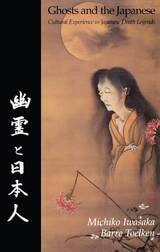
cover of Ghosts and The Japanese: Cultural Experience in Japanese Death Legends

Ghosts and The Japanese

Cultural Experience in Japanese Death Legends

Michiko Iwasaka & Barre Toelken

Utah State University Press, 1994

The Japanese have ambivalent attitudes toward death, deeply rooted in pre-Buddhist traditions. In this scholarly but accessible work, authors Iwasaka and Toelken show that everyday beliefs and customs--particularly death traditions--offer special insight into the living culture of Japan.

[more]