59 books match the query 'Jewish women' and 5 start with g
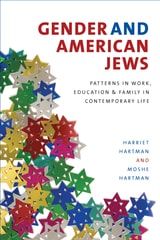
cover of Gender and American Jews: Patterns in Work, Education, and Family in Contemporary Life

Gender and American Jews

Patterns in Work, Education, and Family in Contemporary Life

Harriet Hartman and Moshe Hartman

Brandeis University Press, 2009
In Gender and American Jews, Harriet Hartman and Moshe Hartman interpret the results of the two most recent National Jewish Population Surveys. Building on their critical work in Gender Equality and American Jews (1996), and drawing on relevant sociological work on gender, religion, and secular achievement, this new book brings their analysis of gendered patterns in contemporary Jewish life right to the present moment. The first part of the book examines the distinctiveness of American Jews in terms of family behavior, labor-force patterns, and educational and occupational attainment. The second investigates the interrelationships between “Jewishness” and religious, economic, and family behavior, including intermarriage. Deploying an engaging assortment of charts and graphs and a rigorous grasp of statistics, the Hartmans provide a multifaceted portrait of a multidimensional population.
[more]
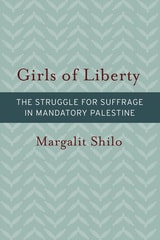
cover of Girls of Liberty: The Struggle for Suffrage in Mandatory Palestine

Girls of Liberty

The Struggle for Suffrage in Mandatory Palestine

Margalit Shilo

Brandeis University Press, 2016
Following the Balfour Declaration and the British conquest of Palestine (1917–1918), the small Jewish community that lived there wanted to establish an elected assembly as its representative body. The issue that hindered this aim was whether women would be part of it. A group of feminist Zionist women from all over the country created a political party that participated in the elections, even before women’s suffrage was enacted. This unique phenomenon in Mandatory Palestine resulted in the declaration of women’s equal rights in all aspects of life by the newly founded Assembly of Representatives. Margalit Shilo examines the story of these activists to elaborate on a wide range of issues, including the Zionist roots of feminism and nationalism; the ultra-Orthodox Jewish sector’s negation of women’s equality; how traditional Jewish concepts of women fashioned rabbinical attitudes on the question of women’s suffrage; and how the fight for women’s suffrage spread throughout the country. Using current gender theories, Shilo compares the Zionist suffrage struggle to contemporaneous struggles across the globe, and connects this nearly forgotten episode, absent from Israeli historiography, with the present situation of Israeli women. This rich analysis of women’s right to vote within this specific setting will appeal to scholars and students of Israel studies, and to feminist and social historians interested in how contexts change the ways in which activism is perceived and occurs.
[more]
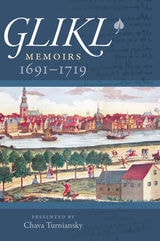
cover of Glikl: Memoirs 1691-1719

Glikl

Memoirs 1691-1719

Annotated by and with an Introduction by Chava Turniansky

Brandeis University Press, 2019

“My dear children, I write this for you in case your dear children or grandchildren come to you one of these days, knowing nothing of their family. For this reason I have set this down for you here in brief, so that you might know what kind of people you come from.”
These words from the memoirs Glikl bas Leib wrote in Yiddish between 1691 and 1719 shed light on the life of a devout and worldly woman. Writing initially to seek solace in the long nights of her widowhood, Glikl continued to record the joys and tribulations of her family and community in an account unique for its impressive literary talents and strong invocation of self. Through intensely personal recollections, Glikl weaves stories and traditional tales that express her thoughts and beliefs. While influenced by popular Yiddish moral literature, Glikl’s frequent use of first person and the significance she assigns her own life experience set the work apart. Informed by fidelity to the original Yiddish text, this authoritative new translation is fully annotated to explicate Glikl’s life and times, offering readers a rich context for appreciating this classic work.
 
[more]
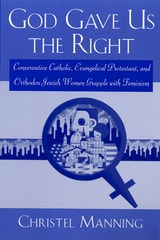
cover of God Gave Us The Right: Conservative Catholic, Evangelical Protestant, and Orthodox Jewish Women Grapple with Feminism

God Gave Us The Right

Conservative Catholic, Evangelical Protestant, and Orthodox Jewish Women Grapple with Feminism

Manning, Christel

Rutgers University Press, 1999
What does it mean to be a religious conservative, particularly for women, in America today? While it appears that people are returning to conservative religion because they are fed up with the excesses of liberalism, including feminism, a closer look at the lives of religious conservatives reveals a more complex reality. Drawing on two years of ethnographic research in Catholic, Jewish, and Protestant communities, Christel Manning explores the diversity among women who have returned to tradition. Arguing that America has undergone profound cultural and economic changes in the last thirty years, which create tension between women's lives and traditional gender roles, she demonstrates that conservative Catholics, Orthodox Jews, and Evangelical Protestants negotiate those tensions in different ways. Manning also shows that women in conservative religious communities share many of the same concerns as secular women.
Manning looks at how the religious communities profiled have been influenced by feminist values and describes the ways in which these women negotiate gender roles at work, religious services, and at home. She explains how they deal with the inconsistencies created by their attempts to integrate feminist and traditionalist norms. In highly accessible prose, Manning examines their attitudes towards the feminist movement, its impact on American culture, and the extent to which the women seek to resist it. God Gave Us the Right explains how these different views of feminism reflect the diverse theologies and historical experiences of the three communities.
[more]
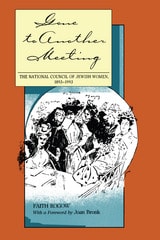
cover of Gone to Another Meeting: The National Council of Jewish Women, 1893-1993

Gone to Another Meeting

The National Council of Jewish Women, 1893-1993

Faith Rogow

University of Alabama Press, 1993

The first comprehensive history of the oldest national religious Jewish women's organization in the United States

Gone to Another Meeting charts the development of the National Council of Jewish Women (NCJW) and its impact on both the Jewish Community in the United States and American Society in general.

Founded in 1893 by Hannah Greenebaum Solomon, NCJW provided a conduit through which Jewish women’s voices could be heard and brought a Jewish voice to America’s women’s rights movement. NCJW would come to represent both the modernization and renewal of traditional Jewish womanhood. Through its emphasis on motherhood, its adoption of domestic feminism, and its efforts to carve a distinct Jewish niche in the late 19th-century Progressive social reform movement in the largely Christian world of women’s clubs, NCJW was instrumental in defining a uniquely American version of Jewish womanhood.
 

[more]