Results by title
936 books match the query 'LGBTQ+ Studies' and 36 start with g

GLQ at Twenty-Five
Marcia Ochoa and Jennifer DeVere Brody, special issue editors
Duke University Press, 0
Contributors: Jafari S. Allen, Marlon M. Bailey, Gabby Benavente, Jennifer DeVere Brody, Andy Campbell, V Varun Chaudhry, Mel Y. Chen, Jih-Fei Cheng, Oliver Coates, Cathy Cohen, Rachel Corbman, Carolyn Dinshaw, Allen Durgin, Elizabeth Freeman, John S. Garrison, Julian Gill-Peterson, Chase Gregory, Sarah Haley, David M. Halperin, Christina B. Hanhardt, Scott Herring, Heather Love, Dana Luciano, Whitney Monaghan, Marcia Ochoa, John Petrus, Elliott H. Powell, Nic John Ramos, Chandan Reddy, Richard T. Rodríguez, Nayan Shah, Stephanie Shelton, C. Riley Snorton, Ragini Tharoor Srinivasan, L. H. Stallings, Susan Stryker, Omise’eke Natasha Tinsley, Karen Tongson, Salvador Vidal-Ortiz, Rachel Walerstein, Mary Zaborskis
Gaming at the Edge
Sexuality and Gender at the Margins of Gamer CultureAdrienne Shaw
University of Minnesota Press, 2015
Video games have long been seen as the exclusive territory of young, heterosexual white males. In a media landscape dominated by such gamers, players who do not fit this mold, including women, people of color, and LGBT people, are often brutalized in forums and in public channels in online play. Discussion of representation of such groups in games has frequently been limited and cursory. In contrast, Gaming at the Edge builds on feminist, queer, and postcolonial theories of identity and draws on qualitative audience research methods to make sense of how representation comes to matter.
In Gaming at the Edge, Adrienne Shaw argues that video game players experience race, gender, and sexuality concurrently. She asks: How do players identify with characters? How do they separate identification and interactivity? What is the role of fantasy in representation? What is the importance of understanding market logic? In addressing these questions Shaw reveals how representation comes to matter to participants and offers a perceptive consideration of the high stakes in politics of representation debates.
Putting forth a framework for talking about representation, difference, and diversity in an era in which user-generated content, individualized media consumption, and the blurring of producer/consumer roles has lessened the utility of traditional models of media representation analysis, Shaw finds new insight on the edge of media consumption with the invisible, marginalized gamers who are surprising in both their numbers and their influence in mainstream gamer culture.
Gay & Lesbian Politics
Sexuality and the Emergence of a New EthicMark Blasius
Temple University Press, 1994
Gay American Autobiography
Writings from Whitman to SedarisDavid Bergman
University of Wisconsin Press, 2009
Volume editor David Bergman guides the reader chronologically through selected writings that give voice to every generation of gay writers since the nineteenth century, including a diverse array of American men of African, European, Jewish, Asian, and Latino heritage. Documenting a range of life experiences that encompass tattoo artists and academics, composers and drag queens, hustlers and clerks, it contains accounts of turn-of-the-century transvestites, gay rights activists, men battling AIDS, and soldiers attempting to come out in the army. Each selection provides important insight on the wide spectrum of ways gay men have defined and lived their lives, highlighting how self-awareness changes an author’s experience.
The volume includes an introduction by Bergman and headnotes for each of the nearly forty entries. Bringing many out-of-print and hard-to-find works to new readers, this challenging and comprehensive anthology chronicles American gay history and life struggles over the course of the past 150 years.
Gay Bar
The Fabulous, True Story of a Daring Woman and Her Boys in the 1950sWill Fellows and Helen P. Branson
University of Wisconsin Press, 2026
Vivacious, unconventional, candid, and straight, Helen Branson operated a gay bar in Los Angeles in the 1950s—America’s most anti-gay decade. After years of fending off drunken passes as an entertainer in cocktail bars, this divorced grandmother preferred the wit, variety, and fun she found among homosexual men. Enjoying their companionship and deploring their plight, she gave her gay friends a place to socialize. Though at the time California statutes prohibited homosexuals from gathering in bars, Helen’s place was relaxed, suave, and remarkably safe from police raids and other anti-homosexual hazards. In 1957 she published her extraordinary memoir Gay Bar, the first book by a heterosexual to depict the lives of homosexuals with admiration, respect, and love.
In this new edition of Gay Bar, Will Fellows interweaves Branson’s chapters with historical perspective provided through his own insightful commentary and excerpts gleaned from letters and essays appearing in gay publications of the period. Also included is the original introduction to the book by maverick 1950s psychiatrist Blanche Baker. The eclectic selection of voices gives the flavor of American life in that extraordinary age of anxiety, revealing how gay men saw themselves and their circumstances, and how others perceived them.
Outstanding Book, selected by the Public Library Association
Best Books for High Schools, selected by the American Association of School Libraries
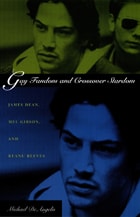
Gay Fandom and Crossover Stardom
James Dean, Mel Gibson, and Keanu ReevesMichael DeAngelis
Duke University Press, 2001
DeAngelis examines a variety of cultural documents, including studio publicity and promotional campaigns, star biographies, scandal magazines, and film reviews, as well as gay political and fan literature that ranges from the closeted pages of One and Mattachine Review in the 1950s to the very “out” dish columns, listserv postings, and on-line star fantasy narratives of the past decade. At the heart of this close historical study are treatments of particular film narratives, including East of Eden, Rebel Without a Cause, The Road Warrior, Lethal Weapon, My Own Private Idaho, and Speed. Using theories of fantasy and melodrama, Gay Fandom and Crossover Stardom demonstrates how studios, agents, and even stars themselves often actively facilitate an audience’s strategic blurring of the already tenuous distinction between the heterosexual mainstream and the gay margins of American popular culture.
In addition to fans of James Dean, Mel Gibson, and Keanu Reeves, those interested in film history, cultural studies, popular culture, queer theory, gender studies, sociology, psychoanalytic theory, melodrama, fantasy, and fandom will enjoy this book.
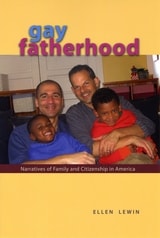
Gay Fatherhood
Narratives of Family and Citizenship in AmericaEllen Lewin
University of Chicago Press, 2009
Men are often thought to have less interest in parenting than women, and gay men are generally assumed to prefer pleasure over responsibility. The toxic combination of these two stereotypical views has led to a lack of serious attention being paid to the experiences of gay fathers. But the truth is that more and more gay men are setting out to become parents and succeeding—and Gay Fatherhood aims to tell their stories.
Ellen Lewin takes as her focus people who undertake the difficult process of becoming fathers as gay men, rather than having become fathers while married to women. These men face unique challenges in their quest for fatherhood, negotiating specific bureaucratic and financial conditions as they pursue adoption or surrogacy and juggling questions about their future child’s race, age, sex, and health. Gay Fatherhood chronicles the lives of these men, exploring how they cope with political attacks from both the "family values" right and the "radical queer" left—while also shedding light on the evolving meanings of family in twenty-first-century America.

Gay Latino Studies
A Critical ReaderMichael Hames-García and Ernesto Javier Martínez, eds.
Duke University Press, 2011
Contributors. Tomás Almaguer, Luz Calvo, Lionel Cantú,, Daniel Contreras, Catriona Rueda Esquibel, Ramón García, Ramón A. Gutiérrez, Michael Hames-García, Lawrence La Fountain-Stokes, María Lugones, Ernesto J. Martínez, Paula M. L. Moya, José Esteban Muñoz, Frances Negrón-Muntaner, Ricardo L. Ortiz, Daniel Enrique Pérez, Ramón H. Rivera-Servera, Richard T. Rodríguez, David Román, Horacio N. Roque Ramírez, Antonio Viego
Gay Liberation after May '68
Guy Hocquenghem
Duke University Press, 2022

Gay Lives
Homosexual Autobiography from John Addington Symonds to Paul MonettePaul Robinson
University of Chicago Press, 1999
Paul Robinson reads the memoirs of French, British, and American gay authors—André Gide, Quentin Crisp, and Martin Duberman, among others—through the prism of sexual identity, asking fascinating questions about homosexuality and its relation to literary form. How did these authors discover their sexual identity? Did they embrace it or reject it? How did they express often conflicted desires in their words, which ranged from defiant and brutally frank to ambiguous and abstract? Robinson considers the choices each made—as a man and an author—to accommodate himself to society's homophobia or live in protest against his oppression.
Despite the threads that connect these stories, Gay Lives refutes the notion that there is a typical homosexual "career" by showing that gay men have led wildly dissimilar lives—from the exuberant to the miserable—and that they have found no less dissimilar meanings in those lives.
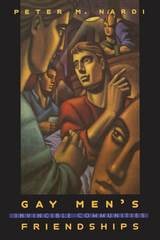
Gay Men's Friendships
Invincible CommunitiesPeter M. Nardi
University of Chicago Press, 1999
Nardi explores the meaning of friends to some gay men, how friends often become a surrogate family, how sexual behavior and attraction affects these friendships, and how, for many, friends mean more and last longer than romantic relationships. While looking at the psychological joys and sorrows of friendship, he also considers the cultural constraints limiting gay men in contemporary urban America—especially those that deal with dominant images of masculinity and heterosexuality—and how they relate to friendship.
By listening to gay men talk about their interactions, Nardi offers a rare glimpse into the mechanisms of gay life. We learn how gay men meet their friends, what they typically do and talk about, and how these strong relationships contain the roots of larger cultural forces such as social movements and gay identities and neighborhoods. Nardi also points out the political and social consequences when friendships fail to provide support against oppression.
An intimate and informative look at gay life in urban America, Gay Men's Friendships ultimately shows how these relationships challenge the gender order of our society by questioning how masculinity is constructed and by offering a model for a more creative blending of gay and heterosexual masculinity.
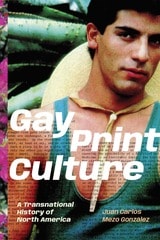
Gay Print Culture
A Transnational History of North AmericaJuan Carlos Mezo González
Duke University Press, 2026

Gay Priori
A Queer Critical Legal Studies Approach to Law ReformLibby Adler
Duke University Press, 2018
Gay Rights at the Ballot Box
Amy L. Stone
University of Minnesota Press, 2012
The passage of the anti-gay marriage Proposition 8 in California in 2008 stunned gay rights activists across the country. Although facing a well-funded campaign in support of the ballot measure, LGBT activists had good reasons for optimism, including the size and strength of their campaign. Since 1974, the LGBT movement has fought 146 anti-gay ballot initiatives sponsored by the religious right and has developed innovative strategies to oppose these measures. In Gay Rights at the Ballot Box, Amy L. Stone examines how the tactics of LGBT activists have evolved and unravels the complex relationship between ballot measure campaigns and the broader goals of the LGBT movement.
The first comprehensive history of anti-gay ballot measures, both those merely attempted and those successfully put before voters, this book draws on archival research and interviews with more than one hundred LGBT activists to provide a detailed account of the campaigns to stop such ballot measures from passing into law. As Stone shows through in-depth case studies, although LGBT activists lost the vast majority of these fights, they also won significant statewide victories in Oregon in 1992 and Arizona in 2006, and local successes, including ones in Ypsilanti, Michigan, in 1998 and 2002.
Stone analyzes how LGBT activists constantly refined their campaign tactics in response to both victories and defeats. She also stresses that such campaigns have played both a complementary and contradictory role within the LGBT movement. Specific anti-ballot campaigns and the broader movement do often strengthen each other. However, ballot measure campaigns sometimes distract activists from the movement’s more general goals, and activists at the movement level can pressure local campaigns to take on more than they can handle. With gay rights coming under increasing assault from the religious right, this book is a vital resource for LGBT activists and others working to block their efforts.
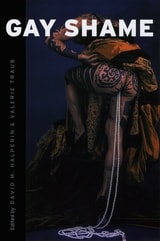
Gay Shame
Edited by David M. Halperin and Valerie Traub
University of Chicago Press, 2009
Gay Shame seeks to lift this unofficial ban on the investigation of homosexuality and shame by presenting critical work from the most vibrant frontier in contemporary queer studies. An esteemed list of contributors tackles a range of issues—questions of emotion, disreputable sexual histories, dissident gender identities, and embarrassing figures and moments in gay history—as they explore the possibility of reclaiming shame as a new, even productive, way to examine lesbian and gay culture.
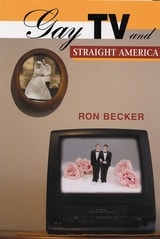
Gay TV and Straight America
Becker, Ron
Rutgers University Press, 2006
After decades of silence on the subject of homosexuality, television in the 1990s saw a striking increase in programming that incorporated and, in many cases, centered on gay material. In shows including Friends, Seinfeld, Party of Five, Homicide, Suddenly Susan, The Commish, Ellen, Will & Grace, and others, gay characters were introduced, references to homosexuality became commonplace, and issues of gay and lesbian relationships were explored, often in explicit detail.
In Gay TV and Straight America, Ron Becker draws on a wide range of political and cultural indicators to explain this sudden upsurge of gay material on prime-time network television. Bringing together analysis of relevant Supreme Court rulings, media coverage of gay rights battles, debates about multiculturalism, concerns over political correctness, and much more, Becker's assessment helps us understand how and why televised gayness was constructed by a specific culture of tastemakers during the decade.
On one hand the evidence points to network business strategies that embraced gay material as a valuable tool for targeting a quality audience of well-educated, upscale adults looking for something "edgy" to watch. But, Becker also argues that the increase of gay material in the public eye creates growing mainstream anxiety in reaction to the seemingly civil public conversation about equal rights.
In today's cultural climate where controversies rage over issues of gay marriage yet millions of viewers tune in weekly to programs like Queer Eye for the Straight Guy, this book offers valuable insight to the complex condition of America's sexual politics.
Gay, Inc.
The Nonprofitization of Queer PoliticsMyrl Beam
University of Minnesota Press, 2018
A bold and provocative look at how the nonprofit sphere’s expansion has helped—and hindered—the LGBT cause
What if the very structure on which social movements rely, the nonprofit system, is reinforcing the inequalities activists seek to eliminate? That is the question at the heart of this bold reassessment of the system’s massive expansion since the mid-1960s. Focusing on the LGBT movement, Myrl Beam argues that the conservative turn in queer movement politics, as exemplified by the shift toward marriage and legal equality, is due mostly to the movement’s embrace of the nonprofit structure.
Based on oral histories as well as archival research, and drawing on the author’s own extensive activist work, Gay, Inc. presents four compelling case studies. Beam looks at how people at LGBT nonprofits in Minneapolis and Chicago grapple with the contradictions between radical queer social movements and their institutionalized iterations. Through interview subjects’ incisive, funny, and heartbreaking commentaries, Beam exposes a complex world of committed people doing the best they can to effect change, and the flawed structures in which they participate, rail against, ignore, and make do.
Providing a critical look at a social formation whose sanctified place in the national imagination has for too long gone unquestioned, Gay, Inc. marks a significant contribution to scholarship on sexuality, neoliberalism, and social movements.
Gender Flashpoints
The Power of DialogueAbigail C. Saguy
Russell Sage Foundation, 2026
Americans are deeply divided about gender. Like other issues in the U.S., debates about gender are extremely polarized and can spark intense anger and conflict. These “gender flashpoints” include gender identity, gender and parenting, gender-neutral restrooms, the use of identifying pronouns, and participation in women’s sports. Even the term gender itself has become contested. In this divisive social context, advocates on both sides have reduced complex issues to all-or-nothing propositions. Many people are confused about these topics, embarrassed about what they do not know, or afraid that they will be called a bigot if they say the “wrong thing.” In Gender Flashpoints, sociologist Abigail C. Saguy gets to the root of these major disagreements about gender.
Saguy interviews activists across the full political spectrum about a wide range of contemporary debates over gender to better understand points of contention as well as surprising areas of agreement. She finds that at the crux of many of these debates are disputes about the goals of gender-related advocacy, the strategies to achieve these goals, and whose rights are being advocated for. For example, when discussing pregnancy-related policy issues, there is disagreement as to whether the term “pregnant person” or “pregnant woman” should be used. While some believe “pregnant person” affirms the existence of nonbinary people and trans men, others believe it erases women. These differences often appear to be simply about language, but they are, in fact, disagreements on worldviews, identities, and legitimacy.
One of the conflicts Saguy dives into is the issue of gender-neutral restrooms. She finds when interviewing different activists about what they thought of the topic, they initially repeated the familiar, mainstream polarized discourse. LGBTQ+ activists and mainstream feminists emphasized the importance of restroom access, especially for transgender and gender-nonconforming people. Conservatives and gender-critical feminists emphasized women’s and girls’ vulnerability and need for privacy and safety in public restrooms. Across the political spectrum, activists spoke about how those on the “other side” were unwilling to engage in productive dialogue. However, Saguy also finds that activists on both sides recognized the complexity of the issue and agreed on the need for public bathrooms that provided everyone with greater safety and privacy. Activists across the spectrum showed enthusiasm for desegregated public restrooms that include an open space for sinks and mirrors—along with toilets with European style, fully enclosed floor-to-ceiling doors. Saguy advocates for engaging in dialogue about charged issues, such as gender-neutral bathrooms, in order to help identify workable solutions to seemingly intractable social problems.
Gender Flashpoints is a fascinating and comprehensive view of the deeply personal and divisive topic of gender that offers hope for finding common ground and a path forward.

Gender and Sexuality in Modern Ireland
Anthony Bradley
University of Massachusetts Press, 1997
Gender, Intersections, and Institutions
Intersectional Groups Building Alliances and Gaining Voice in GermanyEdited by Louise K. Davidson-Schmich
University of Michigan Press, 2017
Gentlemen's Disagreement
Alfred Kinsey, Lewis Terman, and the Sexual Politics of Smart MenPeter Hegarty
University of Chicago Press, 2013
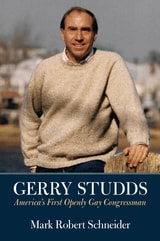
Gerry Studds
America's First Openly Gay CongressmanMark Robert Schneider
University of Massachusetts Press, 2017
The defining moment of his career, however, came in 1983, when he was censured by the House for having had an affair with a page ten years previously. On the floor of Congress, Studds confessed to having behaved inappropriately and then courageously declared that he was a gay man—becoming the country's first openly gay member of Congress. Defying all expectations, Studds won reelection in a bruising campaign. For the rest of his career, he remained loyal to his constituents' concerns while also championing AIDS research and care, leading the effort in Congress to allow gays and lesbians to serve in the military, and opposing the Defense of Marriage Act. Once a deeply conflicted man, he ultimately found a balance between his public service and his private life, which included a happy, legally recognized marriage.
Get Yo' Life
Black Queer PlacemakingR. J. Millhouse
The Ohio State University Press, 2025

Getting Medieval
Sexualities and Communities, Pre- and PostmodernCarolyn Dinshaw
Duke University Press, 1999
In her pursuit of historical analyses that embrace the heterogeneity and indeterminacy of sex and sexuality, Dinshaw examines canonical Middle English texts such as the Canterbury Tales and TheBook of Margery Kempe. She examines polemics around the religious dissidents known as the Lollards as well as accounts of prostitutes in London to address questions of how particular sexual practices and identifications were normalized while others were proscribed. By exploring contemporary (mis)appropriations of medieval tropes in texts ranging from Quentin Tarantino’s Pulp Fiction to recent Congressional debates on U.S. cultural production, Dinshaw demonstrates how such modern media can serve to reinforce constrictive heteronormative values and deny the multifarious nature of history. Finally, she works with and against the theories of Michel Foucault, Homi K. Bhabha, Roland Barthes, and John Boswell to show how deconstructionist impulses as well as historical perspectives can further an understanding of community in both pre- and postmodern societies.
This long-anticipated volume will be indispensable to medieval and queer scholars and will be welcomed by a larger cultural studies audience.
Ghostly Desires
Queer Sexuality and Vernacular Buddhism in Contemporary Thai CinemaArnika Fuhrmann
Duke University Press, 2016
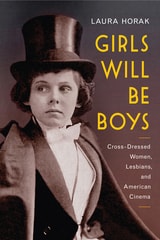
Girls Will Be Boys
Cross-Dressed Women, Lesbians, and American Cinema, 1908-1934Horak, Laura
Rutgers University Press, 2016
Finalist for 2016 Richard Wall Memorial Award from the Theatre Library Association
Long-listed for the 2017 Best Photography Book Award from the Kraszna-Krausz Foundation
Marlene Dietrich, Greta Garbo, and Katharine Hepburn all made lasting impressions with the cinematic cross-dressing they performed onscreen. What few modern viewers realize, however, is that these seemingly daring performances of the 1930s actually came at the tail end of a long wave of gender-bending films that included more than 400 movies featuring women dressed as men.
Laura Horak spent a decade scouring film archives worldwide, looking at American films made between 1908 and 1934, and what she discovered could revolutionize our understanding of gender roles in the early twentieth century. Questioning the assumption that cross-dressing women were automatically viewed as transgressive, she finds that these figures were popularly regarded as wholesome and regularly appeared onscreen in the 1910s, thus lending greater respectability to the fledgling film industry. Horak also explores how and why this perception of cross-dressed women began to change in the 1920s and early 1930s, examining how cinema played a pivotal part in the representation of lesbian identity.
Girls Will Be Boys excavates a rich history of gender-bending film roles, enabling readers to appreciate the wide array of masculinities that these actresses performed—from sentimental boyhood to rugged virility to gentlemanly refinement. Taking us on a guided tour through a treasure-trove of vintage images, Girls Will Be Boys helps us view the histories of gender, sexuality, and film through fresh eyes.
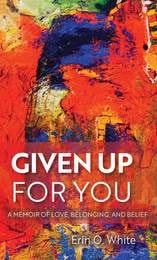
Given Up for You
A Memoir of Love, Belonging, and BeliefErin O. White
University of Wisconsin Press, 2018
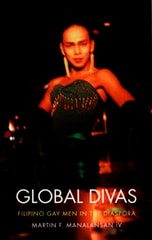
Global Divas
Filipino Gay Men in the DiasporaMartin F. Manalansan IV
Duke University Press, 2003
Manalansan locates diasporic, transnational, and global dimensions of gay and other queer identities within a framework of quotidian struggles ranging from everyday domesticity to public engagements with racialized and gendered images to life-threatening situations involving AIDS. He reveals the gritty, mundane, and often contradictory deeds and utterances of Filipino gay men as key elements of queer globalization and transnationalism. Through careful and sensitive analysis of these men’s lives and rituals, he demonstrates that transnational gay identity is not merely a consumable product or lifestyle, but rather a pivotal element in the multiple, shifting relationships that queer immigrants of color mobilize as they confront the tribulations of a changing world.
Global Emergence Of Gay & Lesbian Pol
edited by Barry D Adam, Jan Willem Duyvendak and André Krouwel
Temple University Press, 1998
Lesbian and gay groups have existed for more than a century, often struggling against enormous odds. In the middle of the twentieth century, movement organizations were suppressed or swept away by fascism, Stalinism, and McCarthyism. Refounded by a few pioneers in the postwar period, movements have risen again as more and more people have stood up for their right to love and live with persons of their choice.
This book addresses both the mature movements of the European Union, North America, and Australia and the newer movements emerging in Latin America, Eastern Europe, and parts of Asia and Africa, examining the social and political conditions that shape movement opportunities and trajectories. It is rich in the details of gay and lesbian cultural and political life in different countries.
God, Sex, and Politics
Homosexuality and Everyday TheologiesDawne Moon
University of Chicago Press, 2004
Through this compelling work we learn that the considerable turmoil surrounding homosexuality in churches has less to do with homosexuality than with the fear of weakening the church's spiritual, communal solidarity. We learn too how the church mirrors the secular world—the fear of division and politics leads members to avoid conflict in the congregations Moon examines. And so, the Protestants who are the subject of her study avoid debating the key issue of whether homosexuality is sinful because of its potentially polarizing effects. The religious culture Moon uncovers is ultimately critical of politics and of the intense moral and social discord that members believe it entails.
God, Sex, and Politics will be of enormous value to sociologists of religion and anyone interested in religious controversies over sexuality.

Good Pictures Are a Strong Weapon
Laura Gilpin, Queerness, and Navajo SovereigntyLouise Siddons
University of Minnesota Press, 2024
What are the limits of political solidarity, and how can visual culture contribute to social change?
A fundamental dilemma exists in documentary photography: can white artists successfully portray Indigenous lives and communities in a manner that neither appropriates nor romanticizes them? With an attentive and sensitive eye, Louise Siddons examines lesbian photographer Laura Gilpin’s classic 1968 book The Enduring Navaho to illuminate the intersectional politics of photography, Navajo sovereignty, and queerness over the course of the twentieth century.
Gilpin was a New York–trained fine arts photographer who started working with Navajo people when her partner accepted a job as a nurse in Arizona. She spent more than three decades documenting Navajo life and creating her book in collaboration with Navajo friends and colleagues. Framing her lesbian identity and her long relationship with the Navajo people around questions of allyship, Good Pictures Are a Strong Weapon addresses the long and problematic history of White photographers capturing images of Native life. Simultaneously, Siddons uses Gilpin’s work to explore the limitations of White advocacy in a political moment that emphasized the need for Indigenous visibility and voices.
Good Pictures Are a Strong Weapon introduces contemporary Diné (Navajo) artists as interlocutors, critics, and activists whose work embodies and extends the cultural sovereignty politics of earlier generations and makes visible the queerness often left implicit in Gilpin’s photographs. Siddons puts their work in conversation with Gilpin’s, taking up her mandate to viewers and readers of The Enduring Navajo to address Navajo aesthetics, traditions, politics, and people on their own terms.
Retail e-book files for this title are screen-reader friendly with images accompanied by short alt text and/or extended descriptions.
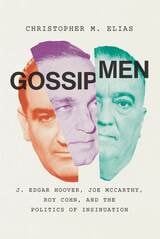
Gossip Men
J. Edgar Hoover, Joe McCarthy, Roy Cohn, and the Politics of InsinuationChristopher M. Elias
University of Chicago Press, 2021
By using gossip as a lens to examine profound issues of state security and institutional power, Elias thoroughly transforms our understanding of the development of modern American political culture.
Gossip Men
J. Edgar Hoover, Joe McCarthy, Roy Cohn, and the Politics of InsinuationChristopher M. Elias
University of Chicago Press, 2021
This is an auto-narrated audiobook edition of this book.
J. Edgar Hoover, Joseph McCarthy, and Roy Cohn were titanic figures in midcentury America, wielding national power in government and the legal system through intimidation and insinuation. Hoover’s FBI thrived on secrecy, threats, and illegal surveillance, while McCarthy and Cohn will forever be associated with the infamous anticommunist smear campaign of the early 1950s, which culminated in McCarthy’s public disgrace during televised Senate hearings. In Gossip Men, Christopher M. Elias takes a probing look at these tarnished figures to reveal a host of startling new connections among gender, sexuality, and national security in twentieth-century American politics. Elias illustrates how these three men solidified their power through the skillful use of deliberately misleading techniques like implication, hyperbole, and photographic manipulation. Just as provocatively, he shows that the American people of the 1950s were particularly primed to accept these coded threats because they were already familiar with such tactics from widely popular gossip magazines.
By using gossip as a lens to examine profound issues of state security and institutional power, Elias thoroughly transforms our understanding of the development of modern American political culture.

Governing Pleasures
Pornography and Social Change in England, 1815-1914Sigel, Lisa Z.
Rutgers University Press, 2002
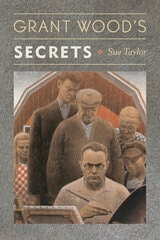
Grant Wood’s Secrets
Sue Taylor
University of Delaware Press, 2011
Published by University of Delaware Press. Distributed worldwide by Rutgers University Press.
Guy Hocquenghem
Beyond Gay IdentityBill Marshall
Duke University Press, 1997
Marshall explores all aspects of Hocquenghem’s writing—journalistic, theoretical, and fictional—much of this work still untranslated. His consideration reaches beyond the aftermath of the events of May 1968 and points toward the ways in which Hocquenghem’s work might invigorate contemporary debates on a range of issues in Marxist and queer theory and in gay, lesbian, and cultural studies. These include the construction of homosexuality in social discourse, the status of "identity politics," and the role of the state and civil society in the determination of each. Demonstrating Hocquenghem’s importance within the framework of French leftist thought, Marshall links him to his contemporaries Foucault, Deleuze, and Guattari. Tracing his connections to the intellectual traditions of Benjamin, Diderot, Fourier, Lucretius, and Gnosticism, he also illustrates Hocquenghem’s place within the European intellectual tradition.Guy Hocquenghem brings an important, challenging, and overly neglected French theorist back to the main stage.