Results by title
372 books match the query 'Language' and 6 start with g

Game Work
Language, Power, and Computer Game CultureKen S. McAllister
University of Alabama Press, 2006
Video and computer games in their cultural contexts.
As the popularity of computer games has exploded over the past decade, both scholars and game industry professionals have recognized the necessity of treating games less as frivolous entertainment and more as artifacts of culture worthy of political, social, economic, rhetorical, and aesthetic analysis. Ken McAllister notes in his introduction to Game Work that, even though games are essentially impractical, they are nevertheless important mediating agents for the broad exercise of socio-political power.
In considering how the languages, images, gestures, and sounds of video games influence those who play them, McAllister highlights the ways in which ideology is coded into games. Computer games, he argues, have transformative effects on the consciousness of players, like poetry, fiction, journalism, and film, but the implications of these transformations are not always clear. Games can work to maintain the status quo or celebrate liberation or tolerate enslavement, and they can conjure feelings of hope or despair, assent or dissent, clarity or confusion. Overall, by making and managing meanings, computer games—and the work they involve and the industry they spring from—are also negotiating power.
This book sets out a method for "recollecting" some of the diverse and copious influences on computer games and the industry they have spawned. Specifically written for use in computer game theory classes, advanced media studies, and communications courses, Game Work will also be welcome by computer gamers and designers.
Ken S. McAllister is Assistant Professor of Rhetoric, Composition, and the Teaching of English at the University of Arizona and Co-Director of the Learning Games Initiative, a research collective that studies, teaches with, and builds computer games.
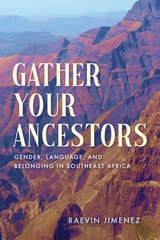
Gather Your Ancestors
Gender, Language, and Belonging in Southeast AfricaRaevin Jimenez
University of Wisconsin Press, 2026
Historically, southeasternmost Africa has been home to a large variety of speech communities, including Nguni, East Bantu, Khoi, and San—the legacy of a long and complicated history of migration, interaction, assimilation, and disaggregation between many peoples. With detailed, careful analysis, Raevin Jimenez guides readers through a thousand years of human movement, cultural contact, and social development in this region. Taking a historical linguistics approach, she sheds new light on this history by focusing on Nguni speakers’ use of gendered practices—including initiation, marriage, and avoidant speech known as hlónipha—to blend multilingual and diverse communities.
Use of gendered institutions inaugurated variable social spaces that could either elide or accommodate difference and thus enabled a multiplicity of community types. Contrary to previous assumptions about the roles of men and women in precolonial southeasternmost Africa, Jimenez shows that gender impacted life and social interactions across a large variety of important domains and became a way of forming, negotiating, and maintaining community. These developments shaped and remain visible in southeastern African speech communities today, and understanding them is vital to understanding the region’s long history and current linguistic society.

Getting It Right
Language, Literature, and EthicsGeoffrey Galt Harpham
University of Chicago Press, 1992
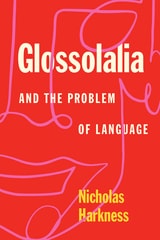
Glossolalia and the Problem of Language
Nicholas Harkness
University of Chicago Press, 2021
Glossolalia and the Problem of Language investigates speaking in tongues in South Korea, where it is practiced widely across denominations and congregations. Nicholas Harkness shows how the popularity of glossolalia in Korea lies at the intersection of numerous, often competing social forces, interwoven religious legacies, and spiritual desires that have been amplified by Christianity’s massive institutionalization. As evangelicalism continues to spread worldwide, Glossolalia and the Problem of Language analyzes one of its most enigmatic practices while marking a major advancement in our understanding of the power of language and its limits.
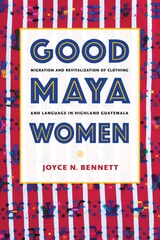
Good Maya Women
Migration and Revitalization of Clothing and Language in Highland Guatemalaby Joyce N. Bennett
University of Alabama Press, 2022
Good Maya Women: Migration and Revitalization of Clothing and Language in Highland Guatemala analyzes how Indigenous women’s migration contributes to women’s empowerment in their home communities in Guatemala. This decolonial ethnographic analysis of Kaqchikel Maya women’s linguistic and cultural activism demonstrates that marginalized people can and do experience empowerment and hope for the future of their communities, even while living under oppressive neoliberal regimes. Joyce N. Bennett contests dominant frameworks of affect theory holding that marginalized peoples never truly experience unrestricted hope or empowerment, and she contributes new understandings of the intimate connections between Indigenous women, migration, and language and clothing revitalization.
Based on more than twenty months of fieldwork, the study begins with an ethnographic investigation of how economic policies force Indigenous women into migration for wage work. To survive, many, like the three young women profiled in this ethnography, are forced to leave their schooling, families, and highland homes to work in cities or other countries. They might work, for example, as vendors, selling crafts to tourists, or as housekeepers or waitresses. Their work exposes them to structural violence, including anti-Indigenous slurs, sexual harassment and violence, and robbery.
Furthermore, the women are pressured to wear Western clothing and to speak Spanish, which endangers Indigenous culture and language in Guatemala. Yet the Indigenous migrant women profiled do not abandon their Indigenous clothing and language, in this case Kaqchikel Maya. Instead, they find inspiration and pride in revitalizing Kaqchikel traditions in their hometowns post-migration. As women attempt to revitalize Kaqchikel Maya language and clothing, they seek to earn the title of “good” women in their home communities.
Unpacking women’s daily activisms reveals that women attempt to retain their language and clothing and also collectively seek to make space for Indigenous people in the modern world. Bennett reveals that women find their attempts at revitalization to be personally empowering, even when their communities do not support them.
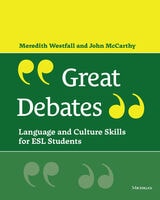
Great Debates
Language and Culture Skills for ESL StudentsMeredith Westfall and John McCarthy
University of Michigan Press, 2004
This book provides vocabulary, conversation tips, language learning tips, and discussion activities to help students debate on a wide variety of fairly non-controversial topics, from dining in or eating out, using the phone or e-mail, type A or type B, fiction or non-fiction, love at first sight or love over time, to diet or exercise.
Along with the discussion activities, the book contains some reading, writing, and vocabulary activities.
Each of the 30 units includes:
pre-debate discussion questions
new vocabulary words
a reading that outlines both sides of the debate
comprehension questions
discussion activities that include expressions used in debate-related speech acts and those pertaining to language learning
writing assignments
idiom and vocabulary review.