Results by title
155 books match the query 'Legislators' and 3 start with g

Gaylord Nelson
Champion for Our EarthSheila Terman Cohen
Wisconsin Historical Society Press, 2010
Born in Clear Lake, Wisconsin, in 1916, Gaylord grew up as immersed in his parents' political work and community service as he was in playing practical jokes and exploring the natural world surrounding his home town. Along the way he encountered experiences that would shape him in fundamental ways: as a man who stood up for what he believed in the face of opposition and yet who also understood how to treat his opponents with respect. Both traits would serve him well as he rose from law student to state senator to Wisconsin governor and finally to three terms as a United States Senator.
Nelson fought to treat all races equally and to condemn McCarthy-era paranoia, but his greatest contribution was to sound the alarm about another battle: the fight to save the natural world and the earth itself. It was his idea to use teach-ins to let people know that the environment needed their help. Thanks to him, more natural resources were conserved and new laws demanded clean air and water. Now, every year on April 22, people all over the world plant trees and pick up litter to celebrate Earth Day. The Earth and its inhabitants aren't safe yet, but Gaylord Nelson demonstrated that even one person can help to save the world.
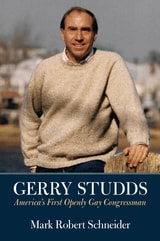
Gerry Studds
America's First Openly Gay CongressmanMark Robert Schneider
University of Massachusetts Press, 2017
The defining moment of his career, however, came in 1983, when he was censured by the House for having had an affair with a page ten years previously. On the floor of Congress, Studds confessed to having behaved inappropriately and then courageously declared that he was a gay man—becoming the country's first openly gay member of Congress. Defying all expectations, Studds won reelection in a bruising campaign. For the rest of his career, he remained loyal to his constituents' concerns while also championing AIDS research and care, leading the effort in Congress to allow gays and lesbians to serve in the military, and opposing the Defense of Marriage Act. Once a deeply conflicted man, he ultimately found a balance between his public service and his private life, which included a happy, legally recognized marriage.
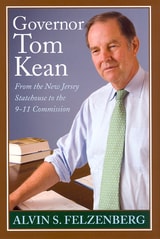
Governor Tom Kean
From the New Jersey Statehouse to the 911 CommissionFelzenberg, Alvin S
Rutgers University Press, 2006
In this first political biography of one of the nation's most popular and successful governors, Alvin S. Felzenberg tells the story of a remarkable career that culminated in an unexpected and crucial contribution to the country-chairmanship of the 9/11 Commission. Felzenberg describes how, early in his political career, Kean worked to transform New Jersey's legislature in the aftermath of court rulings that mandated redistricting in accordance with the "one man, one vote" principle. He discusses Kean's efforts to relieve the urban crisis that followed in the wake of the 1967 Newark riots. He relates how Kean was able to use the New Jersey governorship-purportedly the strongest in the country-to transform a so-called "rust belt" state into a leader in education, environmental responsibility, and economic growth.
Kean's successes in these and other areas caused leaders outside New Jersey to follow in his path. Together with his fellow governors, Kean forged a national consensus on domestic policy between Democratic congresses and Republican presidents, in the process winning for himself a leadership role in his own party. Kean's story serves as an uncommon case of how a Republican loyal to the historic roots and principles of his party can not only win election in a "blue state" but effectively govern it.
Starting from the example the governor set on the state level, Felzenberg's account traces Kean's career to positions of trusted authority on the national stage. After several years of advising presidents, Kean was appointed chairman of the 9/11 Commission. In this role, he made the bipartisan, Congressionally mandated commission one of the most successful in American history.
Drawing on interviews with Kean as well as with state and national leaders, including former presidents Gerald Ford and Bill Clinton and former New York City mayor Ed Koch, Felzenberg not only provides a marvelous biography, but also offers a unique look at American politics during the last four decades of the twentieth century.