Results by title
154 books match the query 'Lesbian Studies' and 4 start with g

Gender, Intersections, and Institutions
Intersectional Groups Building Alliances and Gaining Voice in GermanyEdited by Louise K. Davidson-Schmich
University of Michigan Press, 2017

Girls Will Be Boys
Cross-Dressed Women, Lesbians, and American Cinema, 1908-1934Horak, Laura
Rutgers University Press, 2016
Finalist for 2016 Richard Wall Memorial Award from the Theatre Library Association
Long-listed for the 2017 Best Photography Book Award from the Kraszna-Krausz Foundation
Marlene Dietrich, Greta Garbo, and Katharine Hepburn all made lasting impressions with the cinematic cross-dressing they performed onscreen. What few modern viewers realize, however, is that these seemingly daring performances of the 1930s actually came at the tail end of a long wave of gender-bending films that included more than 400 movies featuring women dressed as men.
Laura Horak spent a decade scouring film archives worldwide, looking at American films made between 1908 and 1934, and what she discovered could revolutionize our understanding of gender roles in the early twentieth century. Questioning the assumption that cross-dressing women were automatically viewed as transgressive, she finds that these figures were popularly regarded as wholesome and regularly appeared onscreen in the 1910s, thus lending greater respectability to the fledgling film industry. Horak also explores how and why this perception of cross-dressed women began to change in the 1920s and early 1930s, examining how cinema played a pivotal part in the representation of lesbian identity.
Girls Will Be Boys excavates a rich history of gender-bending film roles, enabling readers to appreciate the wide array of masculinities that these actresses performed—from sentimental boyhood to rugged virility to gentlemanly refinement. Taking us on a guided tour through a treasure-trove of vintage images, Girls Will Be Boys helps us view the histories of gender, sexuality, and film through fresh eyes.
Given Up for You
A Memoir of Love, Belonging, and BeliefErin O. White
University of Wisconsin Press, 2018
Good Pictures Are a Strong Weapon
Laura Gilpin, Queerness, and Navajo SovereigntyLouise Siddons
University of Minnesota Press, 2024
What are the limits of political solidarity, and how can visual culture contribute to social change?
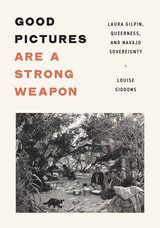
A fundamental dilemma exists in documentary photography: can white artists successfully portray Indigenous lives and communities in a manner that neither appropriates nor romanticizes them? With an attentive and sensitive eye, Louise Siddons examines lesbian photographer Laura Gilpin’s classic 1968 book The Enduring Navaho to illuminate the intersectional politics of photography, Navajo sovereignty, and queerness over the course of the twentieth century.
Gilpin was a New York–trained fine arts photographer who started working with Navajo people when her partner accepted a job as a nurse in Arizona. She spent more than three decades documenting Navajo life and creating her book in collaboration with Navajo friends and colleagues. Framing her lesbian identity and her long relationship with the Navajo people around questions of allyship, Good Pictures Are a Strong Weapon addresses the long and problematic history of White photographers capturing images of Native life. Simultaneously, Siddons uses Gilpin’s work to explore the limitations of White advocacy in a political moment that emphasized the need for Indigenous visibility and voices.
Good Pictures Are a Strong Weapon introduces contemporary Diné (Navajo) artists as interlocutors, critics, and activists whose work embodies and extends the cultural sovereignty politics of earlier generations and makes visible the queerness often left implicit in Gilpin’s photographs. Siddons puts their work in conversation with Gilpin’s, taking up her mandate to viewers and readers of The Enduring Navajo to address Navajo aesthetics, traditions, politics, and people on their own terms.
Retail e-book files for this title are screen-reader friendly with images accompanied by short alt text and/or extended descriptions.