Results by title
998 books match the query 'Life' and 18 start with g
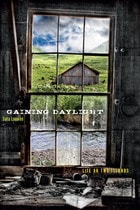
Gaining Daylight
Life on Two IslandsSara Loewen
University of Alaska Press, 2013
Loewen’s writing is richly descriptive; readers can almost feel heat from wood stoves, smell smoking salmon, and spot the ways the ocean blues change with the season. With honesty and humor, Loewen easily draws readers into her world, sharing the rewards of subsistence living and the peace brought by miles of crisp solitude.
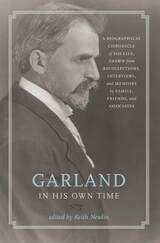
Garland in His Own Time
A Biographical Chronicle of His Life, Drawn from Recollections, Interviews, and Memoirs by Family, Friends, and AssociatesKeith Newlin
University of Iowa Press, 2013
Gentle Flame
The Life and Verse of Dudley, Fourth Lord NorthDale B. J. Randall
Duke University Press, 1983
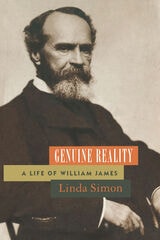
Genuine Reality
A Life of William JamesLinda Simon
University of Chicago Press, 1999
"William James . . . has never seemed so vulnerably human as in Linda Simon's biography. . . . [S]he vivifies James in such a way that his life and thought come freshly alive for the modern reader."—David S. Reynolds, New York Times Book Review
"Superb. . . . Genuine Reality is recommended reading for all soul-searchers."—George Gurley, Chicago Tribune
"Ms. Simon . . . has provided an ideal pathway for James's striding. . . . [Y]ou become engaged in his struggles as if they were your own."—Christopher Lehmann-Haupt, New York Times
"[A]n excellent narrative biography at once sensitively told and lucidly written."—John Patrick Diggins, Wall Street Journal
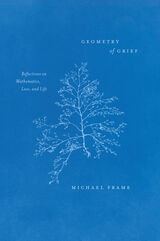
Geometry of Grief
Reflections on Mathematics, Loss, and LifeMichael Frame
University of Chicago Press, 2021
We all know the euphoria of intellectual epiphany—the thrill of sudden understanding. But coupled with that excitement is a sense of loss: a moment of epiphany can never be repeated. In Geometry of Grief, mathematician Michael Frame draws on a career’s worth of insight—including his work with a pioneer of fractal geometry Benoit Mandelbrot—and a gift for rendering the complex accessible as he delves into this twinning of understanding and loss. Grief, Frame reveals, can be a moment of possibility.
Frame investigates grief as a response to an irrevocable change in circumstance. This reframing allows us to see parallels between the loss of a loved one or a career and the loss of the elation of first understanding a tricky concept. From this foundation, Frame builds a geometric model of mental states. An object that is fractal, for example, has symmetry of magnification: magnify a picture of a mountain or a fern leaf—both fractal—and we see echoes of the original shape. Similarly, nested inside great loss are smaller losses. By manipulating this geometry, Frame shows us, we may be able to redirect our thinking in ways that help reduce our pain. Small‐scale losses, in essence, provide laboratories to learn how to meet large-scale losses.
Interweaving original illustrations, clear introductions to advanced topics in geometry, and wisdom gleaned from his own experience with illness and others’ remarkable responses to devastating loss, Frame’s poetic book is a journey through the beautiful complexities of mathematics and life. With both human sympathy and geometrical elegance, it helps us to see how a geometry of grief can open a pathway for bold action.
Geontologies
A Requiem to Late LiberalismElizabeth A. Povinelli
Duke University Press, 2016
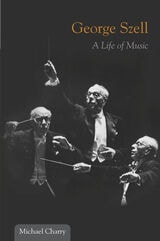
George Szell
A Life of MusicMichael Charry
University of Illinois Press, 2014
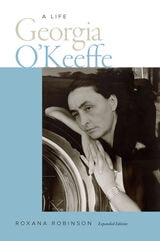
Georgia O'Keeffe
A LifeRoxana Robinson
Brandeis University Press, 2020
When Roxana Robinson’s definitive biography of O’Keeffe was first published in 1989, it received rave reviews and was named a New York Times Notable Book of the Year. This new edition features a new foreword by the author setting O’Keefe in an artistic context over the last thirty years since the book was first published, as well as previously unpublished letters of the young O’Keeffe to her lover, Arthur MacMahon. It also relates the story of Robinson’s own encounter with the artist. As interest in O’Keeffe continues to grow among museum-goers and scholars alike, this book remains indispensable for understanding her life and art.
Gerda Walther
A Life in PhenomenologyAntonio Calcagno
Northwestern University Press, 2027
Exploring the rich phenomenological and psychological insights of Gerda Walther
This is the first major study of Gerda Walther (1897–1977), an important but underappreciated figure in the early phenomenological movement and one of the founding members of the coeducational Freiburg Phenomenological Society. Walther saw herself, along with Hedwig Conrad Martius and Edith Stein, as a student of the phenomenological movement charged with the preservation of its philosophical legacy and the extension of its practice. As Antonio Calcagno elucidates in this learned but accessible biographical account, she served as an important bridge between the Freiburg school of phenomenology, marked by Edmund Husserl’s idealism, and the realist branch that emerged in Munich, where she completed her studies with Alexander Pfänder. Her work has remained little known, however, especially to English-language readers.
Calcagno provides a comprehensive picture of Walther’s philosophical corpus and ideas, from her early investigations to her later writings, while highlighting the originality of her own phenomenological work. He shows how she challenged certain key claims of phenomenology and provided unique solutions to the problems she encountered. The phenomenology that Walther leaves us with is deeply marked by her emphasis on the importance of psyche, spirit, and personhood for achieving a phenomenological methodology and understanding. We find in her work a rich phenomenological psychology that explores not only the limit phenomena of the discipline but also the deep structure of inner psychic life framed in personalist terms.
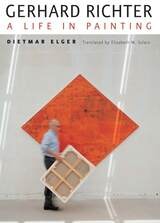
Gerhard Richter
A Life in PaintingDietmar Elger
University of Chicago Press, 2010
Gerhard Richter is one of the most important and influential artists of the post-war era. For decades he has sought innovative ways to make painting more relevant, often through a multifaceted dialogue with photography. Today Richter is most widely recognized for the photo-paintings he made during the 1960s that rely on images culled from mass media and pop culture. Always fascinated with the limits and uncertainties of representation, he has since then produced landscapes, abstractions, glass and mirror constructions, prints, sculptures, and installations.
Though Richter has been known in the United States for quite some time, the highly successful retrospective of his work at the MoMA in 2002 catapulted him to unprecedented fame. Enter noted curator Dietmar Elger, who here presents the first biography of this contemporary artist. Written with full access to Richter and his archives, this fascinating book offers unprecedented insight into his life and work. Elger explores Richter’s childhood in Nazi Germany; his years as a student and mural painter in communist East Germany; his time in the West during the turbulent 1960s and ’70s, when student protests, political strife, and violence tore the Federal Republic of Germany apart; and his rise to international acclaim during the 1980s and beyond.
Richter has always been a difficult personality to parse and the seemingly contradictory strands of his artistic practice have frustrated and sometimes confounded critics. But the extensive interviews on which this book is based disclose a Richter who is far more candid, personal, and vivid than ever before. The result is a book that will be the foundational portrait of this artist for years to come.
Getting A Life
Everyday Uses of AutobiographySidonie Smith
University of Minnesota Press, 1996
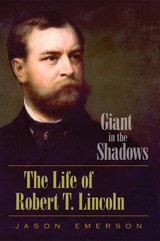
Giant in the Shadows
The Life of Robert T. LincolnJason Emerson
Southern Illinois University Press, 2012
University Press Books for Public and Secondary Schools, 2013 edition
Book of the Year by the Illinois State historical Society, 2013
Although he was Abraham and Mary Lincoln’s oldest and last surviving son, the details of Robert T. Lincoln’s life are misunderstood by some and unknown to many others. Nearly half a century after the last biography about Abraham Lincoln’s son was published, historian and author Jason Emerson illuminates the life of this remarkable man and his achievements in Giant in the Shadows: The Life of Robert T. Lincoln. Emerson, after nearly ten years of research, draws upon previously unavailable materials to offer the first truly definitive biography of the famous lawyer, businessman, and statesman who, much more than merely the son of America’s most famous president, made his own indelible mark on one of the most progressive and dynamic eras in United States history.
Born in a boardinghouse but passing his last days at ease on a lavish country estate, Robert Lincoln played many roles during his lifetime. As a president’s son, a Union soldier, an ambassador to Great Britain, and a U.S. secretary of war, Lincoln was indisputably a titan of his age. Much like his father, he became one of the nation’s most respected and influential men, building a successful law practice in the city of Chicago, serving shrewdly as president of the Pullman Car Company, and at one time even being considered as a candidate for the U.S. presidency.
Along the way he bore witness to some of the most dramatic moments in America’s history, including Robert E. Lee’s surrender at Appomattox Courthouse; the advent of the railroad, telephone, electrical, and automobile industries; the circumstances surrounding the assassinations of three presidents of the United States; and the momentous presidential election of 1912. Giant in the Shadows also reveals Robert T. Lincoln’s complex relationships with his famous parents and includes previously unpublished insights into their personalities. Emerson reveals new details about Robert’s role as his father’s confidant during the brutal years of the Civil War and his reaction to his father’s murder; his prosecution of the thieves who attempted to steal his father’s body in 1876 and the extraordinary measures he took to ensure it would never happen again; as well as details about the painful decision to have his mother committed to a mental facility. In addition Emerson explores the relationship between Robert and his children, and exposes the actual story of his stewardship of the Lincoln legacy—including what he and his wife really destroyed and what was preserved. Emerson also delves into the true reason Robert is not buried in the Lincoln tomb in Springfield but instead was interred at Arlington National Cemetery.
Meticulously researched, full of never-before-seen photographs and new insight into historical events, Giant in the Shadows is the missing chapter of the Lincoln family story. Emerson’s riveting work is more than simply a biography; it is a tale of American achievement in the Gilded Age and the endurance of the Lincoln legacy.
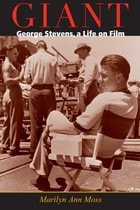
Giant
George Stevens, a Life on FilmMarilyn Ann Moss
University of Wisconsin Press, 2015
Moss documents Stevens’s role as a powerful director who often had to battle the heads of major studios to get his films made his way. She traces the four decades Stevens was a major Hollywood player and icon, from his earliest days at the Hal Roach Studios—where he learned to be a cameraman, writer, and director for Laurel and Hardy features—up to when his films made millions at the box office and were graced by actors such as Elizabeth Taylor, James Dean, Alan Ladd, and Montgomery Clift.
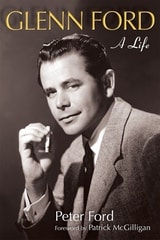
Glenn Ford
A LifePeter Ford
University of Wisconsin Press, 2011
Glenn Ford: A Life chronicles the volatile life, relationships, and career of the renowned actor, beginning with his move from Canada to California and his initial discovery of theater. It follows Ford’s career in diverse media—from film to television to radio—and shows how Ford shifted effortlessly between genres, playing major roles in dramas, noir, westerns, and romances.
This biography by Glenn Ford’s son, Peter Ford, offers an intimate view of a star’s private and public life. Included are exclusive interviews with family, friends, and professional associates, and snippets from the Ford family collection of diaries, letters, audiotapes, unpublished interviews, and rare candid photos. This biography tells a cautionary tale of Glenn Ford’s relentless infidelities and long, slow fade-out, but it also embraces his talent-driven career. The result is an authentic Hollywood story that isn’t afraid to reveal the truth.
Best Books for General Audiences, selected by the American Association of School Librarians
Best Books for General Audiences, selected by the Public Library Reviewers
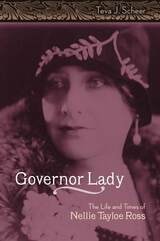
Governor Lady
The Life and Times of Nellie Tayloe RossTeva J. Scheer
University of Missouri Press, 2005
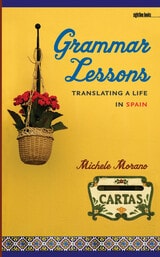
Grammar Lessons
Translating a Life in SpainMichele Morano
University of Iowa Press, 2007
Morano focuses first on her year of living in Oviedo, in the early 1990s, a time spent immersing herself in a new culture and language while working through the relationship she had left behind with an emotionally dependent and suicidal man. Next, after subsequent trips to Spain, she explores the ways that travel sparks us to reconsider our personal histories in the context of larger historical legacies. Finally, she turns to the aftereffects of travel, to the constant negotiations involved in retelling and understanding the stories of our lives. Throughout she details one woman’s journey through vocabulary and verb tense toward a greater sense of her place in the world.
Grammar Lessons illustrates the difficulty and delight, humor and humility of living in a new language and of carrying that pivotal experience forward. Michele Morano’s beautifully constructed essays reveal the many grammars and many voices that we collect, and learn from, as we travel.
Growing Up American
How Vietnamese Children Adapt to Life in the United StatesMin Zhou
Russell Sage Foundation, 1998
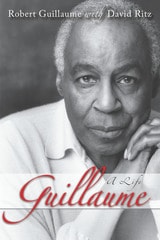
Guillaume
A LifeRobert Guillaume & David Ritz
University of Missouri Press, 2002
Guillaume: A Life is the autobiography of esteemed Broadway, Hollywood, and television star Robert Guillaume. Ten months after suffering a stroke, Guillaume—perhaps best known as television’s Benson—began this autobiography with award-winning author and collaborator David Ritz.
The book goes beyond the recounting of a long and successful career to examine the forces that shaped the man: family, religion, race, and class. Startlingly candid and disarmingly self-aware, Guillaume seeks to know and understand himself, his treatment of the women in his life, and the choices he made along the way. He pursues the truth, however painful it may be, says Ritz, guided by two questions, “Who the hell am I?” and “What made me do what I did?”
Born in St. Louis in 1927 to a young, abused, unstable mother, and reared by a strong, hardworking grandmother, Robert Guillaume managed to move from the poverty and adversity of his youth to a rich, full career as an actor and a singer. Fierce determination and sharp focus enabled this man born to hardship and racial discrimination to study, learn, cultivate his natural talents, and succeed at the performance career he pursued with a vengeance. Guillaume first performed in the strict Catholic schools and churches to which his grandmother, who understood that education would be the key to any success he might achieve, sent him. There his love of classical music was nurtured, and he was encouraged to perform.
From a child longing for his mother’s love to a man unsure of the meaning of love for many of the women in his life, from a young performer struggling to succeed on Broadway and in Hollywood to a grief-stricken father watching his son die of AIDS, Robert Guillaume tells what it was like to realize celebrity and what he sacrificed in the process. Readers will savor the success story of this artist who achieved great recognition and fame, but who never lost sight of his beginnings. Appealing to all audiences, Guillaume is a revealing and poignant autobiography of an extraordinary and distinguished American thespian.