Results by title
1445 books match the query 'Life Sciences' and 45 start with g
Gaian Systems
Lynn Margulis, Neocybernetics, and the End of the AnthropoceneBruce Clarke
University of Minnesota Press, 2020
A groundbreaking look at Gaia theory’s intersections with neocybernetic systems theory
Often seen as an outlier in science, Gaia has run a long and varied course since its formulation in the 1970s by atmospheric chemist James Lovelock and microbiologist Lynn Margulis. Gaian Systems is a pioneering exploration of the dynamic and complex evolution of Gaia’s many variants, with special attention to Margulis’s foundational role in these developments.
Bruce Clarke assesses the different dialects of systems theory brought to bear on Gaia discourse. Focusing in particular on Margulis’s work—including multiple pieces of her unpublished Gaia correspondence—he shows how her research and that of Lovelock was concurrent and conceptually parallel with the new discourse of self-referential systems that emerged within neocybernetic systems theory. The recent Gaia writings of Donna Haraway, Isabelle Stengers, and Bruno Latour contest its cybernetic status. Clarke engages Latour on the issue of Gaia’s systems description and extends his own systems-theoretical synthesis under what he terms “metabiotic Gaia.” This study illuminates current issues in neighboring theoretical conversations—from biopolitics and the immunitary paradigm to NASA astrobiology and the Anthropocene. Along the way, he points to science fiction as a vehicle of Gaian thought.
Delving into many issues not previously treated in accounts of Gaia, Gaian Systems describes the history of a theory that has the potential to help us survive an environmental crisis of our own making.
Gardening with Perennials
Lessons from Chicago's Lurie GardenNoel Kingsbury
University of Chicago Press, 2014
With Gardening with Perennials horticulturalist and garden writer Noel Kingsbury brings a global perspective to the Lurie oasis through a wonderful introduction to the world of perennial gardening. He shows how perennials have much to offer home gardeners, from sustainability—perennials require less water than their annual counterparts—to continuity, as perennials’ longevity makes them a dependable staple.
Kingsbury also explains why Lurie is a perfect case study for gardeners of all locales. The plants represented in this urban oasis were chosen specifically for reliability and longevity. The majority will thrive on a wide range of soils and across a wide climatic range. These plants also can thrive with minimal irrigation, and without fertilizers or chemical control of pests and diseases. Including a special emphasis on plants that flourish in sun, and featuring many species native to the Midwest region, Gardening with Perennials will inspire gardeners around the world to try Chicago-style sustainable gardening.
Gathering Moss
A Natural and Cultural History of MossesRobin Wall Kimmerer
Oregon State University Press, 2003
Winner of the 2005 John Burroughs Medal Award for Natural History Writing
Living at the limits of our ordinary perception, mosses are a common but largely unnoticed element of the natural world. Gathering Moss is a beautifully written mix of science and personal reflection that invites readers to explore and learn from the elegantly simple lives of mosses.
In this series of linked personal essays, Robin Wall Kimmerer leads general readers and scientists alike to an understanding of how mosses live and how their lives are intertwined with the lives of countless other beings. Kimmerer explains the biology of mosses clearly and artfully, while at the same time reflecting on what these fascinating organisms have to teach us.
Drawing on her diverse experiences as a scientist, mother, teacher, and writer of Native American heritage, Kimmerer explains the stories of mosses in scientific terms as well as in the framework of indigenous ways of knowing. In her book, the natural history and cultural relationships of mosses become a powerful metaphor for ways of living in the world.
Gator!
The Making of America’s Iconic Reptile, from First Encounters to Florida ManMark V. Barrow, Jr.
University of Chicago Press, 2026
What this intriguing—and unsettling—apex predator reveals about Americans’ attempts to control and connect with the natural world.
Both a flesh-and-blood critter and the stuff of legend, the alligator inspires as much awe as it does fear. While this apex predator survives mainly on fish, birds, snakes, turtles, and small mammals, it will consume almost anything, including pets, livestock, and—in rare cases—humans. Though dreaded as a man-eater, the alligator has also been cast as a lucrative commodity, a popular roadside attraction, a prized hunting trophy, and even an unlikely household pet.
Gator! tells the riveting story of this iconic predator. Historian Mark V. Barrow, Jr.—a native of Florida, a state famous for its alligators—traces the reptile’s ancient lineage from the age of the dinosaurs to its current status as a cherished mascot and regional icon. He explores its role as a surrogate species, offering vital clues about the health of ecosystems, as well as its profound cultural weight as a totem for Indigenous communities, a mythical sewer-dweller in New York lore, and a disturbing tool of racial oppression used to dehumanize African Americans. Once over-hunted, the alligator has long been celebrated as a triumph of the federal Endangered Species Act. Barrow delves into the nuances of this comeback, one that offers both a cautionary tale of market-driven exploitation and a conservation success story.
An entertaining history of one of North America’s most charismatic animals, Gator! explores how this reptile became a Florida emblem and a national enigma, transforming humans and alligators in the process.
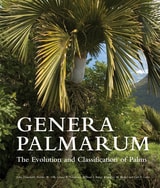
Genera Palmarum
The Evolution and Classification of PalmsJohn Dransfield, Natalie W. Uhl, Conny B. Asmussen, William J. Baker, Madeline Harley, and Carl Lewis
Royal Botanic Gardens, Kew, 2008
In this new edition, genus treatments now include complete descriptions, nomenclature, and etymology, as well as discussions of diversity, distribution, phylogeny, morphology, uses and ecology. All genera are fully illustrated with full-color photographs alongside analytic illustrations, distribution maps, and even electron micrographs of pollen. An updated introduction provides readers with essential background information via authoratative essays on the structure of palms, their chemistry, their history, and much more.
Fully revised for a new generation of researchers and gardening enthusiasts, Genera Palmarum continues to be the gold-standard reference work on palms.
General Cytology
A Textbook of Cellular Structure and Function for Students of Biology and MedicineEdited by Edmund Vincent Cowdry
University of Chicago Press, 1924
This volume was, at the time of publication, the largest and most comprehensive book on the subject of cytology, a branch of zoology which had grown considerably in the years before 1924. It was written by the foremost cytologists in the United States, including Robert Chambers, Edwin G. Conklin, Edmund V. Cowdry, Merle H. Jacobs, Ernest E. Just, Margaret R. Lewis, Warren H. Lewis, Frank R. Lillie, Ralph S. Lillie, Clarence E. McClung, Albert P. Mathews, Thomas H. Morgan, and Edmund B. Wilson.
Generic Tree Flora of Madagascar
George E. Schatz
Royal Botanic Gardens, Kew, 2001
Genes in Development
Re-reading the Molecular ParadigmEva M. Neumann-Held and Christoph Rehmann-Sutter, eds.
Duke University Press, 2006
Contributors discuss alternatives to the programmatic view of dna, including the developmental systems approach, methodical culturalism, the molecular process concept of the gene, the hermeneutic theory of description, and process structuralist biology. None of the approaches cast doubt on the notion that dna is tremendously important to biological life on earth; rather, contributors examine different ideas of how dna should be represented, evaluated, and explained. Just as ideas about genetic codes have reached far beyond the realm of science, the reconceptualizations of genetic theory in this volume have broad implications for ethics, philosophy, and the social sciences.
Contributors. Thomas Bürglin, Brian C. Goodwin, James Griesemer, Paul Griffiths, Jesper Hoffmeyer, Evelyn Fox Keller, Gerd B. Müller, Eva M. Neumann-Held, Stuart A. Newman, Susan Oyama, Christoph Rehmann-Sutter, Sahotra Sarkar, Jackie Leach Scully, Gerry Webster, Ulrich Wolf

Genetic Perspectives in Biology and Medicine
Edward Garber
University of Chicago Press, 1985
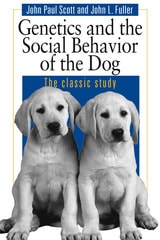
Genetics and the Social Behaviour of the Dog
John Paul Scott and John L. Fuller
University of Chicago Press, 1974
Scott and Fuller’s classic study of dog behavior gathers into one volume the authoritative information that came from their twenty years of research at the Jackson Laboratory. Central to their book is the role heredity plays in the development of behavior. Giving puppies an environment designed on the principles of a well-run school, Scott and Fuller tested five breeds representing the major dog groups and carried out a Mendelian experiment with two of the most different breeds: the basenji and the cocker spaniel.
They found that heredity affects almost every trait tested; that sex affects aggressiveness and the dominance order, but not trainability and problem-solving; that emotional traits profoundly influence performance; that, although breeds differ widely in emotional and motivational characteristics, none shows distinct superiority in problem solving; and that detailed statistical analyses indicate a highly complex pathway between primary gene action and its final effect on behavior.
Included is important information on:
• rearing methods
• the origin and history of dog breeds
• basic behavior patterns
• the physiological and behavioral development of puppies

Genetics, Disability, and Deafness
John Vickrey Van Cleve
Gallaudet University Press, 2004
Pulitzer Prize-winning author Louis Menand begins this wide-ranging volume with an essay that extols diversity and warns of the dangers of modifying the human genome. Nora Groce reviews the ways that societies have defined disability and creates an interpretive framework for discussing the relationship between culture and disability.
In essays devoted to historical perspective, Brian H. Greenwald comments upon the real “toll” taken by A. G. Bell’s insistence upon oralism, while Joseph J. Murray weighs the nineteenth-century debate over whether deaf-deaf marriages should be encouraged. John S. Schuchman’s chilling account of deafness and eugenics in the Nazi era adds wrenching reinforcement to the impetus to include disabled people in genetics debates.
Mark Willis offers an intensely personal reflection on the complexities of genetic alteration, addressing both his heart condition and his blindness in surprisingly different ways. Anna Middleton extends Willis’s concepts in her discussion of couples currently considering the use of genetic knowledge and technology to select for or against a gene that causes deafness.
In the part on the science of genetics, Orit Dagan, Karen B. Avraham, Kathleen S. Arnos, and Arti Pandya clarify the choices presented by genetic engineering, and geneticist Walter E. Nance emphasizes the importance of science in offering individuals knowledge from which they can fashion their own decisions. In the concluding section, Christopher Krentz raises moral questions about the ever-continuing search for human perfection, and Michael Bérubé argues that disability should be considered democratically to ensure full participation of disabled people in all decisions that might affect them.
Genomes and What to Make of Them
Barry Barnes and John Dupré
University of Chicago Press, 2008
For the nonscientist, the claims and counterclaims are dizzying—what does it really mean to understand the genome? Barry Barnes and John Dupré offer an answer to that question and much more in Genomes and What to Make of Them, a clear and lively account of the genomic revolution and its promise. The book opens with a brief history of the science of genetics and genomics, from Mendel to Watson and Crick and all the way up to Craig Venter; from there the authors delve into the use of genomics in determining evolutionary paths—and what it can tell us, for example, about how far we really have come from our ape ancestors. Barnes and Dupré then consider both the power and risks of genetics, from the economic potential of plant genomes to overblown claims that certain human genes can be directly tied to such traits as intelligence or homosexuality. Ultimately, the authors argue, we are now living with a new knowledge as powerful in its way as nuclear physics, and the stark choices that face us—between biological warfare and gene therapy, a new eugenics or a new agricultural revolution—will demand the full engagement of both scientists and citizens.
Written in straightforward language but without denying the complexity of the issues, Genomes and What to Make of Them is both an up-to-date primer and a blueprint for the future.
Genomic Imprinting and Kinship
Haig, David
Rutgers University Press, 2001
Gentry's Rio Mayo Plants
The Tropical Deciduous Forest and Environs of Northwest MexicoRevised and Edited by Paul S. Martin, David Yetman, Mark Fishbein, Phil Jenkins, Thomas R. Van Devender, and Rebecca K. Wilson
University of Arizona Press, 1998
Genus Sorbus
mountain ash and other rowansHugh McAllister
Royal Botanic Gardens, Kew, 2005
Genus Utricularia
a taxonomic monographP. G. Taylor
Royal Botanic Gardens, Kew, 1989
Geoffroy Saint-Hilaire
A Visionary NaturalistHerve Le Guyader
University of Chicago Press, 2003
This was a revolutionary idea—and one vigorously opposed by Geoffroy's colleague Georges Cuvier, a great anatomist and one of the giants of French science. In 1830, their long-running disagreement erupted into furious public debate. Geoffroy argued that all vertebrates shared the same basic body plan not just with each other but with insects as well. Cuvier strenuously disputed this idea, which he saw as tantamount to a belief in "transformism"—arguing instead that each species had its own special and permanent form.
With Geoffroy Saint-Hilaire, Hervé Le Guyader provides an analysis not only of that infamous debate but also of Geoffroy's bold intuitions about anatomy and development. Featuring Geoffroy's published version of the 1830 debates—translated into English for the first time—the book also illustrates how Geoffroy's prescient insights foreshadowed some of the most recent discoveries in evolutionary and developmental biology.
Geology, Ecology, and Human History of the San Luis Valley
Jared Maxwell Beeton
University Press of Colorado, 2020
The first section, “The Geology and Ecology of the San Luis Valley,” surveys the geomorphology, hydrology, animal and plant life, conservation, management, and mining of the valley’s varied terrain. The second section, “Human History of the San Luis Valley,” recounts the valley’s human visitation and settlement, from early indigenous life to Spanish exploration to Hispanic and Japanese settlements. This section introduces readers to the region’s wide range of religious identities—Catholic, Latter-day Saint, Buddhist, Jehovah’s Witness, Amish, and Mennonite—and diverse linguistic traditions, including Spanish, English, Dutch, Danish, Japanese, and Mayan. The final section, “Travel Itineraries,” addresses recreation, specifically fly-fishing and rock climbing.
The book provides a comprehensive overview of the endemic flora and fauna, human history of indigenous lifeways, and diverse settlement patterns that have shaped the region. The Geology, Ecology, and Human History of the San Luis Valley will appeal to students and scholars of geology, ecology, environmental history, and cultural history, as well as residents and tourists seeking to know more about this fascinating and integral part of Colorado and New Mexico.
Contributors:
Benjamin Armstrong, Timothy Armstrong, Deacon Aspinwall, Robert Benson, Lorrie Crawford, Kristy Duran, Jeff Elison, Eric Harmon, Devin Jenkins, Bradley G. Johnson, Robert M. Kirkham, Bessie Konishi, Angie Krall, Richard D. Loosbrock, Richard Madole, A. W. Magee, Victoria Martinez, James McCalpin, Mark Mitchell, R. Nathan Pipitone, Andrew Valdez, Rio de la Vista, Damián Vergara Wilson
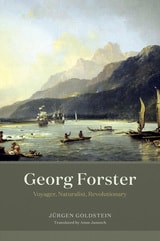
Georg Forster
Voyager, Naturalist, RevolutionaryJürgen Goldstein
University of Chicago Press, 2019
“Stunning. . . . Read this book: in equal measure it will give you hope and trouble your dreams.”—Laura Dassow Walls, author of Henry David Thoreau: A Life and Passage to Cosmos: Alexander von Humboldt’s Shaping of America
Georg Forster (1754–94) was in many ways self-taught and rarely had two cents to rub together, but he became one of the most dynamic figures of the Enlightenment: a brilliant writer, naturalist, explorer, illustrator, translator—and a revolutionary. Granted the extraordinary opportunity to sail around the world as part of Captain James Cook’s fabled crew, Forster touched icebergs, walked the beaches of Tahiti, visited far-flung foreign nations, lived with purported cannibals, and crossed oceans and the equator. Forster recounted the journey in his 1777 book A Voyage Round the World, a work of travel and science that not only established Forster as one of the most accomplished stylists of the time—and led some to credit him as the inventor of the literary travel narrative—but also influenced other German trailblazers of scientific and literary writing, most notably Alexander von Humboldt. A superb essayist, Forster made lasting contributions to our scientific—and especially botanical and ornithological—knowledge of the South Seas.
Having witnessed more egalitarian societies in the southern hemisphere, Forster returned after more than three years at sea to a monarchist Europe entering the era of revolution. When, following the French Revolution of 1789, French forces occupied the German city of Mainz, Forster became a leading political actor in the founding of the Republic of Mainz—the first democratic state on German soil.
In an age of Kantian reason, Forster privileged experience. He claimed a deep connection between nature and reason, nature and politics, nature and revolution. His politics was radical in its understanding of revolution as a natural phenomenon, and in this often overlooked way his many facets—as voyager, naturalist, and revolutionary—were intertwined.
Yet, in the constellation of the Enlightenment’s trailblazing naturalists, scientists, political thinkers, and writers, Forster’s star remains relatively dim today: the Republic of Mainz was crushed, and Forster died in exile in Paris. This book is the source of illumination that Forster’s journey so greatly deserves. Tracing the arc of this unheralded polymath’s short life, Georg Forster explores both his contributions to literature and science and the enduring relationship between nature and politics that threaded through his extraordinary four decades.
Georges Cuvier, Fossil Bones, and Geological Catastrophes
New Translations and Interpretations of the Primary TextsMartin J. S. Rudwick
University of Chicago Press, 1997
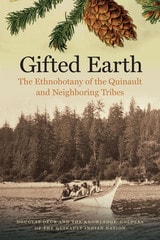
Gifted Earth
The Ethnobotany of the Quinault and Neighboring TribesDouglas Deur
Oregon State University Press, 2022
Gifted Earth features traditional Native American plant knowledge, detailing the use of plants for food, medicines, and materials. It presents a rich and living tradition of plant use within the Quinault Indian Nation in a volume collaboratively developed and endorsed by that tribe.
The Quinault Reservation on the Olympic Peninsula of Washington state is a diverse tribal community, embodying the traditional knowledge of tribes along the entire Pacific Northwest coast. Its membership consists of descendants of many tribes—from the northwestern Olympic Peninsula to the northern Oregon coast—including the Quinault, but also many others who were relocated to the reservation in the nineteenth and early twentieth centuries. Individuals descended from these tribal communities, including Chinook, Chehalis, Hoh, Quileute, Queets, Cowlitz, Tillamook, Clatsop, and others, have contributed to Gifted Earth, giving it remarkable breadth and representation.
A celebration of enduring Native American knowledge, this book will help non-specialists as they discover the potential of the region’s wild plants, learning how to identify, gather, and use many of the plants that they encounter in the Northwestern landscape. Part ethnobotanical guide and part “how-to” manual, Gifted Earth also prepares plant users for the minor hazards and pitfalls that accompany their quest—from how to avoid accidentally eating a bug hidden within a salal berry to how to prevent blisters when peeling the tender stalks of cow parsnip.
As beautiful as it is informative, Gifted Earth sets the standard for a new generation of ethnobotanical guides informed by the values, vision, and voice of Native American communities eager to promote a sustainable, balanced relationship between plant users and the rich plant communities of traditional tribal lands.
Gleason's Plants of Michigan
A Field GuideRevised by Richard K. Rabeler
University of Michigan Press, 1998
“For every plant enthusiast in the Great Lakes State, and . . . in the adjoining ones as well.”
—John J. Pipoly III, SIDA
“A very handy field guide . . . this book will be of use to anyone in northeastern North America.”
—C. Barre Hellquist, Rhodora
“It can be used to identify most of the plants . . . in Michigan and adjacent areas.”
—James E. Eckenwalder, Wildflower
Gleason’s Plants of Michigan is a major revision and expansion of The Plants of Michigan by Henry A. Gleason—the 1918 classic field guide to the flowering plants and trees found in Michigan, neighboring Great Lakes States, and southern Ontario. Richard K. Rabeler has completely updated the family descriptions and added easy-to-use keys. Information on habitats and geographical distribution is now included as well as a comprehensive index of plant names, an illustrated section on terminology, a glossary, and an introduction to botany in Michigan.
Gleason’s Plants of Michigan will be useful to naturalists, environmental specialists, botanists, and everyone who loves the wildflowers and native flora of Michigan and the surrounding areas.

Global Environmental History
I. G. Simmons
University of Chicago Press, 2008
A far-reaching approach that considers the truly global picture and recognizes the contributions of many disciplines—including the natural sciences, the social sciences, and increasingly, the humanities—Global Environmental History focuses not only on the material world but also on humans’ ideas about the planet and their place on it. Taking as his starting point the major phases of human technological evolution of the last 12,000 years, Simmons considers how these changes have affected the natural world and goes on to assess the response to conditions such as climate change. By putting today’s environmental preoccupations into a long-term perspective, Simmons reveals the history of some current anxieties.
A timely examination of the interrelation of history and nature, Simmons’s book will be welcomed by any concerned reader interested in the origins of the modern environmental crisis.
Globalization and New Geographies of Conservation
Edited by Karl S. Zimmerer
University of Chicago Press, 2006
Globalization and New Geographies of Conservation makes four important arguments about the recent coupling of conservation and globalization that is reshaping the place of nature in human-environmental change. First, it has led to an unprecedented number of spatial arrangements whose environmental management goals and prescribed activities vary along a spectrum from strict biodiversity protection to sustainable utilization involving agriculture, food production, and extractive activities. Conservation and globalization are also leading, by necessity, to new scales of management in these activities that rely on environmental science, thus shifting the spatial patterning of humans and the environment. This interaction results, as well, in the unprecedented importance of boundaries and borders; transnational border issues pose both opportunities and threats to global conservation proposed by organizations and institutions that are themselves international. Lastly, Globalization and New Geographies of Conservation argues that the local level has been integral to globalization, while the regional level is often eclipsed at the peril of the successful implementation of conservation and management programs.
Bridging the gap between geography and life science, Globalization and New Geographies of Conservation will appeal to a broad range of students of the environment, conservation planning; biodiversity management, and development and globalization studies.
Goats in America
A Cultural HistoryTami Parr
Oregon State University Press, 2025
Since arriving in North America with cattle and other domesticated livestock in the sixteenth century, goats have provided people sustenance and valuable products, including milk, meat, and mohair. But humans did not appreciate the animals, and as a result, throughout much of American history goats were persecuted as public nuisances and symbols of degenerate behavior. Nevertheless, over the centuries the tenacious goat has overcome many of these stereotypes and secured a spot in the hearts and minds of modern Americans, who love goat cheese and embrace goats as social media stars.
Examining key moments and notable developments in goat history and culture, Goats in America outlines the history and evolving role of goats in communities across the country, from San Francisco and New York City to rural Wisconsin and the Navajo Nation. Parr shows that the evolving reputation of goats in American society ultimately reveals more about humans than it does about goats themselves. So, the next time you are enjoying your favorite goat cheese, take a moment to consider the history and role of goats within American culture.
Gone Fishin'
The 100 Best Spots in New JerseyManny Luftglass
Rutgers University Press, 1998
Grab your tackle and hit the road with Ron Bern and Manny Luftglass as they take you to the choicest places to fish in New York in Gone Fishin': The 100 Best Spots in New York, their follow-up to the highly successful Gone Fishin': The 100 Best Spots in New Jersey.
Truly great freshwater and saltwater fishing abounds throughout the state, from the classic Catskills trout streams to the mighty Hudson and Delaware rivers; from Lake Ontario to the Finger Lakes; from Long Island Sound to the bluewater canyons off the coast; from saltwater bays to artificial reefs; from the smaller sweetwater rivers and New York City reservoirs to surprising trout streams and bass ponds on Long Island.
Luftglass and Bern provide readers with immediately useful insights into each of the 100 best sites. They furnish easy-to-follow directions, descriptions of the body of water, boat launch information, and detailed advice on live and artificial bait, fishing methods, equipment, depths, best times of day and year, secret tips particular to each site, and even specific places to work bait or lures. Gone Fishin' also includes places that are good for children, as well as those which are handicapped accessible.
Throughout the book, Bern and Luftglass share anecdotes about their own fishing adventures and some of the big ones that didn't get away in their more than 33 years of fishing together. The information they cram into every chapter will help you find the spot, fish it more effectively, and catch more fish.
Whether you fish 150 times a year or you are planning to fish for the first time, you're sure to fall hook, line, and sinker for this entertaining and educational guide.
Gorilla Society
Conflict, Compromise, and Cooperation Between the SexesAlexander H. Harcourt and Kelly J. Stewart
University of Chicago Press, 2007
Societies develop as a result of the interactions of individuals as they compete and cooperate with one another in the evolutionary struggle to survive and reproduce successfully. Gorilla society is arranged according to these different and sometimes conflicting evolutionary goals of the sexes. In seeking to understand why gorilla society exists as it does, Alexander H. Harcourt and Kelly J. Stewart bring together extensive data on wild gorillas, collected over decades by numerous researchers working in diverse habitats across Africa, to illustrate how the social system of gorillas has evolved and endured.
Gorilla Society introduces recent theories explaining primate societies, describes gorilla life history, ecology, and social systems, and explores both sexes’ evolutionary strategies of survival and reproduction. With a focus on the future, Harcourt and Stewart conclude with suggestions for future research and conservation. An exemplary work of socioecology from two of the world’s best known gorilla biologists, Gorilla Society will be a landmark study on a par with the work of George Schaller—a synthesis of existing research on these remarkable animals and the societies in which they live.
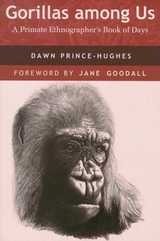
Gorillas among Us
A Primate Ethnographer’s Book of DaysDawn Prince-Hughes; Foreword by Jane Goodall
University of Arizona Press, 2001
Dawn Prince-Hughes is an extraordinary researcher. She does not experiment or measure but instead sits on a wooden bench for hours each day, watching captive gorillas through the enclosure where other visitors average five-second stops. Her patience is rewarded with astounding observations—she watches gorillas make and use tools, bury a dead crow, give birth, and comfort and care for each other.
In Gorillas among Us, Prince-Hughes has compressed years of gorilla observation into a composite diary chronicling the days of one gorilla family. She creates a blended portrait of both peoples—gorilla and human. The entries capture significant observations, which often prompt brief discussions of gorillas’ captivity, diet, communication, aesthetic preferences, social behavior, and play. Several chapters end with thought-provoking meditations on human values. The final section, “More about Gorillas,” provides a concise, accessible introduction to gorilla natural history.
This book will delight and move anyone with an interest in animals, and it also makes a significant contribution to the scarce literature on captive gorillas. Prince-Hughes's observations of tool use by gorillas will interest scientists, and even a casual reader will come away with a new sense of the power of observation. The author hopes to change the way we look at animals in the wild and in captivity, and laments that zoo visitors pause so briefly in front of the gorilla enclosure, rushing on with their assumptions unchanged, without really seeing the gorillas.
By turns opinionated and descriptive, quirky and authoritative, Prince-Hughes draws us into the family life of captive gorillas and into a consideration of our own culture. Readers will learn something new about gorillas and themselves on every page of this poignant story. The book testifies to the potential for interspecies compassion and the love that one person can find in a family of gorillas.

Grammar, Geometry, and Brain
Jens Erik Fenstad
CSLI, 2010
This original study considers the effects of language and meaning on the brain. Jens Erik Fenstad—an expert in the fields of recursion theory, nonstandard analysis, and natural language semantics—combines current formal semantics with a geometric structure in order to trace how common nouns, properties, natural kinds, and attractors link with brain dynamics.
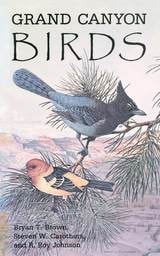
Grand Canyon Birds
Historical Notes, Natural History and EcologyBryan T. Brown
University of Arizona Press, 1987
"Will benefit all amateur naturalists because of its survey of the life zone patterns in [the] southwestern United States." —Science Books & Films
"The subtitle accurately reflects the contents of this excellent book on the birds of a unique natural wonder and national treasure. . . . An annotated checklist discusses the status and abundance of each of the over 300 species of birds known to have occurred in the Grand Canyon region, which is defined here as the river between Glen Canyon Dam and Lake Mead and the contiguous plateaus to the north and south." —Journal of Arizona History
Grandmotherhood
The Evolutionary Significance of the Second Half of Female LifeVoland, Eckart
Rutgers University Press, 2014
By the year 2030, the average life expectancy of women in industrialized countries could reach ninety—exceeding that of men by about ten years. At the present time, postmenopausal women represent more than fifteen percent of the world’s population and this figure is likely to grow.
From an evolutionary perspective, these demographic numbers pose some intriguing questions. Darwinian theory holds that a successful life is measured in terms of reproduction. How is it, then, that a woman’s lifespan can greatly exceed her childbearing and childrearing years? Is this phenomenon simply a byproduct of improved standards of living, or do older women—grandmothers in particular—play a measurable role in increasing their family members’ biological success?
Until now, these questions have not been examined in a thorough and comprehensive manner. Bringing togethertheoretical and empirical work byinternationally recognized scholars in anthropology, psychology, ethnography, and the social sciences, Grandmotherhood explores the evolutionary purpose and possibilities of female post-generative life. Students and scholars of human evolution, anthropology, and even gerontology will look to this volume as a major contribution to the current literature in evolutionary studies.
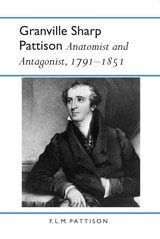
Granville Sharp Pattison
Anatomist and Antagonist, 1791-1851F. L. M. Pattison
University of Alabama Press, 1987
The stormy life of one of the most colorful and complex characters in early 19th-century medicine
Grasses of Wisconsin
The Taxonomy, Ecology, and Distribution of the Gramineae Growing in the State without CultivationNorman C. Fassett
University of Wisconsin Press, 1997
Grasses of the Intermountain Region
Laurel K. Anderton and Mary E. Barkworth
Utah State University Press, 2009
Grasses of the Northeast
A Manual of the Grasses of New England and Adjacent New YorkDennis W. Magee
University of Massachusetts Press, 2014
This book is designed to serve as a reference work, classroom textbook, and field manual for botanists, naturalists, and students interested in learning to identify and learn about the distinguishing features of grasses of the northeastern United States. Included are more than 380 species of grasses that have been documented as occurring in the region. The volume contains 246 range maps and 269 line drawings that clarify descriptions used in the keys and illustrate characteristics of the various kinds of grasses. Dennis Magee also provides a description of each genus and species along with synonyms and habitats. For anyone interested in an up-to-date treatment of the grasses of greater New England, this volume will be an invaluable resource. It is the only comprehensive technical guide devoted exclusively to the grasses of this region and presents a wealth of information in a precise, clear format.
The geographic scope of the work extends from the Canadian border south through Long Island and west to the Hudson River. But given the considerable overlap with the grass flora to the adjacent north, south, and west, the book will also be useful beyond New England and the bordering New York counties.
The volume includes an illustrated glossary of essential terms and concepts and a “how to use this manual” section. A CD-ROM with a multiple-entry identification guide, and hundreds of accompanying photographic images of individual species, is provided in a sleeve inside the back cover of the book.
Grasses
Bromus to Paspalum, Second EditionRobert H. Mohlenbrock
Southern Illinois University Press, 2002
Since the publication of the first edition of Grasses: Bromus to Paspalumin 1972, twenty-two additional taxa of grasses have been discovered in Illinois that are properly placed in this volume. In addition, numerous nomenclatural changes have occurred for plants previously discovered, and many distributional records have been added. New keys have been prepared for each genus where additional species from Illinois are known. For new species, full-page illustrations are provided. This second edition updates the status of Illinois grasses. The book features 263 figures from the first edition plus 21 new figures for this edition by Paul W. Nelson.
Genera of grasses included in this work are Aegilops, Agropyron, Agrostis, Aira, Alopecurus, Anthoxanthum, Avena, Beckmannia, Briza, Bromus, Calamagrostis, Cinna, Dactylis, Deschampsia, Elyhordeum, Elymus, Elytrigia, Festuca, Hierochloe, Holcus, Hordeum, Koeleria, Lolium, Milium, Paspalum, Pennisetum, Phalaris, Phleum, Poa, Puccinellia, Sclerochloa, Secale, Sphenopholis, Torreyochloa, Triticum, and Vulpia.
Grasses
Panicum to Danthonia, Second EditionRobert H. Mohlenbrock
Southern Illinois University Press, 2001
Since the publication of the first edition of Grasses: Panicum to Danthonia in 1973, twenty additional taxa of grasses have been discovered in Illinois that are properly placed in this volume. In addition, numerous nomenclatural changes have occurred for plants already known from the state, and many distributional records have been added. This second edition updates the status of grasses in Illinois. Paul W. Nelson has provided illustrations for all of the additions.
Because the nature of grass structures is generally so different from that of other flowering plants, a special terminology is applied to them. In his introduction, Robert H. Mohlenbrock cites these terms, with descriptions that make the identification of unknown specimens possible. Mohlenbrock’s division of the grass family into subfamilies and tribes is a major departure from the sequence usually found in most floristic works in North America.
Synonyms that have been applied to species in the northeastern United States are given under each species. A description based primarily on Illinois material covers the more important features of the species. The common names—Paflic Grass, Billion Dollar Grass or Japanese Millett, Thread Love Grass, and Goose Grass—are the ones used locally in the state. The habitat designation and dot maps showing county distribution of each grass are provided only for grasses in Illinois, but the overall range for each species is also given.

Great Lakes Chronicle
Essays on Coastal WisconsinWisconsin Coastal Management
Wisconsin Historical Society Press, 2018
Great Transformations in Vertebrate Evolution
Edited by Kenneth P. Dial, Neil Shubin, and Elizabeth L. Brainerd
University of Chicago Press, 2015
This book gathers a diverse team of renowned scientists to capture the excitement of these new discoveries in a collection that is both accessible to students and an important contribution to the future of its field. Marshaling a range of disciplines—from paleobiology to phylogenetics, developmental biology, ecology, and evolutionary biology—the contributors attack particular transformations in the head and neck, trunk, appendages such as fins and limbs, and the whole body, as well as offer synthetic perspectives. Illustrated throughout, Great Transformations in Vertebrate Evolution not only reveals the true origins of whales with legs, fish with elbows, wrists, and necks, and feathered dinosaurs, but also the relevance to our lives today of these extraordinary narratives of change.
Green Planet
How Plants Keep the Earth AliveRice, Stanley A
Rutgers University Press, 2012
Beginning with an overview of how human civilization has altered the face of the Earth, particularly by the destruction of forests, the book details the startling consequences of these actions. Rice provides compelling reasons for government officials, economic leaders, and the public to support efforts to save threatened and endangered plants. Global campaigns to solve environmental problems with plants, such as the development of green roofs and the Green Belt Movement—a women's organization in Kenya that empowers communities worldwide to protect the environment—show readers that efforts to save wild plants can be successful and beneficial to the economic well-being of nations.
Through current scientific evidence, readers see that plants are vital to the ecological health of our planet and understand what can be done to lead to a better—and greener—future
Benefits of plants:
- Help modulate greenhouse gases
- Produce almost all oxygen in the air
- Create cool shade that reduces energy costs
- Prevent floods, droughts, and soil erosion
- Produce all of the food in the world
- Create and preserve soil
- Create natural habitats
- Heal the landscape after natural and human disasters
Gregor Mendel's Experiments on Plant Hybrids
Corcos, Alain F
Rutgers University Press, 1993
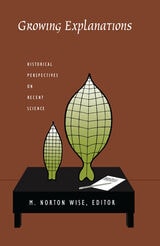
Growing Explanations
Historical Perspectives on Recent ScienceM. Norton Wise, ed.
Duke University Press, 2004
Written by leading historians and philosophers of science, these essays examine the range of subjects, people, and goals involved in changing the character of scientific analysis over the last several decades. They highlight the alternatives that fields as diverse as string theory, fuzzy logic, artificial life, and immunology bring to the forms of explanation that have traditionally defined scientific modernity. A number of the essays deal with the mathematical and physical sciences, addressing concerns with hybridity and the materials of the everyday world. Other essays focus on the life sciences, where questions such as “What is life?” and “What is an organism?” are undergoing radical re-evaluation. Together these essays mark the contours of an ongoing revolution in scientific explanation.
Contributors. David Aubin, Amy Dahan Dalmedico, Richard Doyle, Claus Emmeche, Peter Galison, Stefan Helmreich, Ann Johnson, Evelyn Fox Keller, Ilana Löwy, Claude Rosental, Alfred Tauber

Guide to the Flowers of Western China
Christopher Grey-Wilson and Phillip Cribb
Royal Botanic Gardens, Kew, 2011
Unrivaled in the temperate latitudes of the world, China’s rich flora comprises 30,000 species of plants, and nowhere is this floral richness more evident than in western China. With its lush forests, meandering rivers, and majestic mountains, the west of China has been a center of plant exploration for over two centuries, giving rise to many well-known species of trees, shrubs, perennials, and bulbs that populate our parks and botanical institutes, including rhododendron, orchids, peonies, and roses.
Guide to the Flowers of Western China describes and illustrates more than two thousand species, from the common to the endemic to the extremely rare. Plant families are arranged following the latest DNA-based classification, making this pictorial guide— the largest and most comprehensive on western China ever published—essential for gardeners and plant scientists.
Celebrating the wealth of western China’s vast flora, this magnificent volume will enable the horticulturally inclined traveler (or armchair traveler) to identify many of the plants encountered in the wild.
Guide to the Flowers of Western China
Christopher Grey-Wilson and Phillip Cribb
Royal Botanic Gardens, Kew, 2023
Since the publication of the first edition of Guide to the Flowers of Western China in 2011, there have been great strides in knowledge of the flora of China through international collaboration. Many plants included in the first edition have been revisited in the wild, while areas hitherto inaccessible have opened up, if sometimes only temporarily. Great advances in systematic botany have occurred since the publication of the first edition, particularly with the widespread availability of rapid DNA analysis. The result of this has been an influx of new photographs and data, and the need for a second edition of Guide to the Flowers of Western China.
Gut Anthro
An Experiment in Thinking with MicrobesAmber Benezra
University of Minnesota Press, 2023
A fascinating ethnography of microbes that opens up new spaces for anthropological inquiry
The trillions of microbes in and on our bodies are determined by not only biology but also our social connections. Gut Anthro tells the fascinating story of how a sociocultural anthropologist developed a collaborative “anthropology of microbes” with a human microbial ecologist to address global health crises across disciplines. It asks: what would it mean for anthropology to act with science? Based partly at a preeminent U.S. lab studying the human microbiome, the Center for Genome Sciences at Washington University, and partly at a field site in Bangladesh studying infant malnutrition, it examines how microbes travel between human guts in the “field” and in microbiome laboratories, influencing definitions of health and disease, and how the microbiome can change our views on evolution, agency, and life.
As lab scientists studied the interrelationships between gut microbes and malnutrition in resource-poor countries, Amber Benezra explored ways to reconcile the scale and speed differences between the lab, the intimate biosocial practices of Bangladeshi mothers and their children, and the looming structural violence of poverty. In vital ways, Gut Anthro is about what it means to collaborate—with mothers, local field researchers in Bangladesh, massive philanthropic global health organizations, with the microbiome scientists, and, of course, with microbes. It follows microbes through various enactments in scientific research—microbes as kin, as data, and as race. Revealing how racial categories are used in microbiome research, Benezra argues that microbial differences need transdisciplinary collaboration to address racial health disparities without reifying race as a straightforward biological or social designation.
Gut Anthro is a tour de force of science studies and medical anthropology as well as an intensely personal and deeply theoretical accounting of what it means to do anthropology today.
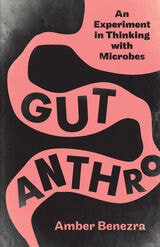
Cover alt text:
Black background overlaid with a pink organic path suggestive of a human digestive system. Title appears within the guts as if being processed.