Results by title
642 books match the query 'Linguistics' and 8 start with g
Gen Z, Explained
The Art of Living in a Digital AgeRoberta Katz, Sarah Ogilvie, Jane Shaw, and Linda Woodhead
University of Chicago Press, 2021
Born since the mid-1990s, members of Generation Z comprise the first generation never to know the world without the internet, and the most diverse generation yet. As Gen Z starts to emerge into adulthood and enter the workforce, what do we really know about them? And what can we learn from them? Gen Z, Explained is the authoritative portrait of this significant generation. It draws on extensive interviews that display this generation’s candor, surveys that explore their views and attitudes, and a vast database of their astonishingly inventive lexicon to build a comprehensive picture of their values, daily lives, and outlook. Gen Z emerges here as an extraordinarily thoughtful, promising, and perceptive generation that is sounding a warning to their elders about the world around them—a warning of a complexity and depth the “OK Boomer” phenomenon can only suggest.
Much of the existing literature about Gen Z has been highly judgmental. In contrast, this book provides a deep and nuanced understanding of a generation facing a future of enormous challenges, from climate change to civil unrest. What’s more, they are facing this future head-on, relying on themselves and their peers to work collaboratively to solve these problems. As Gen Z, Explained shows, this group of young people is as compassionate and imaginative as any that has come before, and understanding the way they tackle problems may enable us to envision new kinds of solutions. This portrait of Gen Z is ultimately an optimistic one, suggesting they have something to teach all of us about how to live and thrive in this digital world.
General Characteristics of the Germanic Languages
Antoine Meillet
University of Alabama Press, 2005
German in Head-Driven Phrase Structure Grammar
Edited by John Nerbonne, Carl Pollard, and Klaus Netter
CSLI, 1993
The theoretical background for these essays can be found in Information-Based Syntax and Semantics and Head-Driven Phrase Structure Grammar, both by Pollard and Sag and both available from the University of Chicago Press.
Gesture and Thought
David McNeill
University of Chicago Press, 2005
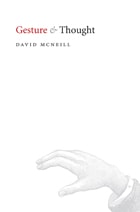
Gesture and Thought expands on McNeill’s acclaimed classic Hand and Mind. While that earlier work demonstrated what gestures reveal about thought, here gestures are shown to be active participants in both speaking and thinking. Expanding on an approach introduced by Lev Vygotsky in the 1930s, McNeill posits that gestures are key ingredients in an “imagery-language dialectic” that fuels both speech and thought. Gestures are both the “imagery” and components of “language.” The smallest element of this dialectic is the “growth point,” a snapshot of an utterance at its beginning psychological stage. Utilizing several innovative experiments he created and administered with subjects spanning several different age, gender, and language groups, McNeill shows how growth points organize themselves into utterances and extend to discourse at the moment of speaking.
An ambitious project in the ongoing study of the relationship of human communication and thought, Gesture and Thought is a work of such consequence that it will influence all subsequent theory on the subject.
Gesture in Multiparty Interaction
Emily Shaw
Gallaudet University Press, 2018
Shaw filmed Deaf and hearing participants playing a gesture-based game as part of a social game night. Their interactions were then studied using discourse analysis to see whether and how Deaf and hearing people craft discourses through the use of their bodies. This volume examines gesture, not just for its iconic, imagistic qualities, but also as an interactive resource in signed and spoken discourse. In addition, Shaw addresses the key theoretical barriers that prevent a full accounting of gesture’s interface with signed and spoken language. Her study pushes further the notion that language is fundamentally embodied.
Grammar, Geometry, and Brain
Jens Erik Fenstad
CSLI, 2010
This original study considers the effects of language and meaning on the brain. Jens Erik Fenstad—an expert in the fields of recursion theory, nonstandard analysis, and natural language semantics—combines current formal semantics with a geometric structure in order to trace how common nouns, properties, natural kinds, and attractors link with brain dynamics.
Grammatical Interfaces in HPSG
Edited by Ronnie Cann, Claire Grover, and Philip H. Miller
CSLI, 2001
Grammatical Theory
Its Limits and Its PossibilitiesFrederick J. Newmeyer
University of Chicago Press, 1983
Newmeyer's formidable scholarship raises the level of debate on transformational generative grammar. He stresses the central importance of an autonomous formal grammar, discusses the limitations of "discourse-based" approaches to syntax, cites support for generativist theory in recent research, and clarifies misunderstood concepts associated with generative grammar.