Results by title
905 books match the query 'Literary' and 20 start with g
Genius
A NovelThomas Rayfiel
Northwestern University Press, 2016
Kara Bell spent her youth plotting escape from Witch’s Falls, Arkansas. Relentless focus and the spurning of all emotional attachment led to the doctoral program in philosophy at Columbia University. But Kara’s careful plans are upended by cancer, and suddenly she is home again, where she finds herself subject to her mother’s suffocating care, her brother’s puzzling love life, the local doctor’s meddling, and the strong gravitational pull of her old friend and obsession, Christy Lee. Will Kara find health and sanity? Will she learn what really happened to her father? Can she escape Witch’s Falls a second time, or will she succumb to the slow poison of local kindness and Snickers Salad?
In Genius, Thomas Rayfiel finds both poignancy and dark humor in deathly illness, family secrets, organized religion, parenting, abortion, gossip, senility, and the mysterious rhythms of small-town life.
Getaway
Glen Pourciau
Four Way Books, 2021
Although the characters in Pourciau’s stories change face, story to story they all inhabit a world dominated by interior voices revealing fragmented selves. They find difficulty making their inner worlds, with their competing narratives and emotions, fit into the world surrounding them. As they confront everyday predicaments and encounters, they are oftentimes averse to expressing their thoughts, thereby leading themselves deeper into a conflicted interior landscape.
Ghosts of New York
A NovelJim Lewis
West Virginia University Press, 2021
“A wondrous novel, with prose that sparkles like certain sidewalks after rain. . . . That’s it, I thought. That’s exactly what it’s like to live in New York.” —New York Times Book Review
Ghosts of New York is a novel in which the laws of time and space have been subtly suspended. It interweaves four strands: a photographer newly returned to the neighborhood where she grew up, after years spent living overseas; a foundling raised on 14th Street; a graduate student, his romantic partner, and his best friend entangled in a set of relationships with far-reaching personal and political repercussions; and a shopkeeper suffering from first love late in life. Mixing prophecy, history, and a hint of speculative fiction, its stories are bound together even as they are propelled into stranger territory. And undergirding it all is a song, which appears, disappears, and then resurfaces.
Ghosts of New York explores complex lives through indelible renderings of settings—a bar, a night market, a recording studio—that alternate between familiar and unsettling. The work of a celebrated novelist and veteran of the art, film, and music scenes in New York and Austin (described as “a rare talent” by the New York Times and “a powerful literary voice” by Jeffrey Eugenides), this novel will immediately absorb readers intrigued by creative people and the places that sustain and challenge them.

Girl Beside Him
Cris Mazza
University of Alabama Press, 2026
Every shadow tells a story she’s not ready to share.
In her ninth work of fiction, Cris Mazza walks the fence between man and nature, instinct and compusion, all the while throwing rocks into the yawning gulch between the sexes. As a portrait of our species, Girl Beside Him is a powerful book.
As the novel unfolds, a moody naturalist obsessed with target shooting meets his pretty assistant, rebounding from her bitter divorce, via a classified ad. Brian and Leya work together in the Wyoming outback, a landscape quick with beauty, death and sex. Ostensibly they have joined forces to track wild cougar, but humanity is the most endangered species here.
As the story lopes along, the naturalists, made feral by heartbreak and the drone of pop culture, spend the summer tracking cougars.…
Taking Sartre's aphorism, hell is other people, to new, dreadful extremes, Mazza's varmits know that the only thing wrong with any landscape is who else is living in it. From deep inside her character's skins, Mazza brings a psychological awareness to her novel that would make Stephen King squirm.

Girl Zoo
Aimee Parkison and Carol Guess
University of Alabama Press, 2019
Girl Zoo is an enthralling and sometimes unsettling collection of short stories that examines how women in society are confined by the limitations and expectations of pop culture, politics, advertising, fashion, myth, and romance. In each story, a woman or girl is literally confined or held captive, and we can only watch as they are transformed into objects of terror and desire, plotting their escape from their cultural cages.
Taken as a whole, this experimental speculative fiction invites parallels to social justice movements focused on sexuality and gender, as well as cautionary tales for our precarious political movement. Parkison and Guess offer no solutions to their characters’ captivity. Instead, they challenge their audience to read against the grain of conventional feminist dystopian narratives by inviting them inside the “Girl Zoo” itself.
Take a step inside the zoo and see for yourself. We dare you. Behind the bars, a world of wonder awaits.
Glory Hole
Stephen Beachy
University of Alabama Press, 2017
It’s 2006, and a cloud of darkness seems to have descended over the Earth—or at least over the minds of a ragtag assortment of Bay Area writers, drug dealers, social workers, porn directors, and Melvin, a street kid and refugee from his Mormon family. A shooter runs amok in an Amish schoolhouse, the president runs amok in the Middle East, a child is kidnapped from Disneyland, and on the local literary scene, a former child prostitute and wunderkind author that nobody has ever met has become a media sensation.
But something is fishy about this author, Huey Beauregard, and so Melvin and his friends Felicia and Philip launch an investigation into the webs of self-serving stories, lies, rumors, and propaganda that have come to constitute our sad, fractured reality.
Glory Hole is a novel about the ravages of time and the varied consequences of a romantic attitude toward literature and life. It is about AIDS, meth, porn, fake biographies, street outreach, the study of Arabic verb forms, Polish transgender modernists, obsession, and future life forms. It’s about getting lost in the fog, about prison as both metaphor and reality, madness, evil clowns, and mystical texts.
Vast and ambitious, comic and tragic, the novel also serves as a version of the I Ching, meaning it can be used as an oracle.
Glory
The Gospel of Judas, A NovelGiuseppe Berto
Rutgers University Press, 2024
In Glory, Italian modernist Giuseppe Berto’s final novel, Judas finally tells his side of the story. From his perspective, Jesus is the betrayer, a would-be political activist and social reformer who fails to live up to his promises. And by fulfilling his predestined role in the drama of Christ’s death and resurrection, Judas himself is partly responsible for humanity’s salvation, enabling them to be redeemed by Christ’s sacrifice. As the novel probes into the psychological motivations behind his rejection of Jesus’ authority, Judas emerges as a compelling conflicted character, a man who seeks to have agency even when he knows his actions are being scripted by a higher power. Through Judas’s searing tortured monologues, this late masterpiece from one of Italy’s greatest writers investigates deep questions about the nature of faith, rebellion, fate, and free will.
God of River Mud
A NovelVic Sizemore
West Virginia University Press, 2024
Winner, 2025 Tennessee Book Award, Fiction
Grappling with innate desires and LGBTQ identity, a family struggles under the oppressive expectations foisted on them by fundamentalist Christianity.
Told through alternating perspectives, God of River Mud chronicles the lives of Berna Minor, her husband, their four children, and Berna’s secret lover.
To escape a life of poverty and abuse, Berna Cannaday marries Zechariah Minor, a fundamentalist Baptist preacher, and commits herself to his faith, trying to make it her own. After Zechariah takes a church beside the Elk River in rural Clay, West Virginia, Berna falls in love with someone from their congregation—Jordan, a woman who has known since childhood that he was meant to be a man. Berna keeps her secret hidden as she struggles to be the wife and mother she believes God wants her to be. Berna and Zechariah’s children struggle as well, trying to reconcile the theology they are taught at home with the fast-changing world around them. And Jordan struggles to find a community and a life that allow him both to be safely and fully himself, as Jay, and to be loved for who he is.
As the decades and stories unfold, traditional evangelical Bible culture and the values of rural Appalachia clash against innate desires, LGBTQ identity, and gender orientation. Sympathies develop—sometimes unexpectedly—as the characters begin to reconcile their faith and their love. God of River Mud delves into the quandary of those marginalized and dehumanized within a religious patriarchy and grapples with the universal issues of identity, faith, love, and belonging.
God
The AutobiographyFranco Ferrucci
University of Chicago Press, 1996
Going
Kevin Oderman
West Virginia University Press, 2006
In Granada, a boy in a dress begs in the white alleys of the old town. A vulnerable runaway, he turns to an American painter who is living in the city for protection, Madeleine James. The boy also meets Madeleine's new friend, poet Cy Jacobs. Although the two adults mean to help the boy, they unwittingly expose him to more peril. Soon, all the characters in the story have been scraped on the touchstone of hard realities and made to show their mettle, be it base or gold. This novel, at times somber and at times flaring with intensity, calls up indelibly the difficulties of making a good life—or a good death—in a world in which we are all, in one way or another, going.
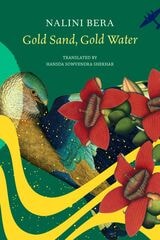
Gold Sand, Gold Water
Nalini Bera
Seagull Books, 2025
The Subarnarekha River shimmers with legend; once said to carry flecks of gold, it remains a source of both promise and hardship for those who live along its banks. In Gold Sand, Gold Water, Nalini Bera conjures a world where folklore and reality flow together, and forbidden love defies caste. Through the eyes of young Lolin, we witness the daily struggles of the Hatua people—part of the marginalized Adivasi and Dalit communities—as they navigate a world where ancient traditions are slowly being eroded by modern industry.
The novel paints an intimate, kaleidoscopic portrait of a vanishing way of life. Lyrical and haunting, Gold Sand, Gold Water is an essential addition to Bengali literature in translation—one that ensures these overlooked stories, like the river itself, continue to flow.
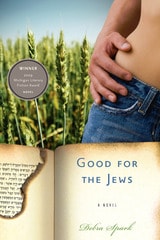
Good for the Jews
Debra Spark
University of Michigan Press, 2009
Good for the Jews is a smart, funny, sexy novel set in Madison, Wisconsin, during the Bush administration. Part mystery and part stranger-comes-to town story, Good for the Jews is loosely based on the biblical book of Esther. Like Esther, Debra Spark's characters deal with anti-Semitism and the way that powerful men—and the women who love them—negotiate bureaucracies.
At the core of the story of right and wrong are young, attractive Ellen Hirschorn and her older cousin Mose, a high school teacher who thinks he knows, in fact, what is "good for the Jews"—and for Ellen, too. Their stories intertwine with those of the school superintendent, his ex-wife and son, and a new principal. Workplace treachery, the bonds of family, coming of age, and romantic relationships all take center stage as the characters negotiate the fallout from a puzzling fire.
Spark's evocative writing style and sharp, understanding treatment of her diverse characters draw the reader into this surprising page-turner, a finalist for the 2009 Foreword Magazine Book of the Year Award.

Good-bye, Son and Other Stories
Janet Lewis
Ohio University Press, 1986
Good-bye, Son and Other Stories, Janet Lewis’s only collection of short fiction, was first published in 1946, but remains as quietly haunting today as it was then. Set in small communities of the upper Midwest and northern California in the ’30s and ’40s, these midcentury gems focus on the quiet cycles connecting youth and age, despair and hope, life and death. A mother’s encounters with her deceased son, an aging woman sitting with the new knowledge of her troubled older sister’s death, and a teenager disillusioned by her own mortality are among the characters, mostly women and girls, whom Lewis delivers. Her understated style and knack for unadorned observation embed us with them as they reckon with the disquieting forces—incomprehensible and destructive to some, enlightening to others—that move us from birth, through life, to death. In the process, Lewis has crafted a paean to the living.
Governor's Mansion, The
Robert Laxalt
University of Nevada Press, 1997
Grace Period
A NovelGerald W. Haslam
University of Nevada Press, 2006
A masterpiece by one of the West’s best-loved authorsJust when Sacramento journalist Marty Martinez thinks his life can’t get any worse, it does. His beloved son has died of AIDS, his wife has divorced him and joined a cult, and his daughter blames him for the disintegration of their family. Then a chance medical examination reveals that he has prostate cancer. Marty faces his new role as a cancer patient with awkward grit and desperation. He is a sympathetic, utterly convincing character seeking faith in a Catholic Church as troubled as he is. He brings increased intensity to his career as he investigates a far-reaching political scandal, reunites his family in unexpected ways, and finds love with a fellow cancer patient. Grace Period is a profound and sometimes hilarious novel about living with serious illness. Marty copes with fear and the painful, sometimes embarrassing, treatment of his disease, but instead of winding down his life he finds fresh purpose and a joyful new love. Haslam brilliantly depicts the complexities of everyday life and the intricate, sometimes tortured bonds of family and friendship. In Grace Period, Haslam shows us that existence at the precarious edge of life offers not only pain and loss but hope, a chance at redemption, love, and even happiness. Grace Period is his masterwork.
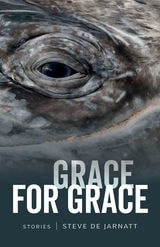
Grace for Grace
StoriesSteve De Jarnatt
Acre Books, 2020
“Rubiaux Rising” (a Best American Short Stories selection) is a tale of triumph amid calamity during Hurricane Katrina, while “Her Great Blue” a surreal interspecies love story. “Mulligan” reveals the private pain of parents traveling across the country to give away their children, and “Wraiths in a Swelter” is both a ghost story and a confessional memoir—following a deliriously exhausted EMT through a deadly Chicago heat wave.
Many of the stories in Grace for Grace are set against the backdrop of natural or manmade catastrophes. These disasters test the characters’ limits as they confront sudden changes and extremes, discovering through their unexpected resourcefulness and endurance something beyond suffering. . . something that approaches the sublime.
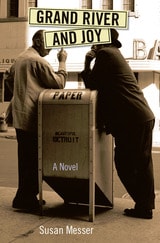
Grand River and Joy
Susan Messer
University of Michigan Press, 2010
Halloween morning 1966, Harry Levine arrives at his wholesale shoe warehouse to find an ethnic slur soaped on the front window. As he scavenges around the sprawling warehouse basement, looking for the supplies he needs to clean the window, he makes more unsettling discoveries: a stash of Black Power literature; marijuana; a new phone line running off his own; and a makeshift living room, arranged by Alvin, the teenaged tenant who lives with his father, Curtis, above the warehouse. Accustomed to sloughing off fears about Detroit's troubled inner-city neighborhood, Harry dismisses the soaped window as a Halloween prank and gradually dismantles “Alvin's lounge” in a silent conversation with the teenaged tenant. Still, these events and discoveries draw him more deeply into the frustrations and fissures permeating his city in the months leading up to the Detroit riots.
Grand River and Joy, named after a landmark intersection in Detroit, follows Harry through the intersections of his life and the history of his city. It's a work of fiction set in a world that is anything but fictional, a novel about the intersections between races, classes and religions exploding in the long, hot summers of Detroit in the 1960s. Grand River and Joy is a powerful and moving exploration of one of the most difficult chapters of Michigan history.
Susan Messer's fiction and nonfiction have appeared in numerous publications, including Glimmer Train Stories, North American Review, and Colorado Review. She received an Illinois Arts Council Fellowship in prose, an Illinois Arts Council literary award for creative nonfiction, and a prize in the Jewish Cultural Writing Competition of the Dora Teitelboim Center for Yiddish Culture.
Cover photograph copyright © Bill Rauhauser and Rauhauser Photographic Trust
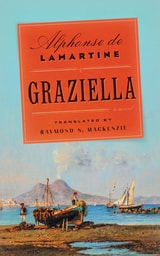
Graziella
A NovelAlphonse de Lamartine
University of Minnesota Press, 2018
In its first modern translation, a novel-cum-memoir of a Frenchman’s erotic awakening in Italy by a preeminent writer of the Romantic period
In 1812 Alphonse de Lamartine, a young man of means, traveled through southern Italy, where, during a sojourn in Naples, he fell in love with a young woman who worked in a cigar factory—and whose death after he returned to France would haunt him throughout his writing life. Graziella, Lamartine called this lost girl in his poetry and memoirs—and also in Graziella, a novel that closely follows the story of his own romance.
“When I was eighteen,” the narrator begins, as if penning his memoir, “my family entrusted me to the care of a relative whose business affairs called her to Tuscany.” The tale that unfolds, of the young man’s amorous experiences amid the natural grandeur and subtle splendors of the Italian countryside, is one of the finest works of fiction in the French Romantic tradition, a bildungsroman that is also a melancholy portrait of the artist as a young man discovering the muse who would both inspire and elude him.
Remarkable for its contemplative prose, its dreamy passions and seductive drawing of the Italian landscape, and its place in the Romantic canon, Graziella is a timeless portrait of love, chronicling the remorse and the misguided ideals of youth that find their expression, if not their amends, in art.
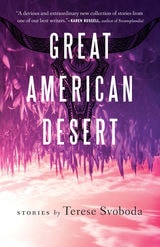
Great American Desert
StoriesTerese Svoboda
The Ohio State University Press, 2019
In her arresting and inimitable style, Svoboda’s delicate handling of the complex dynamics of family and self seeps into every sentence of these first-rate short stories about what we do to the world around us—and what it can do to us.
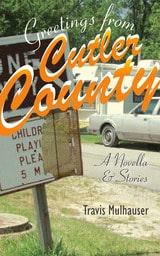
Greetings from Cutler County
A Novella and StoriesTravis Mulhauser
University of Michigan Press, 2005
In one northern Michigan community the lives of desperate small-town dreamers are examined through an ensemble cast as earnest as they are outrageous, and as compelling as they are heartbreaking. The lovers, crooks, failures, and survivors of Cutler County are so flawed and genuine you can't help rooting for them-no matter how foolish or hopeless their pursuits may seem.
The stories take place in Cutler County, Michigan. Most of the characters are young men who think of themselves as losers and outsiders. Short on cash, popularity, and the ambition needed for success, they nevertheless are able to examine their failings with the self-knowing humor and resignation of the perpetually thwarted ne'er-do-well.
The stories are inseparable from the stark shoreline of their Lake Michigan settings-the cavernous woods and vast inland lakes that shape life in northern Michigan-and create a landscape as rugged and dramatic as youth itself. Greetings from Cutler County explores the common triumphs and tragedies of coming of age, while providing a rationale and humor that is uniquely and unforgettably its own.