Results by title
1787 books match the query 'Literary Collections' and 32 start with g
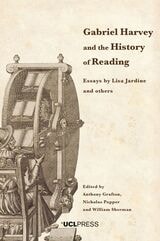
Gabriel Harvey and the History of Reading
Essays by Lisa Jardine and othersEdited by Anthony Grafton, Nicholas Popper, and William H. Sherman
University College London, 2024
Few articles in the humanities have had the impact of Lisa Jardine and Anthony Grafton’s seminal “Studied for Action,” a study of the reading practices of Elizabethan polymath and prolific annotator Gabriel Harvey. Their excavation of the setting, methods, and ambitions of Harvey’s encounters with his books ignited a new interdisciplinary field, the history of reading, which quickly became one of the most exciting corners of the scholarly cosmos. A generation inspired by the model of Harvey fanned out across the world’s libraries and archives, seeking to reveal the many creative, unexpected, and curious ways that individuals throughout history responded to texts, and how these interpretations, in turn, illuminate past worlds.
Three decades on, Harvey’s example and Jardine’s work remain central to cutting-edge scholarship in the history of reading. By uniting “Studied for Action” with new studies on Gabriel Harvey, some of which are published here for the first time, by Jardine, Grafton, and the scholars they have influenced, this collection provides a unique lens on the place of marginalia in textual, intellectual, and cultural history. The chapters capture subsequent work on Harvey and map the fields opened by Jardine and Grafton’s original article, collectively offering a posthumous tribute to Lisa Jardine and an authoritative overview of the History of Reading.
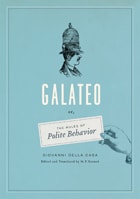
Galateo
Or, The Rules of Polite BehaviorGiovanni Della Casa
University of Chicago Press, 2013
So begins Galateo, a treatise on polite behavior written by Giovanni Della Casa (1503–56) for the benefit of his nephew, a young Florentine destined for greatness.

Gary In Your Pocket
Stories and Notebooks of Gary FisherGary Fisher
Duke University Press, 1996
A uniquely intimate, unflinching testimony of the experience of a young, African American gay man in the AIDS emergency, Gary in Your Pocket includes an introduction by Don Belton that describes Fisher’s achievement in the context of other work by Black gay men such as Marlon Riggs and Essex Hemphill, and a biographical afterword by Eve Kosofsky Sedgwick.
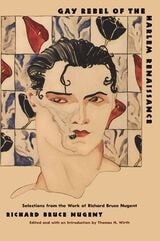
Gay Rebel of the Harlem Renaissance
Selections from the Work of Richard Bruce NugentRichard Bruce Nugent
Duke University Press, 2002
Thomas H. Wirth, a close friend of Nugent’s during the last years of the artist’s life, has assembled a selection of Nugent’s most important writings, paintings, and drawings—works mostly unpublished or scattered in rare and obscure publications and collected here for the first time. Wirth has written an introduction providing biographical information about Nugent’s life and situating his art in relation to the visual and literary currents which influenced him. A foreword by Henry Louis Gates Jr. emphasizes the importance of Nugent for African American history and culture.
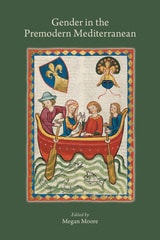
Gender in the Premodern Mediterranean
Megan Moore
Arizona Center for Medieval and Renaissance Studies, 2019
Whereas other volumes have examined gender in the premodern period or premodern Mediterranean Studies, to date no other volume has sought to explore the intersection of the two. The interdisciplinary nature of the essays will make them useful to both scholars and teachers, for they will combine theory and practice in a length that makes them easily accessible to advanced students as well as specialized researchers. The first chapter provides a critical overview of the scholarship on Mediterranean studies as a field of area studies as well as an overview of gender studies in the medieval period. As such, the volume will be useful for students, teachers, and researchers, and its interdisciplinary nature reflects the diaspora of the Mediterranean itself.
Genealogies of Joy
The Pleasure of Latinx LiteratureEdited by Leigh Johnson and Erin Murrah-Mandril; Foreword by Melina Vizcaíno-Alemán
University of Arizona Press, 2027
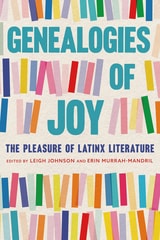
What does it mean to center joy in a world that insists on Latinx suffering? Genealogies of Joy: The Pleasure of Latinx Literature argues that joy is not a luxury or distraction but a radical, sustaining force woven through Latinx literature and culture. From humor and food to protest, friendship, sexuality, and aging, the essays gathered here reveal joy as an embodied, communal practice—one that refuses racialized shame and imagines liberatory futures.
Organized into three sections—Memory, Method, and Maps—the volume traces a genealogy of joy across time and space. Contributors explore how writers such as Gloria Anzaldúa, Julia de Burgos, Erika Sánchez, Javier Zamora, Myriam Gurba, Aidan Thomas, and Sandra Cisneros transform grief into resilience, invert dominant narratives, and reclaim pleasure as political praxis. Whether through irreverent laughter, queer desire, culinary memory, or vulnerable resistance, Latinx authors insist that pleasure and politics are bound together.
Engaging affect theory, Black joy scholarship, borderlands studies, and archival studies, this collection asserts that Latinx joy resists the quantification and commodification of late-stage capitalism. At once rigorous and celebratory, Genealogies of Joy invites readers to recognize joy as a human right and a vital source of connection, creativity, and collective flourishing.
Contributors
Soffía Blystra
Norma Cantú
Margaret Cantú-Sánchez
Karina Diaz
Stephanie Fetta
Elena Foulis
Eva Maria Geicht
Leigh Johnson
Mark J. Mascia
Regina Marie Mills
Erin Murrah-Mandril
Jeannine Ortega
Nancy Ríos
Rey M. Rodríguez
Rosarito Rodríguez-González
Alexandra Rodríguez Sabogal
Karen Roybal
Bianca S. Rubalcava
Suzanne Uzzilia
Natalia Villanueva-Nieves
Melina Vizcaíno-Alemán
Geography and Plays
Gertrude Stein; Introduction by Cyrena N. Pondrom
University of Wisconsin Press, 1993
German Autumn
Stig Dagerman
University of Minnesota Press, 2011
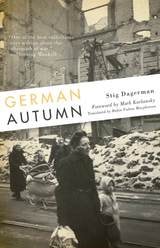
In late 1946, Stig Dagerman was assigned by the Swedish newspaper Expressen to report on life in Germany immediately after the fall of the Third Reich. First published in Sweden in 1947, German Autumn, a collection of the articles written for that assignment, was unlike any other reporting at the time. While most Allied and foreign journalists spun their writing on the widely held belief that the German people deserved their fate, Dagerman disagreed and reported on the humanness of the men and women ruined by the war—their guilt and suffering. Dagerman was already a prominent writer in Sweden, but the publication and broad reception of German Autumn throughout Europe established him as a compassionate journalist and led to the long-standing international influence of the book.
Presented here in its first American edition with a compelling new foreword by Mark Kurlansky, Dagerman’s essays on the tragic aftermath of war, suffering, and guilt are as hauntingly relevant today amid current global conflict as they were sixty years ago.

German Folk Tales
Collected and Edited by the Grimm BrothersFrancis P. Grimm Brothers
Southern Illinois University Press, 0
Gesta Hungarorum
The Deeds of the HungariansSimon Kézai
Central European University Press, 1999
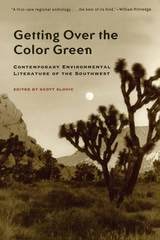
Getting Over the Color Green
Contemporary Environmental Literature of the SouthwestScott Slovic
University of Arizona Press, 2001
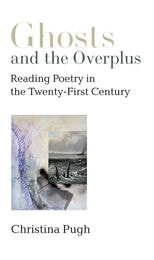
Ghosts and the Overplus
Reading Poetry in the Twenty-First CenturyChristina Pugh
University of Michigan Press, 2024
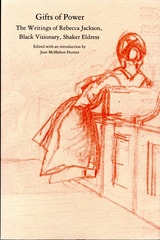
Gifts of Power
The Writings of Rebecca Jackson, Black Visionary, Shaker EldressJean M. Humez
University of Massachusetts Press, 1981
A free black woman in antebellum America, Rebecca Cox Jackson (1795–1871) was an independent itinerant preacher and religious visionary who founded a Shaker community in Philadelphia that survived her death by twenty-five years. Gifts of Power contains her complete extant writings, covering the period 1830 to 1864.
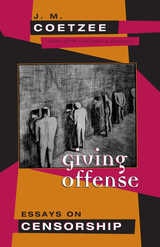
Giving Offense
Essays on CensorshipJ. M. Coetzee
University of Chicago Press, 1996
J. M. Coetzee presents a coherent, unorthodox analysis of censorship from the perspective of one who has lived and worked under its shadow. The essays collected here attempt to understand the passion that plays itself out in acts of silencing and censoring. He argues that a destructive dynamic of belligerence and escalation tends to overtake the rivals in any field ruled by censorship.
From Osip Mandelstam commanded to compose an ode in praise of Stalin, to Breyten Breytenbach writing poems under and for the eyes of his prison guards, to Aleksander Solzhenitsyn engaging in a trial of wits with the organs of the Soviet state, Giving Offense focuses on the ways authors have historically responded to censorship. It also analyzes the arguments of Catharine MacKinnon for the suppression of pornography and traces the operations of the old South African censorship system.
"The most impressive feature of Coetzee's essays, besides his ear for language, is his coolheadedness. He can dissect repugnant notions and analyze volatile emotions with enviable poise."—Kenneth Baker, San Francisco Chronicle Book Review
"Those looking for simple, ringing denunciations of censorship's evils will be disappointed. Coetzee explicitly rejects such noble tritenesses. Instead . . . he pursues censorship's deeper, more fickle meanings and unmeanings."—Kirkus Reviews
"These erudite essays form a powerful, bracing criticism of censorship in its many guises."—Publishers Weekly
"Giving Offense gets its incisive message across clearly, even when Coetzee is dealing with such murky theorists as Bakhtin, Lacan, Foucault, and René; Girard. Coetzee has a light, wry sense of humor."—Bill Marx, Hungry Mind Review
"An extraordinary collection of essays."—Martha Bayles, New York Times Book Review
"A disturbing and illuminating moral expedition."—Richard Eder, Los Angeles Times Book Review
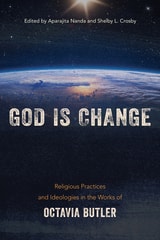
God is Change
Religious Practices and Ideologies in the Works of Octavia ButlerEdited by Aparajita Nanda and Shelby L. Crosby
Temple University Press, 2021
Throughout her work, Octavia E. Butler explored, critiqued, and created religious ideology. Her prescient thoughts on the synergy between politics and religion in America are evident in her 1993 dystopian novel, Parable of the Sower, and its 1998 sequel, Parable of the Talents. They explored, respectively, what happens during a divisive “cultural war” that unjustly impacts the disenfranchised, and the rise of a fascistic president, allied with white fundamentalist Christianity, who chants the slogan, “Make America Great Again.”
But religion, for Butler, need not be a restricting force. The editors of and contributors to God Is Change heighten our appreciation for the range and depth of Butler’s thinking about spirituality and religion, as well as how Butler’s work—especially the Parable and Xenogenesis series—offers resources for healing and community building. Essays consider the role of spirituality in Butler’s canon and the themes of confronting trauma as well as experiencing transformation and freedom. God Is Change meditates on alternate religious possibilities that open different political and cultural futures to illustrate humanity’s ability to endure change and thrive.
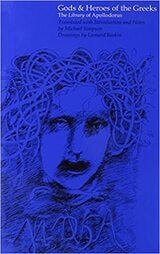
Gods and Heroes of the Greeks
The "Library" of ApollodorusMichael Simpson
University of Massachusetts Press, 1976
The immortal characters of Greek mythology enact their dramas, conflicts, and passions in the Library of Apollodorus. Probably composed in the first century A.D., it is the only Greek handbook of mythology to survive antiquity, and is a major source of our knowledge of Greek myths.
Beginning with the birth of the gods and ending with the death of Odysseus, the Library traces the destinies of such great mythic figures as Prometheus, Oedipus, Heracles, Daedalus, and the heroes of the Trojan War. Sir James G. Frazer called the Library “an accurate record of what the Greeks in general believed about the origin an early history of the world and their race.”
Michael Simpson’s new translation captures the fine simplicity and straightforwardness of the original. Leonard Baskin’s drawings throw a unique contemporary light on this ancient world.
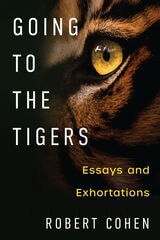
Going to the Tigers
Essays and ExhortationsRobert Cohen
University of Michigan Press, 2022
In this funny and perceptive collection, novelist and essayist Robert Cohen shares his thoughts on the writing process and then puts these prescriptions into practice—from how to rant effectively as an essayist and novelist (“The Piano Has Been Drinking”), how to achieve your own style, naming characters (and creating them), how one manages one’s own identity with being “a writer” in time and space, to the use of reference and allusion in one’s work. Cohen is a deft weaver of allusion himself. In lieu of telling the reader how to master the elements of writing fiction, he shows them through the work of the writers who most influenced his own development, including Roth, Ellison, Kafka, and Robinson. Rooted in his own experiences, this collection of essays shows readers how to use their influences and experiences to create bold, personal, and individual work. While the first part of the book teaches writing, the essays in the second part show how these elements come together.
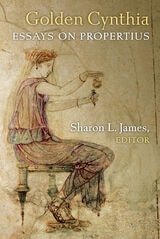
Golden Cynthia
Essays on PropertiusSharon L. James, Editor
University of Michigan Press, 2022
The elegiac poet Propertius responds in his verse to the complex changes that Rome underwent in his period, taking on numerous topics including poetic and sexual rivalry, visual art, violence, inability to control the elusive mistress, imperialism, colonialism, civil war, the radical new shape of the Roman state under the new monarch Augustus, and more. These essays, by well-known scholars of Roman elegy, offer new ways of reading Propertius’ topics, attitudes, and poetics.
This book begins with two distinguished essays by the late Barbara Flaschenriem, whose work on Propertius remains influential. The other contributions, offered in honor of her, are by Diane Rayor, Andrew Feldherr, Ellen Greene, Lowell Bowditch, Alison Keith, and volume editor Sharon L. James. These essays explore topics including Propertian didacticism, dream interpretation, visual art and formalism, sex and violence, Roman imperialism and its connection to the elegiac puella, and Propertius’ engagement, in Book 4, with Vergil’s poetry.
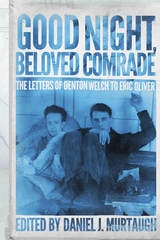
Good Night, Beloved Comrade
The Letters of Denton Welch to Eric OliverEdited and with an introduction by Daniel J. Murtaugh
University of Wisconsin Press, 2017
Though German bombs were ravaging Britain, Welch wrote in his published work about the idyllic landscapes and local people he observed in Kent. There, in 1943, he met and fell in love with Eric Oliver, a handsome, intelligent, but rather insecure "landboy"—an agricultural worker with the wartime Land Army. Oliver would become a companion, comrade, lover, and caretaker during the last six years of Welch's life. All fifty-one letters that Welch wrote to Oliver are collected and annotated here for the first time. They offer a historical record of life amidst the hardship, deprivation, and fear of World War II, and also are a timeless testament of one young man's tender and intimate emotions, his immense courage in adversity, and his continual struggle for love and creative existence.
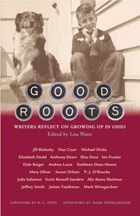
Good Roots
Writers Reflect on Growing Up in OhioLisa Watts
Ohio University Press, 2007
Winner of the Ohioana Library’s 2008 Ohio Legacy Citation
2014-2015 Choose to Read Ohio selection
“A good place to be from.” That’s how some people might characterize the Buckeye State. The writings in Good Roots: Writers Reflect on Growing Up in Ohio, are testimony to the truth of that statement. By prominent writers such as P. J. O’Rourke, Susan Orlean, and Alix Kates Shulman, these contributions are alternately nostalgic, irreverent, and sincere, and offer us a personal sense of place. Their childhoods are as varied as their work. Some were raised in urban Cleveland, Akron, and Cincinnati, others in the small Ohio towns that typify the Midwest, and still others in the countryside. Yet what they have to tell us about their roots resonates with a shared heritage, a sense of what is universal and enduring about growing up in the heartland.
Their collective résumé reads like a literary Who’s Who, including four Pulitzer Prizes, several National Book Awards, and many prestigious fellowships. Good Roots is also plain good reading from some of our country’s most accomplished contemporary writers.
Contributors include: Jill Bialosky, Dan Cryer, Michael Dirda, Elizabeth Dodd, Anthony Doerr, Rita Dove, Ian Frazier, Dale Keiger, Andrea Louie, Kathleen Dean Moore, Mary Oliver, Susan Orlean, P. J. O’Rourke, Julie Salamon, Scott Russell Sanders, Alix Kates Shulman, Jeffery Smith, James Toedtman, and Mark Winegardner.

Good-Bye Samizdat
Twenty Years of Czechoslovak Underground WritingMarketa Goetz-Stankiewicz
Northwestern University Press, 1992

Good-bye, Son and Other Stories
Janet Lewis
Ohio University Press, 1986
Good-bye, Son and Other Stories, Janet Lewis’s only collection of short fiction, was first published in 1946, but remains as quietly haunting today as it was then. Set in small communities of the upper Midwest and northern California in the ’30s and ’40s, these midcentury gems focus on the quiet cycles connecting youth and age, despair and hope, life and death. A mother’s encounters with her deceased son, an aging woman sitting with the new knowledge of her troubled older sister’s death, and a teenager disillusioned by her own mortality are among the characters, mostly women and girls, whom Lewis delivers. Her understated style and knack for unadorned observation embed us with them as they reckon with the disquieting forces—incomprehensible and destructive to some, enlightening to others—that move us from birth, through life, to death. In the process, Lewis has crafted a paean to the living.
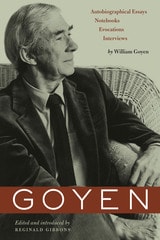
Goyen
Autobiographical Essays, Notebooks, Evocations, InterviewsBy William Goyen
University of Texas Press, 2007
William Goyen (1915-1983) was an American original, acclaimed nationally and internationally, and one of the most important writers ever to be associated with the regional culture and literary history of Texas. Called "one of the great American writers of short fiction" by the New York Times Book Review, Goyen also authored the novels The House of Breath, In a Farther Country, Come, the Restorer, and Arcadio, as well as plays, poetry, and nonfiction. His literary works manifest an intimate intensity of feeling and an inimitable tone of voice, reflecting Goyen's lifelong desire to create art that was at once a spiritual quest for universal truths and an evocation of the rhythms of speech and storytelling of his native East Texas.
This volume contains all of the uncollected autobiographical writings of William Goyen, including essays previously published in American periodicals and literary journals; interviews published in Paris Review, TriQuarterly, and the French magazine Masques; and previously unpublished materials drawn from Goyen's papers in the Harry Ransom Humanities Research Center at the University of Texas at Austin. The writings span Goyen's entire adult life, from youthful journals to autobiographical sketches to his long sketch for an autobiographical book, Six Women, which profiles women whom Goyen felt had influenced him deeply: Frieda Lawrence, Dorothy Brett, Mabel Dodge Luhan, Margo Jones, Millicent Rogers, and Katherine Anne Porter. The volume also contains late essays on growing up in Houston, writing from life, and illness and recovery.
While most of William Goyen's work was autobiographical, writing a traditional autobiography proved to be inimical to his artistic sensibility and style. Thus, the pieces collected in Goyen constitute the most complete autobiography that we will ever have from this highly regarded writer.
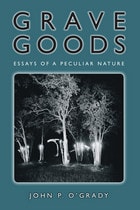
Grave Goods
John P. O'Grady
University of Utah Press, 2014
"Overheard in a coffee shop the other day, one young woman severely admonishing another about the dangers of amateur séances: 'Just one wrong move, and Poof! Suddenly every dead rock star and TV evangelist is knocking at your door and forcing you to bake ten thousand apple pies. You can’t trust these ghosts. They have a mind of their own.'"
—from the book
Just because this is a collection of essays about psychics, murderers, strange disappearances, and occult phenomena doesn’t mean it isn’t funny. With wit, wry curiosity, and redemptive irony John P. O’Grady peels back the surface of the seemingly normal to reveal the dubious, the inexplicable, the outlandish.
Consider Leo LaHappe, a.k.a. "The Bugman." During a 1970s-era dormitory bull session Leo reveals a strange obsession with Virginia Dare, the first child born of English parents in the New World. His obsession becomes the catalyst for a campus-wide witch hunt at the University of Maine.
Or, what about the beekeeper who knocks on O’Grady’s door. Dressed in his professional gear—boots, coveralls, and dark veil—the man seeks permission to search the author’s woods for his hive. Turns out he hadn’t told the bees about his mother’s death and, sensitive creatures that they are, the bees had run away. "I have to tell them I’m sorry," the beekeeper explains. "I just hope they forgive me and come home."
Grave Goods includes ghost stories, macabre modern legends, and metaphysical investigations, all informed by the natural sciences, history, philosophy, literature, and mythology. From laugh-out-loud funny to eerily thoughtful, these essays reveal the natural world as a place of unnatural surprises and strange beauty. A place where Rip Van Winkle, O’Grady’s college buddies, and ragtag psychics rub shoulders with Buddha, Socrates, and Stephen King—and it all makes perfect sense.
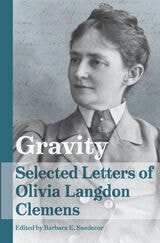
Gravity
Selected Letters of Olivia Langdon ClemensEdited by Barbara E. Snedecor
University of Missouri Press, 2023
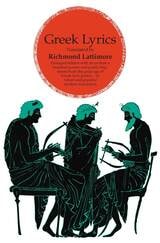
Greek Lyrics, Second Edition
More than a Hundred Poems and Poetic Fragments from the Great Age of Greek Lyric PoetryRichmond Lattimore
University of Chicago Press, 1960
In this second edition of Greek Lyrics, translator and editor Richmond Lattimore brings together a vast assortment of seventh-and sixth-century Greek lyric, elegiac, and iambic poetry. For the Greekless student or curious scholar, these translations showcase the diversity of poetic subjects in classical antiquity, which range from love poems to medical inscriptions and drinking songs. Gracefully and robustly translated by a number of top-tier translators, this volume includes poets such as Archílochus, Callínus, Semónides of Amórgos, Hippónax, Tyrtaéus, Mimnérmus, Solon, Phocýlides, Xenóphanes, Theógnis, Terpánder, Alcman, Stesíchorus, íbycus, Sappho, Alcaéus, Anácreon, Hýbrias, Praxílla, Corínna, Simónides of Ceos, Pindar, and Bacchýlides.
Greek Tragedies 1
Aeschylus: Agamemnon, Prometheus Bound; Sophocles: Oedipus the King, Antigone; Euripides: HippolytusEdited by Mark Griffith, Glenn W. Most, David Grene, and Richmond Lattimore
University of Chicago Press, 2013
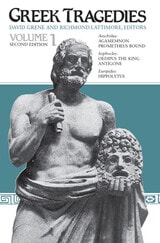
Greek Tragedies, Volume 1
Edited by David Grene and Richmond Lattimore
University of Chicago Press, 1991
Greek Tragedies, Volume 2
Edited by David Grene and Richmond Lattimore
University of Chicago Press, 1960
Greek Tragedies, Volume 3
Edited by David Grene and Richmond Lattimore
University of Chicago Press, 1991
Green Cane and Juicy Flotsam
Short Stories by Caribbean WomenEsteves, Carmen C
Rutgers University Press, 1991
Growing Up Chicago
Edited by David Schaafsma, Roxanne Pilat, and Lauren DeJulio Bell, Foreword by Luis Alberto Urrea
Northwestern University Press, 2021
The stories evoke childhood trips to the Art Institute of Chicago, nighttime games of ringolevio, and the giant neon Magikist lips that once perched over the expressway, sharing perspectives that range from a young man who dreams of becoming an artist to a single mother revisiting her Mexican roots, from a woman’s experience with sexual assault to a child’s foray into white supremacy. This book memorably explores culture, social identity, and personal growth through the eyes of Chicagoans, affirming that we each hold the ability to shape the places in which we live and write and read as much as those places shape us.