Results by title
716 books match the query 'Literary Figures' and 21 start with g
Gabriela Mistral
The Audacious TravelerMarjorie Agosín
Ohio University Press, 2003
Gabriela Mistral is the only Latin American woman writer to be awarded the Nobel Prize in Literature. Even so, her extraordinary achievements in poetry, narrative, and political essays remain largely untold. Gabriela Mistral: The Audacious Traveler explores boldly and thoughtfully the complex legacy of Mistral and the way in which her work continues to define Latin America.
Edited by Professor Marjorie Agosín, Gabriela Mistral: The Audacious Traveler addresses for the first time the vision that Mistral conveyed as a representative of Chile during the drafting of the United Nations Human Rights Declaration. It depicts Mistral as a courageous social activist whose art and writings against fascism reveal a passionate voice for freedom and justice.
The book also explores Mistral’s Pan-American vision and her desire to be part of a unified American hemisphere as well as her concern for the Caribbean and Brazil. Readers will learn of her sojourn in Brazil, her turbulent years as consul in Madrid, and, finally, her last days on Long Island.
Students of her poetry, as well as general readers, will find Gabriela Mistral: The Audacious Traveler an insightful collection dedicated to the life and work of an inspiring and original artist.
The contributors are Jonathan Cohen, Joseph R. Slaughter, Verónica Darer, Patricia Varas, Eugenia Muñoz, Darrell B. Lockhart, Ivonne Gordon Vailakis, Santiago Daydí-Tolson, Diana Anhalt, Ana Pizarro, Randall Couch, Patricia Rubio, Elizabeth Horan, Emma Sepúlveda, Luis Vargas Saavedra, and Marie-Lise Gazarian-Gautier.
Garland in His Own Time
A Biographical Chronicle of His Life, Drawn from Recollections, Interviews, and Memoirs by Family, Friends, and AssociatesKeith Newlin
University of Iowa Press, 2013
Garrison Keillor
Peter A. Scholl
University of Iowa Press, 1994
Geography and Plays
Gertrude Stein; Introduction by Cyrena N. Pondrom
University of Wisconsin Press, 1993

George Santayana - American Writers 100
University of Minnesota Pamphlets on American WritersNewton P. Stallknecht
University of Minnesota Press, 1971
George Santayana - American Writers 100 was first published in 1971. Minnesota Archive Editions uses digital technology to make long-unavailable books once again accessible, and are published unaltered from the original University of Minnesota Press editions.
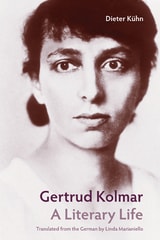
Gertrud Kolmar
A Literary LifeDieter Kühn
Northwestern University Press, 2013
Linda Marianiello here translates into English for the first time Dieter Kühn’s highly praised and definitive biography of one of Germany’s greatest poets, Gertrud Kolmar. Kolmar carried German-language poetry to new heights, speaking truth in a time when many poets collapsed in the face of increasing Nazi repression. Born Gertrud Käthe Chodziesner in Berlin in 1894, she completed her first collection, Poems, in 1917. She took her pen name, Kolmar, from the name of the town where her family originated.
Kolmar’s third collection of poems appeared in 1938 but soon disappeared in the wake of the overall repression of Jewish authors. At the time, she served as secretary to her father, Ludwig Chodziesner, a prominent lawyer. In 1941, the Nazis compelled her to work in a German armaments factory. Even as a forced laborer, the strength of her poetic voice grew, perhaps reaching its highest level before her deportation to Auschwitz. From gentle nature verses to stirring introspection, these are poems in which we can still find ourselves today. Both she and her father died in Nazi concentration camps, he in 1942, she the following year. The translation of Dieter Kühn’s biography conveys the tragic, yet courageous, life of a great poet to an English-speaking audience.
Gertrude Stein - American Writers 10
University of Minnesota Pamphlets on American WritersFrederick J. Hoffman
University of Minnesota Press, 1961
Gertrude Stein - American Writers 10 was first published in 1961. Minnesota Archive Editions uses digital technology to make long-unavailable books once again accessible, and are published unaltered from the original University of Minnesota Press editions.
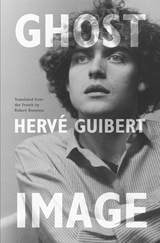
Ghost Image
Hervé Guibert
University of Chicago Press, 2014
Both a memoir and an exploration of the artistic process, Ghost Image not only reveals Guibert’s particular experience as a gay artist captivated by the transience and physicality of his media and his life, but also his thoughts on the more technical aspects of his vocation. In one essay, Guibert searches through a cardboard box of family portraits for clues—answers, or even questions—about the lives of his parents and more distant relatives. Rifling through vacation snapshots and the autographed images of long-forgotten film stars, Guibert muses, “I don’t even recognize the faces, except occasionally that of an aunt or great-aunt, or the thin, fair face of my mother as a young girl.” In other essays, he explains how he composes his photographs, and how—in writing—he seeks to escape and correct the inherent limits of his technique, to preserve those images lost to his technical failings as a photographer.
With strains of Jean Genet and recurring themes that speak to the work of contemporary artists across a range of media, Guibert’s Ghost Image is a beautifully written, melancholic ode to existence and art forms both fleeting and powerful—a unique memoir at the nexus of family, memory, desire, and photography.
Giving Their Word
Conversations with Contemporary PoetsSteven Ratiner
University of Massachusetts Press, 2002
Based on a three-year series of interviews conducted by Steven Ratiner for the Christian Science Monitor, this book offers extended conversations with twelve of the most influential poets writing today. Their comments are wonderfully detailed, refreshingly honest, and provide the sort of intimate introduction to both poet and text that readers are rarely privileged to enjoy. Included are conversations with William Stafford, Mary Oliver, John Montague, Charles Simic, Seamus Heaney, Donald Hall, Maxine Kumin, Carolyn Forché, Martín Espada, Marge Piercy, Rita Dove, and Bei Dao. In the book's closing interview, Steven Ratiner makes a return visit to Donald Hall's New Hampshire farm shortly before the publication of Hall's collection Without, which focused on the death of his wife, poet Jane Kenyon.
Giving their word is what poets do; it is their stock-in-trade, their daily bread. In the hands of the most accomplished, a poet's words are transformed into a kind of window: looking inward toward the territory of memory, dream, personal mythology and opening out onto the landscape of the shared world where life and work are rooted. For each poet there is an intricate relationship between these two realms and poetry's third domain, the language that bridges both experiences and becomes the body of the poem. Giving Their Word shows us that the poet's fidelity to that relationship sustains his or her development over time, urges the writing toward new levels of discovery, and bestows on readers that most prized of commodities: a feeling of the authentic.
For poets, students of poetry, and that far-flung community of readers for whom the contemporary poem still provides a journey worth taking, this book will present a host of pleasures. Giving Their Word enlarges the frame through which we view the poet's text and yields significant insights into the craft and character of each of these writers.
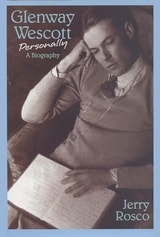
Glenway Wescott Personally
A BiographyJerry Rosco
University of Wisconsin Press, 2002
As a writer, Glenway Wescott (1901–1987) left behind several novels, including The Grandmothers and The Pilgrim Hawk, noted for their remarkable lyricism. As a literary figure, Wescott also became a symbol of his times. Born on a Wisconsin farm in 1901, he associated as a young writer with Hemingway, Stein, and Fitzgerald in 1920s Paris and subsequently was a central figure in New York’s artistic and gay communities. Though he couldn’t finish a novel after the age of forty-five, he was just as famous as an arts impresario, as a diarist, and for the company he kept: W. H. Auden, Christopher Isherwood, Marianne Moore, Somerset Maugham, E. M. Forster, Joseph Campbell, and scores of other luminaries.
In Glenway Wescott Personally, Jerry Rosco chronicles Wescott’s long and colorful life, his early fame and later struggles to write, the uniquely privileged and sometimes tortured world of artistic creation. Rosco sensitively and insightfully reveals Wescott’s private life, his long relationship with Museum of Modern Art curator Monroe Wheeler, his work with sex researcher Alfred Kinsey that led to breakthrough findings on homosexuality, and his kinship with such influential artists as Jean Cocteau, George Platt-Lynes, and Paul Cadmus.
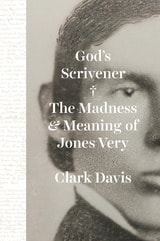
God's Scrivener
The Madness and Meaning of Jones VeryClark Davis
University of Chicago Press, 2023
In September of 1838, a few months after Ralph Waldo Emerson delivered his controversial Divinity School address, a twenty-five-year-old tutor and divinity student at Harvard named Jones Very stood before his beginning Greek class and proclaimed himself “the second coming.” Over the next twenty months, despite a brief confinement in a mental hospital, he would write more than three hundred sonnets, many of them in the voice of a prophet such as John the Baptist or even of Christ himself—all, he was quick to claim, dictated to him by the Holy Spirit.
Befriended by the major figures of the Transcendentalist movement, Very strove to convert, among others, Elizabeth and Sophia Peabody, Bronson Alcott, Nathaniel Hawthorne, and most significantly, Emerson himself. Though shocking to some, his message was simple: by renouncing the individual will, anyone can become a “son of God” and thereby usher in a millennialist heaven on earth. Clark Davis’s masterful biography shows how Very came to embody both the full radicalism of Emersonian ideals and the trap of isolation and emptiness that lay in wait for those who sought complete transcendence.
God’s Scrivener tells the story of Very’s life, work, and influence in depth, recovering the startling story of a forgotten American prophet, a “brave saint” whose life and work are central to the development of poetry and spirituality in America.
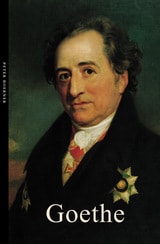
Goethe
Peter Boerner
Haus Publishing, 2013
An exceptionally prolific and versatile writer, Goethe produced important works covering a range of genres. As a young man, he composed pastoral plays in the style of the waning Rococco, was an early proponent of the avant-garde Sturm und Drang movement, and became a literary superstar with The Sorrows of Young Werther, in which a young man’s unrequited love culminates in tragedy. In his classic play Faust, which evolved over a sixty-year period, he created one of the best-known versions of the legend and introduced the prototype of the romantic hero. A scientist active in various fields, including botany and the theory of colors, Goethe also pondered issues of evolution well before Darwin. In Boerner’s illustrated biography, Goethe’s impressive oeuvre comes to vibrant life.
A major contribution to the English-language literature on Goethe, this is a beautiful and accessible introduction to one of history’s foremost geniuses.
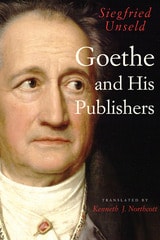
Goethe and His Publishers
Siegfried Unseld
University of Chicago Press, 1996
Goethe and His Publishers organizes for the first time the myriad details of Goethe's career in print. Director of the German publishing company Suhrkamp Verlag, Siegfried Unseld brings a singular perspective to this biography, focusing our attention on an essential component of Goethe's literary endeavors: his relationship to his publishers. Carefully examining each work, Unseld covers the range of Goethe's oeuvre, from first anonymous publications to eventual monumental editions brought out by Johann Friedrich Cotta, the most renowned publisher of his day.
Unseld sifts through the rich correspondence between Goethe and his publishers, as well as letters to and from friends, colleagues, and contemporaries. Analyzing publishing contracts, draft contracts, and historical documents, Unseld reveals the tremendous energy Goethe exerted on behalf of his manuscripts. During negotiations he was sometimes circumspect and reserved, other times demanding and assertive. These exchanges not only shed new light on Goethe's complex character but also show how he changed the author's role in the publishing process. Thus, this work offers a penetrating study on the intricate and many-tiered relations between author and publisher, then and today.
Goethe and His Publishers celebrates Goethe's works, his life, and his times, from the viewpoint of a publisher today. Written by an individual who has devoted much of his life to the study of the poet whom he reveres, such a personal approach not only forms an excellent introduction to Goethe's work but helps restore Goethe to his rightful place in the world of letters.
Gone But Not Forgotten
My Favourite Flops and Other Projects that Came to NothingHans Magnus Enzensberger
Seagull Books, 2022
“My dear fellow artists, whether writers, actors, painters, film-makers, singers, sculptors, or composers, why are you so reluctant to talk about your minor or major failures?” With that question, Hans Magnus Enzensberger—the most senior among Germany’s great writers—begins his amusing ruminations on his favorite projects that never saw the light of day. There is enlightenment in every embarrassing episode, he argues, and while artists tend to forget their successes quickly, the memory of a project that came to nothing stays in the mind for years, if not decades. Triumphs hold no lessons for us, but fiascos can extend our understanding, giving insight into the conditions of production, conventions, and practices of the industries concerned, and helping novices to assess the snares and minefields in the industry of their choice. What’s more, Enzensberger argues, flops have a therapeutic effect: They can cure, or at least alleviate, the vocational illnesses of authors, be it the loss of control or megalomania. In Gone but Not Forgotten, Enzensberger looks back at his uncompleted experiments not just in the world of books but also in cinema, theater, opera, and journal publishing, and shares with us a “store of ideas” teeming with sketches of still-possible projects. He also reflects on the likely reasons for these big and small defeats. Interspersed among his ruminations are excerpts from those experiments, giving readers a taste of what we missed. Together, the pieces in this volume build a remarkable picture of a versatile genius’s range of work over more than half a century and make us reflect on the very nature of success and failure by which we measure our lives.
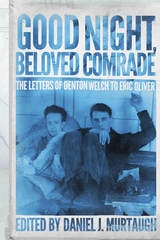
Good Night, Beloved Comrade
The Letters of Denton Welch to Eric OliverEdited and with an introduction by Daniel J. Murtaugh
University of Wisconsin Press, 2017
Though German bombs were ravaging Britain, Welch wrote in his published work about the idyllic landscapes and local people he observed in Kent. There, in 1943, he met and fell in love with Eric Oliver, a handsome, intelligent, but rather insecure "landboy"—an agricultural worker with the wartime Land Army. Oliver would become a companion, comrade, lover, and caretaker during the last six years of Welch's life. All fifty-one letters that Welch wrote to Oliver are collected and annotated here for the first time. They offer a historical record of life amidst the hardship, deprivation, and fear of World War II, and also are a timeless testament of one young man's tender and intimate emotions, his immense courage in adversity, and his continual struggle for love and creative existence.
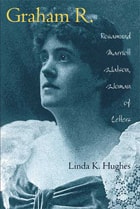
Graham R.
Rosamund Marriot Watson, Woman of LettersLinda K. Hughes
Ohio University Press, 2005
Rosamund Marriott Watson was a gifted poet, an erudite literary and art critic, and a daring beauty whose life illuminates fin-de-siècle London and the way in which literary reputations are made—and lost. A participant in aestheticism and decadence, she wrote six volumes of poems noted for their subtle cadence, diction, and uncanny effects. Linda K. Hughes unfolds a complex life in Graham R.: Rosamund Marriott Watson, Woman of Letters, tracing the poet’s development from accomplished ballads and sonnets, to avant-garde urban impressionism and New Woman poetry, to her anticipation of literary modernism.
Despite an early first divorce, she won fame writing under a pseudonym, Graham R. Tomson. The influential Andrew Lang announced the arrival of a new poet he assumed to be a man. She was soon hosting a salon attended by Lang, Oscar Wilde, and other 1890s notables. Publishing to widespread praise as Graham R., she exemplified the complex cultural politics of her era. A woman with a man’s name and a scandalous past, she was also a graceful beauty who captivated Thomas Hardy and left an impression on his work. At the height of her success she fell in love with writer H. B. Marriott Watson and dared a second divorce.
Graham R. combines the stories of a gifted poet, of London literary networks in the 1890s, and of a bold woman whose achievements and scandals turned on her unusual history of marriage and divorce. Her literary history and her uncommon experience reveal the limits and opportunities faced by an unconventional, ambitious, and talented woman at the turn of the century.
Grass Widow
Making My Way in Depression AlabamaViola Goode Liddell
University of Alabama Press, 2004
An engaging account of one woman’s overcoming the Depression and small town mores.
Viola Goode Liddell’s short memoir tells the story of her return to Alabama in search of a husband and a new life. Thirty years old and recently divorced, Liddell comes back to her home state—with her young son—determined to survive, during the depths of the Depression. Liddell narrates the obstacles she faces as a single mother in the 1930s Deep South with self-deprecating humor and a confessional tone that reveal both her intelligence and her unapologetic ambitions.
Unable to earn, borrow, or beg enough money to support herself and her child, Liddell uses her family connections to secure a teaching position in Camden, Alabama. Even though an older sister’s status within the community helps her land the job, Liddell is warned that she must be very careful as she navigates the tricky social terrain of small town life, particularly when it comes to men. A commentary on the plight of women of the time is woven into the narrative as Liddell recounts her experience of being refused a loan at the local bank by her own brother-in-law.
Despite all the restrictions on her behavior and the crushing reality that she has become "the biggest nuisance in the family" because of her past, Liddell cheerfully and successfully builds a new life of respectability and hope.
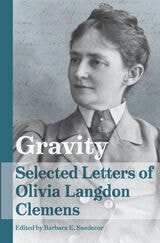
Gravity
Selected Letters of Olivia Langdon ClemensEdited by Barbara E. Snedecor
University of Missouri Press, 2023
Greg Egan
Karen Burnham
University of Illinois Press, 2014
Greg Egan (1961- ) publishes works that challenge readers with rigorous, deeply-informed scientific speculation. He unapologetically delves into mathematics, physics, and other disciplines in his prose, putting him in the vanguard of the hard science fiction renaissance of the 1990s.
A working physicist and engineer, Karen Burnham is uniquely positioned to provide an in-depth study of Egan's science-heavy oeuvre. Her survey of the author's career covers novels like Permutation City and Schild's Ladder and the Hugo Award-winning novella "Oceanic," analyzing how Egan used cutting-edge scientific theory to explore ethical questions and the nature of humanity. As Burnham shows, Egan's collected works constitute a bold artistic statement: that narratives of science are equal to those of poetry and drama, and that science holds a place in the human condition as exalted as religion or art.
The volume includes a rare interview with the famously press-shy Egan covering his works, themes, intellectual interests, and thought processes.
Gregory Benford
George Slusser
University of Illinois Press, 2014
Like many other current science fiction writers, Benford has tackled the major genres: space travel, time travel, technology running amok, prolonged longevity, searing apocalyptic cosmic events, and alien life, which he theorizes to be more likely viral than intelligent. An astrophysicist by training and profession, Benford has published more than twenty novels, over one hundred short stories, some fifty essays, and myriad articles that display both his scientific rigor as well as a recognition of literary traditions.
In this study, George Slusser explores the extraordinary, seemingly inexhaustible display of creative energy in Gregory Benford's life and work. Presenting Benford's ideas on science and the writing of science fiction, the volume addresses the writer's literary production and his place in contemporary science fiction. By identifying direct sources and making parallels with other works and writers, Slusser reveals the vast scope of Benford's knowledge, both of literature and of the major scientific and philosophical issues of our time. Slusser also discusses Benford's numerous scientific articles and nonfiction books and includes a new interview with Benford.
Gut Feelings
A Writer'S Truths And Minute InventionsMerrill Joan Gerber
University of Wisconsin Press, 2003
Gerber writes of her apprenticeships with celebrated writing teachers Andrew Lytle and Wallace Stegner and recounts her ghostly (and ghastly) experiences during a month at Yaddo, the famous retreat for artists. Gerber includes three pieces in the book—originally published as stories—but which blur the line between fiction and memoir, demonstrating Gerber’s contention that the deepest secrets in life beget the most passionate fictions.