Results by title
459 books match the query 'Literature' and 7 start with g

Gendering Bodies/Performing Art
Dance and Literature in Early Twentieth-Century British CultureAmy Koritz
University of Michigan Press, 1995

Genealogy and Literature
Lee Quinby, Editor
University of Minnesota Press, 1995
Genealogy and Literature was first published in 1995. Minnesota Archive Editions uses digital technology to make long-unavailable books once again accessible, and are published unaltered from the original University of Minnesota Press editions.
Traditionalists insist that literature transcends culture. Others counter that it is subversive by nature. By challenging both claims, Genealogy and Literature reveals the importance of literature for understanding dominant and often violent power/knowledge relations within a given society.
The authors explore the ways in which literature functions as a cultural practice, the links between death and literature as a field of discourse, and the possibilities of dismantling modes of bodily regulation. Through wide-ranging investigations of writing from England, France, Nigeria, Peru, Japan, and the United States, they reinvigorate the study of literature as a means of understanding the complexities of everyday experience.
Contributors: Claudette Kemper Columbus, Lennard J. Davis, Simon During, Michel Foucault, Ellen J. Goldner, Tom Hayes, Kate Mehuron, Donald Mengay, Imafedia Okhamafe, Lee Quinby, José David Saldivar, Malini Johar Schueller.
Lee Quinby is professor of English and American studies at Hobart and William Smith Colleges. She is the author of Anti-Apocalypse: Exercises in Genealogical Criticism (Minnesota, 1994).

Georg Lukacs and Thomas Mann
A Study in the Sociology of LiteratureMarcus, Judith
University of Massachusetts Press, 1987
Georg Lukács, the philosopher and literary critic, and Thomas Mann, the creative artist were two towering figures in the twentieth-century European intellectual life. Although they enjoyed a fruitful literary relationship, the two men never established an intimate friendship. In fact, Lukács once said that the only “dark spot” and “unsolved mystery” in his life was Mann’s life-long unresponsiveness to him as a bad person. Based primarily on Lukács, Katja Mann, Ernst Bloch, Arnold Hauser, and others, Part I of this study traces the development of “spiritual-intellectual symbiosis” between Lukács and Mann that lasted at least until the First World War. Part 2 turns to the question of the inspirational sources for Mann’s fictional characters, Leo Naphta, in his novel The Magic Mountain. Exploring the claim that Lukács himself was the model for his protagonist, Judith Marcus looks at the “Jewish intellectual” as an ideal type throughout Mann’s oeuvre. She concludes that Naphta’s totalitarian personality was inspired by the radicalism, rigidity, dogmatism, and asceticism of the young, then non-Marxist Lukács, and that is was in part these very traits in Lukács that stymied the growth of personal intimacy between the two men.
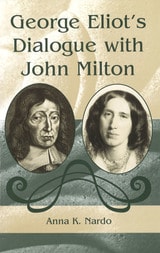
George Eliot's Dialogue with John Milton
Anna K. Nardo
University of Missouri Press, 2003

Getting It Right
Language, Literature, and EthicsGeoffrey Galt Harpham
University of Chicago Press, 1992

Guidelines on Subject Access to Individual Works of Fiction, Drama, Etc.
American Library Association, 2000
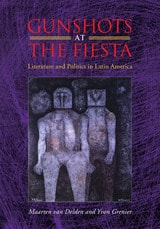
Gunshots at the Fiesta
Literature and Politics in Latin AmericaMaarten van Delden
Vanderbilt University Press, 2009
Yet the authors of this book argue that the relationship between the two realms is much more complex and fraught with tension than is nowadays recognized. In examining these tensions, and in revealing the diverse ways in which literature and politics intersect in the Latin American cultural tradition, Gunshots at the Fiesta offers a lively challenge to the current tendency--especially strong in the U.S. academy--to read Latin American literature through a narrowly political prism.
The authors argue that one can only understand the nature of the dialogue between literature and politics if one begins by recognizing the different logics that operate in these different domains. Using this idea of the different logics of politics and literature as a guiding thread, Van Delden and Grenier offer bold new readings of major authors such as José Martí, Octavio Paz, Carlos Fuentes, Gabriel García Márquez, and Mario Vargas Llosa, as well as compelling interpretations of works by less-frequently-discussed figures such as Claribel Alegría, Marisol Martín del Campo and Víctor Hugo Rascón Banda.