Results by title
164 books match the query 'Medical care' and 3 start with g
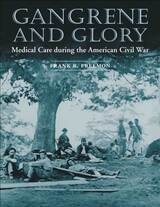
Gangrene and Glory
Medical Care during the American Civil WarFrank R. Freemon
University of Illinois Press, 1998
This unusual history of the Civil War takes a close look at the battlefield doctors in whose hands rested the lives of thousands of Union and Confederate soldiers and at the makeshift medicine they were forced to employ.
A medical doctor and a credentialed historian, Frank R. Freemon combines poignant, sometimes horrifying anecdotes of amputation, infection, and death with a clearheaded discussion of the state of medical knowledge, the effect of the military bureaucracy on medical supplies, and the members of the medical community who risked their lives, their health, and even their careers to provide appropriate care to the wounded. Freemon examines the impact on major campaigns--Manassas, Gettysburg, Vicksburg, Shiloh, Atlanta--of ignorance, understaffing, inexperience, overcrowded hospitals, insufficient access to ambulances, and inadequate supplies of essentials such as quinine.
Presenting the medical side of the war from a variety of perspectives--the Union, the Confederacy, doctors, nurses, soldiers, and their families--Gangrene and Glory achieves a peculiar immediacy by restricting its scope to the knowledge and perceptions available to its nineteenth-century subjects. Now available for the first time in paperback, this important volume takes a hard, close look at a neglected and crucial aspect of this bloody conflict.
[more]
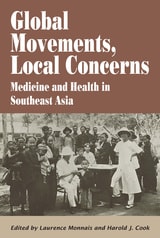
Global Movements, Local Concerns
Medicine and Health in Southeast AsiaEdited by Laurence Monnais and Harold J. Cook
National University of Singapore Press, 2012
The development of medicine in Southeast Asia over the past two centuries has not been a simple imposition of European scientific medicine, but a complex and negotiated process that drew on Southeast Asian health experts, local medical traditions, and changing national and popular expectations. The contributors to this volume show how the practices of health in Southeast Asia over the past two centuries were mediated by local medical traditions, colonial interests, governments and policies, international interventions, and by a wide range of health agents and intermediaries. Their findings call into question many of the claims based on medicalization and biopolitics that treat change as a process of rupture. While governments, both colonial and national, instituted policies that affected large numbers of people, much health care remained rooted in a more interactive and locally-mediated experience, in which tradition, adaptation and hybridization is as important as innovation and conflict. "Semi-subaltern" Western-trained doctors and varied traditional healers, many of them women, were among the cultural brokers involved in the building of healthcare systems, and helped circulate mixed practices and ideas about medicine and health even as they found their place in new professional and social hierarchies in an era of globalization.
[more]
Good Medicine, Hard Times
Memoir of a Combat Physician in IraqEdward P. Horvath, MD
The Ohio State University Press, 2022
Good Medicine, Hard Times is the moving memoir of one of the most senior-ranking combat physicians to have served on the battlefields of the second Iraq war. Former US Army Colonel Edward P. Horvath, MD, brings readers through the intricacies of war as he relates stories of working to save the lives of soldiers, enemies, and civilians alike and shares the moral dilemmas faced by medical professionals during war. Enlisting in the Army as a fifty-nine-year-old physician, Dr. Horvath knew that he had a greater calling in life: to save the “neighbor’s kid”—no matter who that neighbor or the kid might be. Over his three deployments, he strived to do that amid cultural clashes, insurgent attacks, military controversy, and the suffering of children caught in the crossfire. In his clear-eyed, empathetic, and unforgettable account, he shows what it means to provide compassionate care in the most trying of circumstances, always keeping in mind that every person he cares for is someone’s child.
[more]