Results by title
308 books match the query 'Memory' and 11 start with g
Gallery Bundu
A Story about an African PastPaul Stoller
University of Chicago Press, 2005
In Paul Stoller's work of fiction framed by African storytelling, David is the 52-year-old co-owner of Gallery Bundu, an African art shop in New York City. As a young man in the late 1960s, he joined the Peace Corps to avoid the draft. Assigned to teach English in Niger, he was eager to seek out adventure, and he found it—from drugged-out American expatriates and mamba-filled forests to seductive African women. In the course of his stay in Niger, David meets and falls in love with Zeinabou, a strikingly beautiful woman who professes her love to him, though David believes that he is not the only man she dates. Two weeks before his anticipated return to the United States, Zeinabou informs David that she is pregnant with what she believes is his child. Not knowing how to react, David flees Niger and returns to America ridden with guilt. The hastiness of David's decision will shadow his every move for the rest of his life and will lead him to eventually return to Niger and try to make amends.
Beautifully written and deeply felt, Gallery Bundu is a cautionary tale about the impulses of youth and the unyielding grip of regret. Stoller's vivid language and style allow readers, through David's recollections, to touch, taste, and smell the sensations of West Africa—the tasty aroma of a traditional African fish stew, the spectacle of witches, and the humorous and often frightening experiences of traveling in the bush. A lyrical novel of decisions and destiny, Gallery Bundu is rich in character and detail, bringing anthropology to a new literary height.
Gathering Together, We Decide
Archives of Dispossession, Resistance, and Memory in Ndé HomelandsEdited by Margo Tamez, Cynthia Bejarano, and Jeffrey P. Shepherd
University of Arizona Press, 2025
In response, Dr. Eloisa Tamez and her daughter, Dr. Margo Tamez, organized a gathering of Lipan tribal members, activists, lawyers, and allies to meet in El Calaboz, South Texas. This gathering was a response to the appropriation of the Tamez family land, but it also provided an international platform to dispute the militarization of Indigenous territory throughout the U.S.-Mexico bordered lands. The gathering and years of ensuing resistance and activism produced an archive of scholarly analyses, testimonios, artwork, legal briefs, poetry, and other cultural productions.
This unique collection spotlights powerful voices and perspectives from Ndé leaders, Indigenous elders, settler-allies, Native youth, and others associated with the Tamez family, the Ndé defiance, and the larger Indigenous rights movement to document their resistance; expose, confront, and end racism and militarization; and to foreground Indigenous women–led struggles for justice.

Gay Men at the Movies
Cinema, Memory and the History of a Gay Male CommunityScott McKinnon
Intellect Books, 2016
Generations and Collective Memory
Amy Corning and Howard Schuman
University of Chicago Press, 2015
Their key finding—built on historical research and interviews in the United States and seven other countries (including China, Japan, Germany, Lithuania, Russia, Israel, and Ukraine)—is that our most powerful generational memories are of shared experiences in adolescence and early adulthood, like the 1963 Kennedy assassination for those born in the 1950s or the fall of the Berlin Wall for young people in 1989. But there are exceptions to that rule, and they're significant: Corning and Schuman find that epochal events in a country, like revolutions, override the expected effects of age, affecting citizens of all ages with a similar power and lasting intensity.
The picture Corning and Schuman paint of collective memory and its formation is fascinating on its face, but it also offers intriguing new ways to think about the rise and fall of historical reputations and attitudes toward political issues.
Genocide Lives in Us
Women, Memory, and Silence in RwandaJennie E. Burnet
University of Wisconsin Press, 2012
In the aftermath of the 1994 genocide, Rwandan women faced the impossible—resurrecting their lives amidst unthinkable devastation. Haunted by memories of lost loved ones and of their own experiences of violence, women rebuilt their lives from “less than nothing.” Neither passive victims nor innate peacemakers, they traversed dangerous emotional and political terrain to emerge as leaders in Rwanda today. This clear and engaging ethnography of survival tackles three interrelated phenomena—memory, silence, and justice—and probes the contradictory roles women played in postgenocide reconciliation.
Based on more than a decade of intensive fieldwork, Genocide Lives in Us provides a unique grassroots perspective on a postconflict society. Anthropologist Jennie E. Burnet relates with sensitivity the heart-wrenching survival stories of ordinary Rwandan women and uncovers political and historical themes in their personal narratives. She shows that women’s leading role in Rwanda’s renaissance resulted from several factors: the dire postgenocide situation that forced women into new roles; advocacy by the Rwandan women’s movement; and the inclusion of women in the postgenocide government.
Honorable Mention, Aidoo-Snyder Book Prize, Women’s Caucus of the African Studies Association
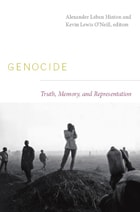
Genocide
Truth, Memory, and RepresentationAlexander Laban Hinton and Kevin Lewis O Neill, eds.
Duke University Press, 2009
Specialists on the societies about which they write, these anthropologists draw on ethnographic research to provide on-the-ground analyses of communities in the wake of mass brutality. They investigate how mass violence is described or remembered, and how those representations are altered by the attempts of others, from NGOs to governments, to assert “the truth” about outbreaks of violence. One contributor questions the neutrality of an international group monitoring violence in Sudan and the assumption that such groups are, at worst, benign. Another examines the consequences of how events, victims, and perpetrators are portrayed by the Rwandan government during the annual commemoration of that country’s genocide in 1994. Still another explores the silence around the deaths of between eighty and one hundred thousand people on Bali during Indonesia’s state-sponsored anticommunist violence of 1965–1966, a genocidal period that until recently was rarely referenced in tourist guidebooks, anthropological studies on Bali, or even among the Balinese themselves. Other contributors consider issues of political identity and legitimacy, coping, the media, and “ethnic cleansing.” Genocide: Truth, Memory, and Representation reveals the major contribution that cultural anthropologists can make to the study of genocide.
Contributors. Pamela Ballinger, Jennie E. Burnet, Conerly Casey, Elizabeth Drexler, Leslie Dwyer, Alexander Laban Hinton, Sharon E. Hutchinson, Uli Linke, Kevin Lewis O’Neill, Antonius C. G. M. Robben, Debra Rodman, Victoria Sanford
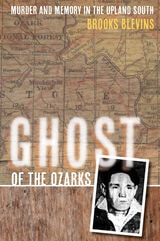
Ghost of the Ozarks
Murder and Memory in the Upland SouthBrooks Blevins
University of Illinois Press, 2012
Ghostly Figures
Memory and Belatedness in Postwar American PoetryAnn Keniston
University of Iowa Press, 2015
Ghostly Figures contends that this poetics of belatedness, along with the way it is bound to questions of poetic making, is a central, if critically neglected, force in postwar American poetry. Discussing works by Sylvia Plath, Adrienne Rich, Jorie Graham, Susan Howe, and a group of poets responding to the AIDS epidemic, Ann Keniston draws on and critically assesses trauma theory and psychoanalysis, as well as earlier discussions of witness, elegy, lyric trope and figure, postmodernism, allusion, and performance, to define the ghosts that clearly dramatize poetics of belatedness throughout the diverse poetry of post–World War II America.
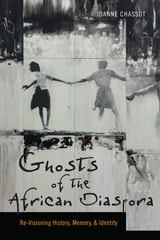
Ghosts of the African Diaspora
Re-Visioning History, Memory, and IdentityJoanne Chassot
Dartmouth College Press, 2018
Global Memoryscapes
Contesting Remembrance in a Transnational AgeEdited by Kendall R. Phillips and G. Mitchell Reyes
University of Alabama Press, 2011
The essays contained within the volume--by scholars from a wide range of disciplines including American studies, art history, political science, psychology, and sociology--each engage a particular instance of the practices of memory as they are complicated by globalization.
Subjects include the place of nostalgia in post-Yugoslavia Serbian national memory, Russian identity after the collapse of the Soviet Union, political remembrance in South Africa’s Truth and Reconciliation Commissions, the role of Chilean mass media in forging national identity following the arrest of Augusto Pinochet, American debates over memorializing Japanese internment camps, and how the debate over the Iraq war is framed by memories of opposition to the Vietnam War.

Grotowski's Bridge Made of Memory
Embodied Memory, Witnessing and Transmission in the Grotowski WorkDominika Laster
Seagull Books, 2016
Considered one of the most influential theatre practitioners of the 20th century, Polish director Jerzy Grotowski revolutionized contemporary theatre in multiple ways. Perhaps best known for his notion of ‘poor theatre,’ Grotowski went beyond the confines of conventional theatre to systematically explore the possibilities of the human being in a performative context. In Grotowski’s Bridge Made of Memory, Dominika Laster analyzes core aspects of Grotowski’s work such as body-memory, vigilance, witnessing, verticality, and transmission, arguing that these performance praxes involve a deliberate blurring of the boundaries of the self and other.
This comprehensive study traces key thematic threads across Grotowski’s research, examining lesser-known aspects of his work such as performance compositions structured around African and Afro-Caribbean traditional songs and ritual movement as well as textual material from the Christian Gnostic tradition. As an active process of research and questioning conducted through the “body-being” of the performer, Grotowski’s work represents a practical realization of the often highly theoretical and abstract discussions of one of the field’s main preoccupations: embodied practice as a way of knowing.