Results by title
355 books match the query 'Middle Atlantic (DC, DE, MD, NJ, NY, PA)' and 5 start with g
Garbage in the Garden State
Jordan P. Howell
Rutgers University Press, 2023
Howell acknowledges that New Jersey is sometimes imagined, particularly by non-New Jerseyans, as a giant garbage dump for New York and Philadelphia. But every place has had to struggle with the challenges of waste management. New Jersey's trash history is in fact more interesting and more important than most. New Jersey’s waste history includes intensive planning, deep-seated political conflict, organized crime, and literally every level of state and federal judiciary. It is a colorful history, to say the least, and one that includes a number of firsts with regard to recycling, comprehensive planning, and the challenging economics of trash.
Global Philadelphia
Immigrant Communities Old and NewEdited by Ayumi Takenaka and Mary Johnson Osirim
Temple University Press, 2010
The racial and ethnic composition of Philadelphia continues to diversify as a new wave of immigrants—largely from Asia and Latin America—reshape the city’s demographic landscape. Moreover, in a globalized economy, immigration is the key to a city’s survival and competitiveness. The contributors to Global Philadelphia examine how Philadelphia has affected its immigrants’ lives, and how these immigrants, in turn, have shaped Philadelphia.
Providing a detailed historical, ethnographic, and sociological look at Philadelphia’s immigrant communities, this volume examines the social and economic dynamics of various ethnic populations. Significantly, the contributors make comparisons to and connections between the traditional immigrant groups—Germans, Italians, the Irish, Jews, Puerto Ricans, and Chinese—and newer arrivals, such as Cambodians, Haitians, Indians, Mexicans, and African immigrants of various nationalities.
While their experiences vary, Global Philadelphia focuses on some of the critical features that face all immigrant groups—intra-group diversity, the role of institutions, and ties to the homeland. Taken together, these essays provide a richer understanding of the processes and implications of contemporary immigration to the area.
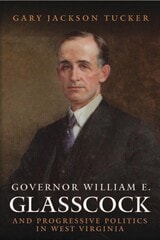
Governor William Glasscock and Progressive Politics in West Virginia
Gary Jackson Tucker
West Virginia University Press, 2008
From 1909 to 1913, Governor William Glasscock served the state of West Virginia as an ardent progressive and reformer. In his inaugural address he proclaimed government "the machinery invoked and devised by man for his benefit and protection” and good government the guarantor of the happiness, prosperity, success, and welfare of the people. Governor William Glasscock and Progressive Politics in West Virginia recounts the life and work of West Virginia’s thirteenth governor. Born during the Civil War, Glasscock witnessed a country torn by sectional, fratricidal war become a powerful industrial nation by the turn of the twentieth century. Author Gary Jackson Tucker demonstrates how Glasscock, along with others during the Progressive Era, railed against large and powerful political and economic machines to enact legislation protecting free and fair elections, just taxation, regulation of public utilities, and workmen’s compensation laws. Never hesitating to use the power of the state to stand firm against racism and mob rule, and placing his own personal safety in jeopardy, Glasscock won the praise and admiration of average people. Glasscock’s four years in office took his own health and financial security from him, but left behind a better government—a good government—for the people of West Virginia.
Grand Forage 1778
The Battleground Around New York CityTodd W. Braisted
Westholme Publishing, 2016
After two years of defeats and reverses, 1778 had been a year of success for George Washington and the Continental Army. France had entered the war as the ally of the United States, the British had evacuated Philadelphia, and the redcoats had been fought to a standstill at the Battle of Monmouth. While the combined French-American effort to capture Newport was unsuccessful, it lead to intelligence from British-held New York that indicated a massive troop movement was imminent. British officers were selling their horses and laying in supplies for their men. Scores of empty naval transports were arriving in the city. British commissioners from London were offering peace, granting a redress of every grievance expressed in 1775. Spies repeatedly reported conversations of officers talking of leaving. To George Washington, and many others, it appeared the British would evacuate New York City, and the Revolutionary War might be nearing a successful conclusion. Then, on September 23, 1778, six thousand British troops erupted into neighboring Bergen County, New Jersey, followed the next day by three thousand others surging northward into Westchester County, New York. Washington now faced a British Army stronger than Burgoyne’s at Saratoga the previous year. What, in the face of all intelligence to the contrary, had changed with the British?
Through period letters, reports, newspapers, journals, pension applications, and other manuscripts from archives in the United States, Canada, United Kingdom, and Germany, the complete picture of Britain’s last great push around New York City can now be told. The strategic situation of Britain’s tenuous hold in America is intermixed with the tactical views of the soldiers in the field and the local inhabitants, who only saw events through their narrow vantage points. This is the first publication to properly narrate the events of this period as one campaign. Grand Forage 1778: The Battleground Around New York City by historian Todd W. Braisted explores the battles, skirmishes, and maneuvers that left George Washington and Sir Henry Clinton playing a deadly game of chess in the lower Hudson Valley as a prelude to the British invasion of the Southern colonies.
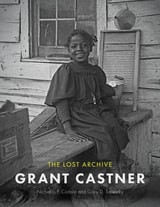
Grant Castner
The Lost ArchiveNicholas P. Ciotola
Rutgers University Press, 2026
Castner’s glass plate negatives are a visual record of New Jersey’s social and cultural history. His many human subjects are rich and poor, young and old, Black and white. They are at work, at play, at home, and in the community. Castner also documented social change brought about by electricity, engineering, education, industry, and transportation. He captured the excitement of public amusements such as parades and fairs. He recorded the aftermath of floods, fires and other disasters. Castner also had a fondness for the outdoors. He used his camera to reflect on the beauty and tranquility that he found in the natural landscapes of New Jersey.
This book presents the collective work of Grant Castner, an amateur artist whose place in New Jersey history was, until now, completely unknown. His photographic negatives forever preserve pinpoint moments in the past. They are time machines to another era. Let this long lost archive transport you on a visual journey into a New Jersey of days gone by.