Results by title
188 books match the query 'Middle Eastern' and 3 start with g
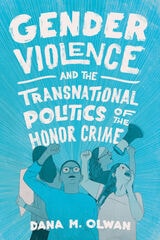
Gender Violence and the Transnational Politics of the Honor Crime
Dana M. Olwan
The Ohio State University Press, 2021
More specifically, Olwan traces the term’s appearance in public and popular works that allow for its continued mass acceptance and circulation—from media depictions in Canada and beyond, to how it is taken up in national registers about migration and belonging in the US, to activism in Palestine that reveal the fault lines between activist and academic critiques of the honor crime, and finally to feminist efforts in Jordan and the wider Middle East to confront legal codes used to sanction gender-related violence. Through these cases, Olwan demonstrates how the honor crime functions as a signifier that governs and manages populations and how its meanings travel and circulate across and between separate and interconnected circuits of power and knowledge.
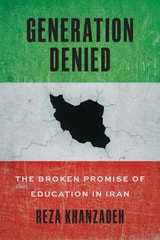
Generation Denied
The Broken Promise of Education in IranReza Khanzadeh
University of Texas Press, 2026
An examination of the struggles of Iran’s youth when education promises success only through loyalty to the regime, and how that loyalty manifests through ideological capital within regime-imposed parameters.
Education is highly prized in Iranian society, touted as the key to success and influence. After all, the state’s top leaders are themselves scholars and experts in Islamic thought, history, and law, and graduates of elite institutions like Sharif University enjoy better job prospects than their peers. Yet the promise of a return on investment from education is a ruse: What unlocks opportunity is not academic development but loyalty to the regime. Generation Denied shows how the education system, from middle school through university, relies on standardized tests to funnel students into politically quiescent STEM fields, limiting their potential and quashing intellectual opposition to the regime. Students then graduate into a job market dominated by regime-affiliated entities, who hire applicants on the basis not of skills but of political agendas. Those who resist discover that the future they want in Iran does not exist, resulting in compelled migration. Closely following five young men who chose to be outsiders by pursuing education while rejecting political conformity, Reza Khanzadeh situates Iran within a broader global context, offering groundbreaking insight into the roles of education and employment in non-democratic governments.
Giving Voice to Stones
Place and Identity in Palestinian LiteratureBy Barbara McKean Parmenter
University of Texas Press, 1994
"A struggle between two memories" is how Palestinian poet Mahmud Darwish describes the conflict between Palestinians and Israelis. Within this struggle, the meanings of land and home have been challenged and questioned, so that even heaps of stones become points of contention. Are they proof of ancient Hebrew settlement, or rubble from a bulldozed Palestinian village? The memory of these stones, and of the land itself, is nurtured and maintained in Palestinian writing and other modes of expression, which are used to confront and counter Israeli images and rhetoric. This struggle provides a rich vein of thought about the nature of human experience of place and the political uses to which these experiences are put.
In this book, Barbara McKean Parmenter explores the roots of Western and Zionist images of Palestine, then draws upon the work of Darwish, Ghassan Kanafani, and other writers to trace how Palestinians have represented their experience of home and exile since the First World War. This unique blending of cultural geography and literary analysis opens an unusual window on the struggle between these two peoples over a land that both divides them and brings them together.