Results by title
968 books match the query 'Movements' and 37 start with g
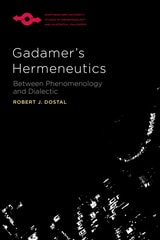
Gadamer’s Hermeneutics
Between Phenomenology and DialecticRobert J. Dostal
Northwestern University Press, 2022
The book situates Gadamer’s hermeneutics in three important ways: in relation to the contestability of the legacy of the Enlightenment project; in relation to the work of his mentor, Martin Heidegger; and in relation to Gadamer’s reading of Plato and Aristotle. Dostal explores both Gadamer’s claim on the Enlightenment and his ambivalence toward it. He considers Gadamer’s dependence on Heidegger’s accomplishment while pointing out the ways in which Gadamer charted his own course, rejecting his teacher’s reading of Plato and his antihumanism. Dostal points out notable differences in the philosophers’ politics as well. Finally, Dostal mediates between Gadamer’s hermeneutics and what might be called philological hermeneutics. His analysis defends the civic humanism that is the culmination of the philosopher’s hermeneutics, a humanism defined by moral education, common sense, judgment, and taste. Supporters and critics of Gadamer’s philosophy will learn much from this major achievement.
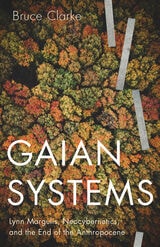
Gaian Systems
Lynn Margulis, Neocybernetics, and the End of the AnthropoceneBruce Clarke
University of Minnesota Press, 2020
A groundbreaking look at Gaia theory’s intersections with neocybernetic systems theory
Often seen as an outlier in science, Gaia has run a long and varied course since its formulation in the 1970s by atmospheric chemist James Lovelock and microbiologist Lynn Margulis. Gaian Systems is a pioneering exploration of the dynamic and complex evolution of Gaia’s many variants, with special attention to Margulis’s foundational role in these developments.
Bruce Clarke assesses the different dialects of systems theory brought to bear on Gaia discourse. Focusing in particular on Margulis’s work—including multiple pieces of her unpublished Gaia correspondence—he shows how her research and that of Lovelock was concurrent and conceptually parallel with the new discourse of self-referential systems that emerged within neocybernetic systems theory. The recent Gaia writings of Donna Haraway, Isabelle Stengers, and Bruno Latour contest its cybernetic status. Clarke engages Latour on the issue of Gaia’s systems description and extends his own systems-theoretical synthesis under what he terms “metabiotic Gaia.” This study illuminates current issues in neighboring theoretical conversations—from biopolitics and the immunitary paradigm to NASA astrobiology and the Anthropocene. Along the way, he points to science fiction as a vehicle of Gaian thought.
Delving into many issues not previously treated in accounts of Gaia, Gaian Systems describes the history of a theory that has the potential to help us survive an environmental crisis of our own making.

Gender and Historiography
Studies in the earlier middle ages in honour of Pauline StaffordJanet L. Nelson, Susan Reynolds, and Susan M. Johns
University of London Press, 2012
Genesis and Structure of Hegel's "Phenomenology of Spirit"
Jean Hyppolite
Northwestern University Press, 1979
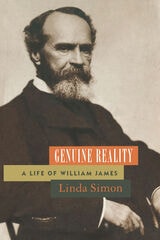
Genuine Reality
A Life of William JamesLinda Simon
University of Chicago Press, 1999
"William James . . . has never seemed so vulnerably human as in Linda Simon's biography. . . . [S]he vivifies James in such a way that his life and thought come freshly alive for the modern reader."—David S. Reynolds, New York Times Book Review
"Superb. . . . Genuine Reality is recommended reading for all soul-searchers."—George Gurley, Chicago Tribune
"Ms. Simon . . . has provided an ideal pathway for James's striding. . . . [Y]ou become engaged in his struggles as if they were your own."—Christopher Lehmann-Haupt, New York Times
"[A]n excellent narrative biography at once sensitively told and lucidly written."—John Patrick Diggins, Wall Street Journal

Gerard de Lairesse and his Painted Heavens
Iconography, Style and Technique in the Art of Ceiling PaintingMargriet van Eikema Hommes
Amsterdam University Press, 2026
In this book, Margriet van Eikema Hommes, in search of an explanation for this ceiling painting’s intriguing origins, investigates its meaning and purpose. The painter and his patron prove to have been jointly responsible for the iconography, which they repeatedly updated to reflect military and political events in the Disaster Year and the dramatic twists of fate in De Graeff’s own life.
This beautifully illustrated book not only situates the work within its cultural and historical context but also offers an in-depth examination of Lairesse’s painting technique and the way he meticulously designed his ceiling pieces in close dialogue with the architecture of the room.
Gerard de Lairesse and his Painted Heavens
Iconography, Style and Technique in the Art of Ceiling PaintingLynne Richards
Amsterdam University Press, 2027
In this book, Margriet van Eikema Hommes, in search of an explanation for this ceiling painting’s intriguing origins, investigates its meaning and purpose. The painter and his patron prove to have been jointly responsible for the iconography, which they repeatedly updated to reflect military and political events in the Disaster Year and the dramatic twists of fate in De Graeff’s own life.
This beautifully illustrated book not only situates the work within its cultural and historical context but also offers an in-depth examination of Lairesse’s painting technique and the way he meticulously designed his ceiling pieces in close dialogue with the architecture of the room.
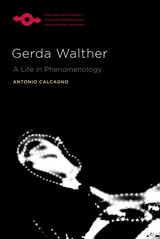
Gerda Walther
A Life in PhenomenologyAntonio Calcagno
Northwestern University Press, 2027
Exploring the rich phenomenological and psychological insights of Gerda Walther
This is the first major study of Gerda Walther (1897–1977), an important but underappreciated figure in the early phenomenological movement and one of the founding members of the coeducational Freiburg Phenomenological Society. Walther saw herself, along with Hedwig Conrad Martius and Edith Stein, as a student of the phenomenological movement charged with the preservation of its philosophical legacy and the extension of its practice. As Antonio Calcagno elucidates in this learned but accessible biographical account, she served as an important bridge between the Freiburg school of phenomenology, marked by Edmund Husserl’s idealism, and the realist branch that emerged in Munich, where she completed her studies with Alexander Pfänder. Her work has remained little known, however, especially to English-language readers.
Calcagno provides a comprehensive picture of Walther’s philosophical corpus and ideas, from her early investigations to her later writings, while highlighting the originality of her own phenomenological work. He shows how she challenged certain key claims of phenomenology and provided unique solutions to the problems she encountered. The phenomenology that Walther leaves us with is deeply marked by her emphasis on the importance of psyche, spirit, and personhood for achieving a phenomenological methodology and understanding. We find in her work a rich phenomenological psychology that explores not only the limit phenomena of the discipline but also the deep structure of inner psychic life framed in personalist terms.
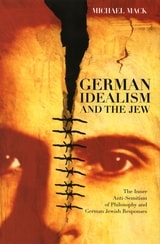
German Idealism and the Jew
The Inner Anti-Semitism of Philosophy and German Jewish ResponsesMichael Mack
University of Chicago Press, 2003
Offering the first analytical account of the connection between anti-Semitism and philosophy, Mack begins his exploration by showing how the fundamental thinkers in the German idealist tradition—Kant, Hegel, and, through them, Feuerbach and Wagner—argued that the human world should perform and enact the promises held out by a conception of an otherworldly heaven. But their respective philosophies all ran aground on the belief that the worldly proved incapable of transforming itself into this otherworldly ideal. To reconcile this incommensurability, Mack argues, philosophers created a construction of Jews as symbolic of the "worldliness" that hindered the development of a body politic and that served as a foil to Kantian autonomy and rationality.
In the second part, Mack examines how Moses Mendelssohn, Heinrich Heine, Franz Rosenzweig, and Freud, among others, grappled with being both German and Jewish. Each thinker accepted the philosophies of Kant and Hegel, in varying degrees, while simultaneously critiquing anti-Semitism in order to develop the modern Jewish notion of what it meant to be enlightened—a concept that differed substantially from that of Kant, Hegel, Feuerbach, and Wagner. By speaking the unspoken in German philosophy, this book profoundly reshapes our understanding of it.
German Idealism
An Anthology and GuideEdited by Brian O'Connor and Georg Mohr
University of Chicago Press, 2007
Beginning with the publication of Kant’s Critique of Pure Reason and extending through to Hegel’s death, the period known as German Idealism signaled the end of an epoch of rationalism, empiricism, and enlightenment—and the beginning of a new “critical” period of philosophy. The most comprehensive anthology of this vital tradition to date, German Idealism brings together an expansive selection of readings from the tradition’s major figures like Kant, Hegel, Fichte, and Schelling.
Arranged thematically into sections on topics such as the relationships between self and knowledge, freedom and morality, law and state, and nature and science, to name a few, German Idealism discloses many of the contrasts that helped to differentiate each of the tradition’s key thinkers. Each expertly translated text comes with an editorial introduction to guide readers through many of the problems the texts specifically deal with, as well as their historical context.
The most accessible and expansive introduction to German Idealism ever, this anthology will be hailed by instructors and scholars as the most dependable guide to the tradition for years to come.
Geschlecht III
Sex, Race, Nation, HumanityJacques Derrida
University of Chicago Press, 2020
Amid new revelations about Heidegger’s anti-Semitism and the contemporary context of nationalist resurgence, this third piece of the Geschlecht series is timelier and more necessary than ever. Meticulously edited and expertly translated, this volume brings Derrida’s mysterious and much awaited text to light.
Gesta, volume 60 number 2 (Fall 2021)
The University of Chicago Press
University of Chicago Press Journals, 2021
Gesta, volume 61 number 1 (Spring 2022)
The University of Chicago Press
University of Chicago Press Journals, 2022
Gesta, volume 61 number 2 (Fall 2022)
The University of Chicago Press
University of Chicago Press Journals, 2022
Gesta, volume 62 number 1 (Spring 2023)
The University of Chicago Press
University of Chicago Press Journals, 2023
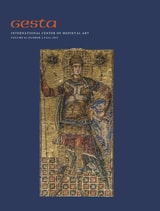
Gesta, volume 62 number 2 (Fall 2023)
The University of Chicago Press
University of Chicago Press Journals, 2023
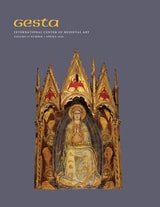
Gesta, volume 63 number 1 (Spring 2024)
The University of Chicago Press
University of Chicago Press Journals, 2024
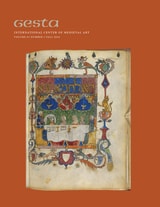
Gesta, volume 63 number 2 (Fall 2024)
The University of Chicago Press
University of Chicago Press Journals, 2024
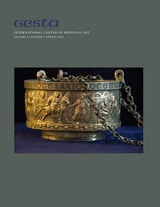
Gesta, volume 64 number 1 (Spring 2025)
The University of Chicago Press
University of Chicago Press Journals, 2025
Gesta, volume 64 number 2 (Fall 2025)
The University of Chicago Press
University of Chicago Press Journals, 2025
Gesta, volume 65 number 1 (Spring 2026)
The University of Chicago Press
University of Chicago Press Journals, 2026
Gestures
Vilém Flusser
University of Minnesota Press, 2014
Throughout his career, the influential new media theorist Vilém Flusser kept the idea of gesture in mind: that people express their being in the world through a sweeping range of movements. He reconsiders familiar actions—from speaking and painting to smoking and telephoning—in terms of particular movement, opening a surprising new perspective on the ways we share and preserve meaning. A gesture may or may not be linked to specialized apparatus, though its form crucially affects the person who makes it.
These essays, published here as a collection in English for the first time, were written over roughly a half century and reflect both an eclectic array of interests and a durable commitment to phenomenological thought. Defining gesture as “a movement of the body or of a tool attached to the body for which there is no satisfactory causal explanation,” Flusser moves around the topic from diverse points of view, angles, and distances: at times he zooms in on a modest, ordinary movement such as taking a photograph, shaving, or listening to music; at others, he pulls back to look at something as vast and varied as human “making,” embracing everything from the fashioning of simple tools to mass manufacturing. But whatever the gesture, Flusser analyzes it as the expression of a particular form of consciousness, that is, as a particular relationship between the world and the one who gestures.
Giacomo Ceruti
A Compassionate EyeDavide Gasparotto
J. Paul Getty Trust, The, 2023
The northern Italian artist Giacomo Ceruti (1698–1767) was born in Milan and active in Brescia and Bergamo. For his distinctive, large-scale paintings of low-income tradespeople and individuals experiencing homelessness, whom he portrayed with dignity and sympathy, Ceruti came to be known as Il Pitocchetto (the little beggar).
Accompanying the first US exhibition to focus solely on Ceruti, this publication explores relationships between art, patronage, and economic inequality in early modern Europe, considering why these paintings were commissioned and by whom, where such works were exhibited, and what they signified to contemporary audiences. Essays and a generous plate section contextualize and closely examine Ceruti’s pictures of laborers and the unhoused, whom he presented as protagonists with distinct stories rather than as generic types. Topics include depictions of marginalized subjects in the history of early modern European art, the career of the artist and his significance in the history of European painting, and period discourses around poverty and social support. A detailed exhibition checklist, complete with provenance, exhibition history, and bibliography, provides information critical for the further understanding of Ceruti’s oeuvre.
This volume is published to accompany an exhibition on view at the J. Paul Getty Museum at the Getty Center from July 18 to October 29, 2023.
Given Time II
Jacques Derrida
University of Chicago Press, 2026
The long-awaited conclusion to Derrida’s seminar on the gift and time.
In 1991, Jacques Derrida published the first half of a seminar delivered from 1978 to 1979 on gifts and time, but the second installment (though expected) was not completed in his lifetime. Given Time II completes the seminar with eight sessions that showcase Derrida’s most advanced work on the problematic of the gift in Heidegger, with deep dives into some of the most difficult texts in the Heideggerian corpus, including “The Origin of the Work of Art,” “The Thing,” and “On Time and Being.”
Beyond Heidegger, Derrida engages Claude Lévi-Strauss, Marcel Mauss, Maurice Blanchot, Jacques Lacan, and others on the act of giving and receiving, the sacrificial gift, and more. Throughout, Derrida identifies a paradox of gift giving: for the gift to be received as a gift, it must not appear as such, since gifts often involve a cycle of debt and repayment. Given Time II is a uniquely Derridean treatment of an important subject in the work of Heidegger and beyond.
Given Time
I. Counterfeit MoneyJacques Derrida
University of Chicago Press, 1992
Derrida reads the relation of time to gift through a number of texts: Heidegger's Time and Being, Mauss's The Gift, as well as essays by Benveniste and Levi-Strauss that assume Mauss's legacy. It is, however, a short tale by Baudelaire, "Counterfeit Money," that guides Derrida's analyses throughout. At stake in his reading of the tale, to which the second half of this book is devoted, are the conditions of gift and forgiveness as essentially bound up with the movement of dissemination, a concept that Derrida has been working out for many years.
For both readers of Baudelaire and students of literary theory, this work will prove indispensable.
Given Time
I. Counterfeit MoneyJacques Derrida
University of Chicago Press, 1992
Derrida reads the relation of time to gift through a number of texts: Heidegger's Time and Being, Mauss's The Gift, as well as essays by Benveniste and Levi-Strauss that assume Mauss's legacy. It is, however, a short tale by Baudelaire, "Counterfeit Money," that guides Derrida's analyses throughout. At stake in his reading of the tale, to which the second half of this book is devoted, are the conditions of gift and forgiveness as essentially bound up with the movement of dissemination, a concept that Derrida has been working out for many years.
For both readers of Baudelaire and students of literary theory, this work will prove indispensable.
Glancing Visions
Surface and Depth in Nineteenth-Century American LiteratureZachary Tavlin
University of Alabama Press, 2023
How the “glance” rather than the “gaze” in nineteenth-century literature and art anticipates the turn to modernism
The sweeping vantages that typify American landscape painting from the nineteenth century by Thomas Cole and other members of the Hudson River School are often interpreted for their geopolitical connotations, as visual attempts to tame the wild, alleviating fears of a savage frontier through views that subdue the landscape to the eye. But many literary figures of the era display a purposeful disdain for the “possessive gaze,” signaling a preference for subtle glances, often informed by early photography, Impressionism, new techniques in portraiture, and, soon after, the dawn of cinema. The visual subjectivities and contingencies introduced by these media made room for a visual counternarrative, one informed by a mode of seeing that moves fast and lightly across the surface of things.
Tavlin probes Nathaniel Hawthorne’s theory of the imagination at a turning point in the history of photography, when momentary glances take on new narrative potentials. The poetry of Frances Ellen Watkins Harper toggles between gazes and glances, unsettling two competing forms of racialized seeing as they pertain to nineteenth-century Black life and racial hierarchies—the sentimental gaze and the slave trader’s glance—highlighting the life-and-death stakes of looking and looking away. Emily Dickinson’s syntactical oddities and her lifelong process of stitching and unstitching the poems that constitute her corpus all derive from a commitment to immanence associated with animal perception. Tavlin investigates, as well, Henry James’s vexed relationship to painterly Impressionism and William Carlos Williams’s imagist poetics as a response to early cinema’s use of the cut as the basis for a new visual grammar.
Each of these literary artists—via their own distinctive sensibilities and the artistic or technological counterparts that informed them—refuse the authoritative, all-possessive gaze in favor of the glance, a mode of seeing, thinking, and being that made way for the twentieth century’s twist on modernity. Glancing Visions will be of interest to scholars and teachers of American literature and literary history, visual culture, visual theory, aesthetic philosophy, and phenomenology.
Global Homophobia
States, Movements, and the Politics of OppressionEdited by Meredith L. Weiss and Michael J. Bosia
University of Illinois Press, 2013
Combining rich empirical analysis with theoretical synthesis, these studies examine how homophobia travels across complex and ambiguous transnational networks, how it achieves and exerts decisive power, and how it shapes the collective identities and strategies of those groups it targets. The first comparative volume to focus specifically on the global diffusion of homophobia and its implications for an emerging worldwide LGBT movement, Global Homophobia opens new avenues of debate and dialogue for scholars, students, and activists.
Contributors are Mark Blasius, Michael J. Bosia, David K. Johnson, Kapya J. Kaoma, Christine (Cricket) Keating, Katarzyna Korycki, Amy Lind, Abouzar Nasirzadeh, Conor O'Dwyer, Meredith L. Weiss, and Sami Zeidan.
God as Otherwise Than Being
Toward a Semantics of the GiftCalvin O. Schrag
Northwestern University Press, 2002
Schrag draws with grace, ease, and precision upon the history of Western metaphysics, from Plato and Aristotle through Nietzsche and Heidegger. Most important to his central question of God as "otherwise than Being," however, are such influential post-Heideggerian thinkers as Jean-Luc Marion, Jacques Derrida, and Emmanuel Levinas. Schrag's inquiry engages these thinkers at a serious level and also expands recent discussions by relating them to the work of figures hitherto overlooked or underplayed, most notably Paul Tillich.

God of Many Names
Play, Poetry and Power in Hellenic Thought, From Homer to AristotleMihai I. Spariosu
Duke University Press, 1991
Building upon the scholarship of an earlier volume, Dionysus Reborn, Spariosu her continues to draw on Dionysus—the “God of many names,” of both poetic play and sacred power—as a mythical embodiment of the two sides of the classical Greek mentality. Combining philosophical reflection with close textual analysis, the author examines the divided nature of the Hellenic mentality in such primary canonic texts as the Iliad, the Odyssey, the Theogony, Works and Days, the most well-known of the Presocratic fragments, Euripides’ Bacchae, Aristophanes’ The Frogs, Plato’s Republic and Laws, and Aristotle’s Poetics and Politics.
Spariosu’s model illuminates the many of the most enduring questions in contemporary humanistic study and addresses modern questions about the nature of the interrelation of poetry, ethics, and politics.
God, the Flesh, and the Other
From Irenaeus to Duns ScotusEmmanuel Falque Translated from the French by William Christian Hackett
Northwestern University Press, 2015
In God, the Flesh, and the Other, the philosopher Emmanuel Falque joins the ongoing debate about the role of theology in phenomenology. An important voice in the second generation of French philosophy’s “theological turn,” Falque examines philosophically the fathers of the Church and the medieval theologians on the nature of theology and the objects comprising it. Falque works phenomenology itself into the corpus of theology. Theological concepts thus translate into philosophical terms that phenomenology should legitimately question: concepts from contemporary phenomenology such as onto-theology, appearance, reduction, body/flesh, inter-corporeity, the genesis of community, intersubjectivity, and the singularity of the other find penetrating analogues in patristic and medieval thought forged through millennia of Christological and Trinitarian debate, mystical discourses, and speculative reflection. Through Falque’s wide-ranging interpretive path, phenomenology finds itself interrogated—and renewed.
Good Vibes Only
Phenomenology and the Biopolitics of Algorithmic LegitimationRobin James
Duke University Press, 2026
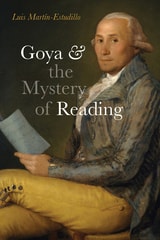
Goya and the Mystery of Reading
Luis Martín-Estudillo
Vanderbilt University Press, 2023
Goya and the Mystery of Reading explores the critical impact this transition had on the work of an artist who aimed not to copy the world around him, but to see it anew—to read it. Goya's creations offer a sustained reflection on the implications of reading, which he depicted as an ambiguous, often mysterious activity: one which could lead to knowledge or ecstasy, to self-fulfillment or self-destruction, to piety or perdition. At the same time, he used reading to elicit new possibilities of interpretation. This book reveals for the first time the historical, intellectual, and artistic underpinnings of reading as one of the pillars of his art.
This book is the recipient of the 2023 Norman L. and Roselea J. Goldberg Prize from Vanderbilt University Press for the best book in the area of art or medicine.
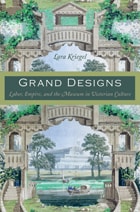
Grand Designs
Labor, Empire, and the Museum in Victorian CultureLara Kriegel
Duke University Press, 2007
Drawing on a wide range of sources, including museum guidebooks, design manuals, illustrated newspapers, pattern books, and government reports, Kriegel brings to life the many Victorians who claimed a stake in aesthetic reform during the middle years of the nineteenth century. The aspiring artists who attended the Government School of Design, the embattled provincial printers who sought a strengthened industrial copyright, the exhibition-going millions who visited the Crystal Palace, the lower-middle-class consumers who learned new principles of taste in metropolitan museums, and the working men of London who critiqued the city’s art and design collections—all are cast by Kriegel as leading cultural actors of their day. Grand Designs shows how these Victorians vied to upend aesthetic hierarchies in an imperial age and, in the process, to refashion London’s public culture.
Groundless Noir
Ontology and Latin American Crime FictionErik Larson
Bucknell University Press, 2026
This philosophical study of Latin American noir fiction poses the question, What if precarity and uncertainty aren’t just themes of the genre but ways of being in the world? Emerging from a region immersed in violence, trauma, and political instability, the novela negra reveals not just disillusionment but a desire to adapt to, even dwell within, chaos. In the hands of writers like Ricardo Piglia, Roberto Bolaño, and Patricia Melo, savvy detectives and antiheroes navigate a world in which meaning constantly shifts and certainty is elusive. Blending literary analysis with philosophical inquiry, Larson draws on Heideggerian ontology to demonstrate how the noir novel becomes a mode of existence—grounded in its very groundlessness. Rather than offering resolution, these novels embody a paradoxical desire: to engage crisis while also adapting to it. In doing so, they become both ideological and pedagogical—existential fiction for an uncertain world.
Published by Bucknell University Press. Distributed worldwide by Rutgers University Press.
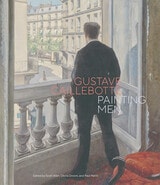
Gustave Caillebotte
Painting MenScott Allan
J. Paul Getty Trust, The, 2024
More than any other French Impressionist, painter Gustave Caillebotte (1848–1894) observed and depicted the many men in his life, including his brothers and friends, employees, and the workers and bourgeois in his Parisian neighborhood. Male subjects feature prominently in some of his best-known works, such as The Floor Scrapers, Man at His Bath, Young Man at His Window, Boating Party, and Paris Street, Rainy Day. The originality of his paintings of men is fully explored for the first time in this catalogue, published to accompany a major international exhibition co-organized by the J. Paul Getty Museum, Musée d’Orsay, and the Art Institute of Chicago.
Alongside paintings, drawings, and photographs, as well as an appendix featuring maps and new biographical research that sheds light on Caillebotte’s social network, this volume includes historically grounded thematic essays by curators and leading scholars. By exploring the complex and varied facets of Caillebotte’s identity—as son, brother, soldier, bachelor, amateur, sportsman, and so on—these essays pose questions of identity, leaving space for ambiguous and fluid expressions of gender and masculinity—for both Caillebotte and the larger late nineteenth-century French world.
This volume is published to accompany an exhibition on view at the Musée d’Orsay from October 8, 2024, to January 19, 2025, J. Paul Getty Museum at the Getty Center from March 25 to May 25, 2025, and The Art Institute of Chicago from June 29 to October 5, 2025.
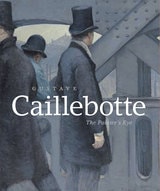
Gustave Caillebotte
The Painter's EyeMary Morton and George Shackelford
University of Chicago Press, 2015
The book features fifty of Caillebotte’s strongest paintings, including post-conservation images of Paris Street; Rainy Day, along with The Floorscrapers and Pont de l’Europe, all of which date from a particularly fertile period between 1875 and 1882. The artist was criticized at the time for being too realistic and not impressionistic enough, but he was a pioneer in adopting the angled perspective of a modern camera to compose his scenes. Caillebotte’s skill and originality are evident even in the book’s reproductions, and the essays offer critical insights into his inspiration and subjects.
This sumptuously illustrated publication makes clear why Caillebotte is among the most intriguing artists of nineteenth-century France, and it deepens our understanding of the history of impressionism.