Results by title
226 books match the query 'New Jersey' and 8 start with g
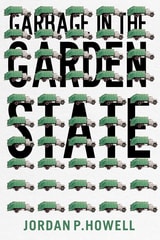
Garbage in the Garden State
Jordan P. Howell
Rutgers University Press, 2023
Howell acknowledges that New Jersey is sometimes imagined, particularly by non-New Jerseyans, as a giant garbage dump for New York and Philadelphia. But every place has had to struggle with the challenges of waste management. New Jersey's trash history is in fact more interesting and more important than most. New Jersey’s waste history includes intensive planning, deep-seated political conflict, organized crime, and literally every level of state and federal judiciary. It is a colorful history, to say the least, and one that includes a number of firsts with regard to recycling, comprehensive planning, and the challenging economics of trash.
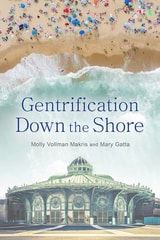
Gentrification Down the Shore
Molly Vollman Makris
Rutgers University Press, 2021
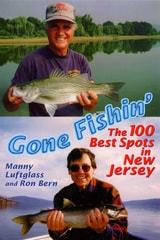
Gone Fishin'
The 100 Best Spots in New JerseyManny Luftglass
Rutgers University Press, 1998
Grab your tackle and hit the road with Ron Bern and Manny Luftglass as they take you to the choicest places to fish in New York in Gone Fishin': The 100 Best Spots in New York, their follow-up to the highly successful Gone Fishin': The 100 Best Spots in New Jersey.
Truly great freshwater and saltwater fishing abounds throughout the state, from the classic Catskills trout streams to the mighty Hudson and Delaware rivers; from Lake Ontario to the Finger Lakes; from Long Island Sound to the bluewater canyons off the coast; from saltwater bays to artificial reefs; from the smaller sweetwater rivers and New York City reservoirs to surprising trout streams and bass ponds on Long Island.
Luftglass and Bern provide readers with immediately useful insights into each of the 100 best sites. They furnish easy-to-follow directions, descriptions of the body of water, boat launch information, and detailed advice on live and artificial bait, fishing methods, equipment, depths, best times of day and year, secret tips particular to each site, and even specific places to work bait or lures. Gone Fishin' also includes places that are good for children, as well as those which are handicapped accessible.
Throughout the book, Bern and Luftglass share anecdotes about their own fishing adventures and some of the big ones that didn't get away in their more than 33 years of fishing together. The information they cram into every chapter will help you find the spot, fish it more effectively, and catch more fish.
Whether you fish 150 times a year or you are planning to fish for the first time, you're sure to fall hook, line, and sinker for this entertaining and educational guide.
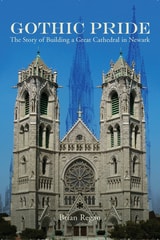
Gothic Pride
The Story of Building a Great Cathedral in NewarkRegan, Brian
Rutgers University Press, 2012
Calling upon a wealth of primary sources, Brian Regan describes in a compelling narrative the cathedral’s almost century-long history. He traces the project to its origins in the late 1850s and the great expectations held by the project’s prime movers—all passionate about Gothic architecture and immensely proud of Newark—that never wavered despite numerous setbacks and challenges. Construction did not begin until 1898 and, when completed in 1954, the cathedral became New Jersey’s largest church—and the most expensive Catholic church ever built in America. During Pope John Paul II’s visit to the United States in 1995, he celebrated evening prayer at the Cathedral. On that occasion, the Cathedral of the Sacred Heart was elevated to a basilica to become the Cathedral Basilica of the Sacred Heart.
Meticulously researched, Gothic Pride brings to life the people who built, contributed to, and worshipped in Sacred Heart, recalling such remarkable personalities as George Hobart Doane, Jeremiah O’Rourke, Gonippo Raggi, and Archbishop Thomas Walsh. In many ways, the cathedral’s story is a lens that lets us look at the history of Newark itself—its rise as an industrial city and its urban culture in the nineteenth century; its transformation in the twentieth century; its immigrants and the profound effects of their cultures, especially their religion, on American life; and the power of architecture to serve as a symbol of community values and pride..
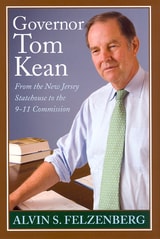
Governor Tom Kean
From the New Jersey Statehouse to the 911 CommissionFelzenberg, Alvin S
Rutgers University Press, 2006
In this first political biography of one of the nation's most popular and successful governors, Alvin S. Felzenberg tells the story of a remarkable career that culminated in an unexpected and crucial contribution to the country-chairmanship of the 9/11 Commission. Felzenberg describes how, early in his political career, Kean worked to transform New Jersey's legislature in the aftermath of court rulings that mandated redistricting in accordance with the "one man, one vote" principle. He discusses Kean's efforts to relieve the urban crisis that followed in the wake of the 1967 Newark riots. He relates how Kean was able to use the New Jersey governorship-purportedly the strongest in the country-to transform a so-called "rust belt" state into a leader in education, environmental responsibility, and economic growth.
Kean's successes in these and other areas caused leaders outside New Jersey to follow in his path. Together with his fellow governors, Kean forged a national consensus on domestic policy between Democratic congresses and Republican presidents, in the process winning for himself a leadership role in his own party. Kean's story serves as an uncommon case of how a Republican loyal to the historic roots and principles of his party can not only win election in a "blue state" but effectively govern it.
Starting from the example the governor set on the state level, Felzenberg's account traces Kean's career to positions of trusted authority on the national stage. After several years of advising presidents, Kean was appointed chairman of the 9/11 Commission. In this role, he made the bipartisan, Congressionally mandated commission one of the most successful in American history.
Drawing on interviews with Kean as well as with state and national leaders, including former presidents Gerald Ford and Bill Clinton and former New York City mayor Ed Koch, Felzenberg not only provides a marvelous biography, but also offers a unique look at American politics during the last four decades of the twentieth century.

Grant Castner
The Lost ArchiveNicholas P. Ciotola
Rutgers University Press, 2026
Castner’s glass plate negatives are a visual record of New Jersey’s social and cultural history. His many human subjects are rich and poor, young and old, Black and white. They are at work, at play, at home, and in the community. Castner also documented social change brought about by electricity, engineering, education, industry, and transportation. He captured the excitement of public amusements such as parades and fairs. He recorded the aftermath of floods, fires and other disasters. Castner also had a fondness for the outdoors. He used his camera to reflect on the beauty and tranquility that he found in the natural landscapes of New Jersey.
This book presents the collective work of Grant Castner, an amateur artist whose place in New Jersey history was, until now, completely unknown. His photographic negatives forever preserve pinpoint moments in the past. They are time machines to another era. Let this long lost archive transport you on a visual journey into a New Jersey of days gone by.

Great Dishes from New Jersey's Favorite Restaurants
Vicki J. Caparulo
Rutgers University Press, 2003
Great Houses and Gardens of New Jersey
Seebohm, Caroline
Rutgers University Press, 2003
New Jersey is called the Garden State with good reason- some of the nation's most strikingly beautiful homes and gardens can be found within its borders. Caroline Seebohm and Peter C. Cook have captured them gloriously in Great Houses and Gardens of New Jersey.
No other book has so beautifully presented the architectural story of the state, stunningly documented in more than 200 color photographs- from a centuries-old farm to modern glass houses, from woodlands planted with native plants to formal French and English-style gardens. Each house and garden is privately owned, and many have never before been photographed. Readers are given an exclusive peek at some of New Jersey's greatest treasures.
Seebohm and Cook take us on a private tour of a pre-revolutionary Dutch farmhouse that could have sprung from the coast of Devon in England; a brick-patterned house that vividly expresses the originality and exuberance of the region's early builders and craftsmen; a collection of native stone buildings reminiscent of Bucks County, Pennsylvania; and an Arts and Crafts house with contributions by New Jersey's innovative Gustav Stickley. The twentieth century is equally well represented with works by masters such as Frank Lloyd Wright, Robert Venturi, Michael Graves, and Richard Meier.
The book showcases gardens of dazzling splendor and variety- woodlands ablaze with native azaleas and dogwoods; a charming sunken garden by well-known English garden designer Penelope Hobhouse; a stunning water garden on the Navesink River; a tiny formal garden surrounded by a picket fence in Somerset County; a garden in Alpine carpeted with bluebells in the spring, scented with roses in the summer, and with orchids on display all year round.