Results by title
87 books match the query 'Officials and employees' and 2 start with g
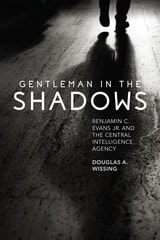
Gentleman in the Shadows
Benjamin C. Evans Jr. and the Central Intelligence AgencyDouglas A. Wissing
Indiana Historical Society Press, 2019
Gentleman in the Shadows is a biography of Benjamin C. Evans Jr., a Central Intelligence Agency executive who operated at the top levels of the U.S. intelligence community during the darkest days of the Cold War. After serving as a covert case officer in revolutionary Havana, Cuba, and then managing The Asia Foundation, a sprawling CIA front organization, Evans was promoted to the CIA headquarters’ seventh floor, where the executive directorate team managed world-changing intelligence missions. A socially adept administrator, Evans was the CIA Executive Secretary for seven Directors of Central Intelligence under four presidential administrations. Evans was part of the tumultuous period that included America’s crusade to democratize Occupied Japan, the Korean War, nuclear standoffs with the Soviet Union, the anti-Castro counterrevolutionary movement that climaxed in the Bay of Pigs invasion, the Vietnam War, Watergate, and the Family Jewels furor after the CIA’s dirty secrets were revealed. Through his marriage, Evans was a member of America’s elite, which figured so prominently in the U.S. intelligence services. Born and raised in a prosperous family in Crawfordsville, Indiana, Evans was imbued with conservative Hoosier values that celebrated servant-leadership. Following his graduation from the U.S. Military Academy at West Point, Evans’s social savvy and encultured mores stood him in good stead in Occupied Japan, where he served as aide-de-camp to General Eugene Harrison, a decorated World War II intelligence officer and Occupation administrator. It was in Occupied Japan that Evans and the general’s stepdaughter, Jan King, fell in love, and later married. When President Harry Truman recognized he needed a foreign intelligence service, General Harrison was on the commission that established what came to be the CIA. Not too many years later, Harrison and his cohorts insured that his son-in-law Evans, by then a respected military intelligence officer, was offered a position in the agency.CIA families not uncommonly led double lives of sequestered thoughts, unasked questions, and intimate deception. An empathetic family man, Evans paid a psychological price for his emotionally isolated life in the clandestine service.Gentleman in the Shadows is a biography of Benjamin C. Evans Jr., a Central Intelligence Agency executive who operated at the top levels of the U.S. intelligence community during the darkest days of the Cold War. After serving as a covert case officer in revolutionary Havana, Cuba, and then managing The Asia Foundation, a sprawling CIA front organization, Evans was promoted to the CIA headquarters’ seventh floor, where the executive directorate team managed world-changing intelligence missions. A socially adept administrator, Evans was the CIA Executive Secretary for seven Directors of Central Intelligence under four presidential administrations. Evans was part of the tumultuous period that included America’s crusade to democratize Occupied Japan, the Korean War, nuclear standoffs with the Soviet Union, the anti-Castro counterrevolutionary movement that climaxed in the Bay of Pigs invasion, the Vietnam War, Watergate, and the Family Jewels furor after the CIA’s dirty secrets were revealed. Through his marriage, Evans was a member of America’s elite, which figured so prominently in the U.S. intelligence services. Born and raised in a prosperous family in Crawfordsville, Indiana, Evans was imbued with conservative Hoosier values that celebrated servant-leadership. Following his graduation from the U.S. Military Academy at West Point, Evans’s social savvy and encultured mores stood him in good stead in Occupied Japan, where he served as aide-de-camp to General Eugene Harrison, a decorated World War II intelligence officer and Occupation administrator. It was in Occupied Japan that Evans and the general’s stepdaughter, Jan King, fell in love, and later married. When President Harry Truman recognized he needed a foreign intelligence service, General Harrison was on the commission that established what came to be the CIA. Not too many years later, Harrison and his cohorts insured that his son-in-law Evans, by then a respected military intelligence officer, was offered a position in the agency.CIA families not uncommonly led double lives of sequestered thoughts, unasked questions, and intimate deception. An empathetic family man, Evans paid a psychological price for his emotionally isolated life in the clandestine service.
[more]
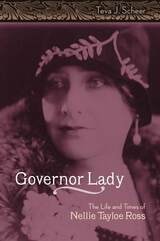
Governor Lady
The Life and Times of Nellie Tayloe RossTeva J. Scheer
University of Missouri Press, 2005
Governor Lady is the fascinating story of one of the most famous political women of her generation. Nellie Tayloe Ross was elected governor of Wyoming in 1924—just four years after American women won the vote—and she went on to be nominated for U.S. vice president in 1928, named vice chairman of the Democratic National Committee the same year, and appointed the first female director of the Mint in 1932. Ross launched her career when her husband, William Bradford Ross, the preceding governor, died, leaving her widowed with four sons and no means of supporting them. She was an ironic choice to be such a pioneer in women’s rights, since she claimed her entire life that she had no interest in feminism. Nevertheless, she believed in equal opportunity and advancement in merit irrespective of gender—core feminist values. The dichotomy between Ross’s career and life choices, and her stated priorities of wife and mother, is a critical contradiction, making her an intriguing woman.
Exhaustively researched and powerfully written, Governor Lady chronicles the challenges and barriers that a woman with no job experience, higher education, or training faced on the way to becoming a confident and effective public administrator. In addition to the discrimination and resentment she faced from some of her male associates, she also aroused the enmity of Eleanor Roosevelt, whom she displaced at the DNC.
Born exactly one hundred years after the signing of the Declaration of Independence, Ross lived to celebrate the nation’s bicentennial, so her long and remarkable life precisely spanned the second U.S. century. She was reared in the Victorian era, when upper- and middle-class women were expected to be domestic, decorative, and submissive, but she died as the women’s movement was creating a multitude of opportunities for young women of the 1970s. Nellie’s story will be of great interest to anyone curious about women’s history and biography. The contemporary American career woman will especially identify with Ross’s struggle to balance her career, family, and active personal life.
[more]