Results by title
314 books match the query 'Plants' and 15 start with g
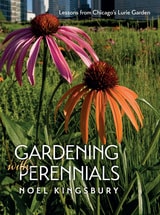
Gardening with Perennials
Lessons from Chicago's Lurie GardenNoel Kingsbury
University of Chicago Press, 2014
With Gardening with Perennials horticulturalist and garden writer Noel Kingsbury brings a global perspective to the Lurie oasis through a wonderful introduction to the world of perennial gardening. He shows how perennials have much to offer home gardeners, from sustainability—perennials require less water than their annual counterparts—to continuity, as perennials’ longevity makes them a dependable staple.
Kingsbury also explains why Lurie is a perfect case study for gardeners of all locales. The plants represented in this urban oasis were chosen specifically for reliability and longevity. The majority will thrive on a wide range of soils and across a wide climatic range. These plants also can thrive with minimal irrigation, and without fertilizers or chemical control of pests and diseases. Including a special emphasis on plants that flourish in sun, and featuring many species native to the Midwest region, Gardening with Perennials will inspire gardeners around the world to try Chicago-style sustainable gardening.
Gentry's Rio Mayo Plants
The Tropical Deciduous Forest and Environs of Northwest MexicoRevised and Edited by Paul S. Martin, David Yetman, Mark Fishbein, Phil Jenkins, Thomas R. Van Devender, and Rebecca K. Wilson
University of Arizona Press, 1998
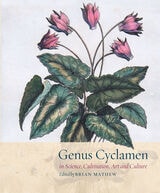
Genus Cyclamen
In Science, Cultivation, Art and CultureEdited by Brian Mathew
Royal Botanic Gardens, Kew, 2013
Genus Cyclamen is a celebration of this remarkable plant. Its science-based emphasis on botany and cultivation is complemented by sections on art and history, including twenty-five newly commissioned paintings and over seven hundred photographs. It provides a wealth of information, including taxonomic descriptions, flowering periods, distribution, and habitat, all based on the deep knowledge and practical experiences of the Cyclamen Society and other cyclamen experts. This book will find a wide audience of growers, gardeners, botanists, and enthusiasts, thanks to its all-encompassing coverage of the cyclamen and its informative, but accessible style.
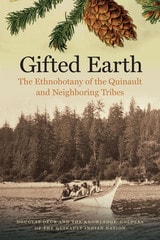
Gifted Earth
The Ethnobotany of the Quinault and Neighboring TribesDouglas Deur
Oregon State University Press, 2022
Gifted Earth features traditional Native American plant knowledge, detailing the use of plants for food, medicines, and materials. It presents a rich and living tradition of plant use within the Quinault Indian Nation in a volume collaboratively developed and endorsed by that tribe.
The Quinault Reservation on the Olympic Peninsula of Washington state is a diverse tribal community, embodying the traditional knowledge of tribes along the entire Pacific Northwest coast. Its membership consists of descendants of many tribes—from the northwestern Olympic Peninsula to the northern Oregon coast—including the Quinault, but also many others who were relocated to the reservation in the nineteenth and early twentieth centuries. Individuals descended from these tribal communities, including Chinook, Chehalis, Hoh, Quileute, Queets, Cowlitz, Tillamook, Clatsop, and others, have contributed to Gifted Earth, giving it remarkable breadth and representation.
A celebration of enduring Native American knowledge, this book will help non-specialists as they discover the potential of the region’s wild plants, learning how to identify, gather, and use many of the plants that they encounter in the Northwestern landscape. Part ethnobotanical guide and part “how-to” manual, Gifted Earth also prepares plant users for the minor hazards and pitfalls that accompany their quest—from how to avoid accidentally eating a bug hidden within a salal berry to how to prevent blisters when peeling the tender stalks of cow parsnip.
As beautiful as it is informative, Gifted Earth sets the standard for a new generation of ethnobotanical guides informed by the values, vision, and voice of Native American communities eager to promote a sustainable, balanced relationship between plant users and the rich plant communities of traditional tribal lands.
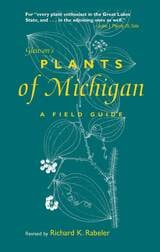
Gleason's Plants of Michigan
A Field GuideRevised by Richard K. Rabeler
University of Michigan Press, 1998
“For every plant enthusiast in the Great Lakes State, and . . . in the adjoining ones as well.”
—John J. Pipoly III, SIDA
“A very handy field guide . . . this book will be of use to anyone in northeastern North America.”
—C. Barre Hellquist, Rhodora
“It can be used to identify most of the plants . . . in Michigan and adjacent areas.”
—James E. Eckenwalder, Wildflower
Gleason’s Plants of Michigan is a major revision and expansion of The Plants of Michigan by Henry A. Gleason—the 1918 classic field guide to the flowering plants and trees found in Michigan, neighboring Great Lakes States, and southern Ontario. Richard K. Rabeler has completely updated the family descriptions and added easy-to-use keys. Information on habitats and geographical distribution is now included as well as a comprehensive index of plant names, an illustrated section on terminology, a glossary, and an introduction to botany in Michigan.
Gleason’s Plants of Michigan will be useful to naturalists, environmental specialists, botanists, and everyone who loves the wildflowers and native flora of Michigan and the surrounding areas.
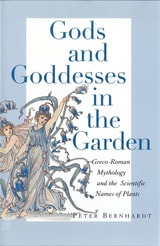
Gods and Goddesses in the Garden
Greco-Roman Mythology and the Scientific Names of PlantsBernhardt, Peter
Rutgers University Press, 2008
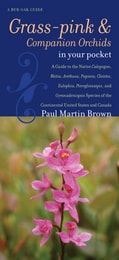
Grass-pinks and Companion Orchids in Your Pocket
A Guide to the Native Calopogon, Bletia, Arethusa, Pogonia, Cleistes, Eulophia, Pteroglossaspis, andPaul Martin Brown
University of Iowa Press, 2008
Brown provides general distributional information, time of flowering, and habitat requirements for each species as well as a complete list of hybrids and the many different growth and color forms that can make identifying orchids so intriguing. For the grass-pinks and companions he includes information on 16 species, 2 additional varieties, and 7 hybrids.
Grass-pinks, with their showy pink to white flowers, are some of the most conspicuous wild orchids encountered in the prairies, bogs, and open wetlands of eastern North America. Most of these species are easy to identify based upon their general appearance, range, and time of flowering. Answering three simple questions—when, where, and how does it grow?—and comparing the living plant with the striking photos in the backpack-friendly laminated guide should enable both professional and amateur naturalists to achieve the satisfaction of identifying a specific orchid.
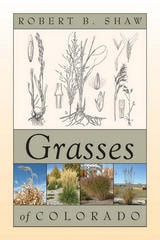
Grasses of Colorado
Robert B. Shaw
University Press of Colorado, 2008
Colorado's elevation range of more than 11,000 feet creates a wide variety of habitats that supports a spectacular diversity of grasses. With 335 known species, Colorado has one of the most diverse and extensive grass floras in the United States.
Comprehensive coverage, useful keys, and detailed species descriptions in Grasses of Colorado will make this volume the standard reference for years to come. Robert B. Shaw provides overviews of Colorado's physiography and ecoregions and introduces the grass plant in plain, enjoyable text. He includes a checklist of Colorado grasses, a bibliography, and a glossary of terms that may be unfamiliar to nonspecialists. Line drawings, state distribution maps, and habitat notes for each species enable accurate plant identification, familiarity with regional ecogeography, and increased understanding of plant ecology of the Rocky Mountains.
A monumental accomplishment certain to become the standard work on the subject, Grasses of Colorado synthesizes existing literature and incorporates recent scientific findings to offer a complete, current reference.
Grasses
Bromus to Paspalum, Second EditionRobert H. Mohlenbrock
Southern Illinois University Press, 2002
Since the publication of the first edition of Grasses: Bromus to Paspalumin 1972, twenty-two additional taxa of grasses have been discovered in Illinois that are properly placed in this volume. In addition, numerous nomenclatural changes have occurred for plants previously discovered, and many distributional records have been added. New keys have been prepared for each genus where additional species from Illinois are known. For new species, full-page illustrations are provided. This second edition updates the status of Illinois grasses. The book features 263 figures from the first edition plus 21 new figures for this edition by Paul W. Nelson.
Genera of grasses included in this work are Aegilops, Agropyron, Agrostis, Aira, Alopecurus, Anthoxanthum, Avena, Beckmannia, Briza, Bromus, Calamagrostis, Cinna, Dactylis, Deschampsia, Elyhordeum, Elymus, Elytrigia, Festuca, Hierochloe, Holcus, Hordeum, Koeleria, Lolium, Milium, Paspalum, Pennisetum, Phalaris, Phleum, Poa, Puccinellia, Sclerochloa, Secale, Sphenopholis, Torreyochloa, Triticum, and Vulpia.
Grasses
Panicum to Danthonia, Second EditionRobert H. Mohlenbrock
Southern Illinois University Press, 2001
Since the publication of the first edition of Grasses: Panicum to Danthonia in 1973, twenty additional taxa of grasses have been discovered in Illinois that are properly placed in this volume. In addition, numerous nomenclatural changes have occurred for plants already known from the state, and many distributional records have been added. This second edition updates the status of grasses in Illinois. Paul W. Nelson has provided illustrations for all of the additions.
Because the nature of grass structures is generally so different from that of other flowering plants, a special terminology is applied to them. In his introduction, Robert H. Mohlenbrock cites these terms, with descriptions that make the identification of unknown specimens possible. Mohlenbrock’s division of the grass family into subfamilies and tribes is a major departure from the sequence usually found in most floristic works in North America.
Synonyms that have been applied to species in the northeastern United States are given under each species. A description based primarily on Illinois material covers the more important features of the species. The common names—Paflic Grass, Billion Dollar Grass or Japanese Millett, Thread Love Grass, and Goose Grass—are the ones used locally in the state. The habitat designation and dot maps showing county distribution of each grass are provided only for grasses in Illinois, but the overall range for each species is also given.
Green Gold
Alabama's Forests and Forest IndustriesJames E. Fickle
University of Alabama Press, 2014
Green Gold is a thorough and valuable compilation of information on Alabama’s timber and forest products industry, the largest manufacturing industry in the state.
Alabama has the third-largest commercial forest in the nation, after only Georgia and Oregon. Fully two-thirds of the state’s land supports the growth of over fifteen billion trees on twenty-two million acres, which explains why Alabama looks entirely green from space. Green Gold presents the story of human use of and impact on Alabama’s forests from pioneer days to the present, as James E. Fickle chronicles the history of the industry from unbridled greed and exploitation through virtual abandonment to revival, restoration, and enlightened stewardship.
As the state’s largest manufacturing industry, forest products have traditionally included naval stores such as tar, pitch, and turpentine, especially in the southern longleaf stands; sawmill lumber, both hardwood and pine; and pulp and paper milling. Green Gold documents all aspects of the industry, including the advent of “scientific forestry” and the development of reforestation practices with sustained yields. Also addressed are the historical impacts of Native Americans and of early settlers who used axes, saws, and water- and steam-powered sawmills to clear and utilize forests. Along with an account of railroad logging and the big mills of the lumber bonanza days of the late nineteenth and early twentieth centuries, the book also chronicles the arrival of professional foresters to the state, who began to deal with the devastating legacy of “cut out and get out” logging and to fight the perennial curse of woods arson. Finally, Green Gold examines the rise of the tree farm movement, the rebirth of large-scale lumbering, the advent of modern environmental concerns, and the movement toward the “Fourth Forest” in Alabama.
A Copublication with the Alabama Forestry Foundation

Green Nature/Human Nature
THE MEANING OF PLANTS IN OUR LIVESCharles A. Lewis
University of Illinois Press, 1996
Why do gardeners delight in the germination and growth of a seed? Why are our spirits lifted by flowers, our feelings of tension allayed by a walk in a forest or park? What other positive influences can green nature
bring to humanity?
In Green Nature/Human Nature Charles A. Lewis describes the psychological, sociological, and physiological responses of people to vegetation in cities and forests, as well as in horticultural therapy programs in hospitals, geriatric institutions, physical rehabilitation centers, drug rehabilitation programs, and correctional institutions. He presents an evolutionary basis for the human attraction to plants. People-plant interactions are presented from two perspectives: participatory, in which the individual is involved in planting and maintaining the vegetation, and observational, in which the individual bears no responsibility for establishing or maintaining the vegetation.
In what amounts to a straightforward catalog of well-documented and tangible benefits, Lewis brings the latest and best research into plant/human interaction to bear on questions of how green nature is intertwined with the human psyche and how that interaction can lead to enhanced well-being and an appreciation of the human dimension in environmental concerns.
Lewis's work will be essential reading for anyone interested in plants
and how they affect people.
A volume in the series The Environment and the Human Condition

Guide To The Trees Of Utah
Michael Kuhns
Utah State University Press, 1998
For any tree enthusiast, be it homeowner, landscaper, recreationist, traveler, or student, who has needed a comprehensive, user-friendly guide to the trees of Utah and the Intermountain West, this new guide is the answer.
Tree specialist Michael Kuhns, through extensive research, has compiled a comprehensive list of virtually every native and introduced tree species from the eastern slope of the Rockies westward to the Sierra Nevada, and from north-central Oregon, the Salmon River region, and Yellowstone southward to the Grand Canyon and northern New Mexico. Included in the guide are simple and easy-to-use identification and classification keys, which are accompanied by hundreds of illustrations that introduce basic information on tree anatomy, climate/hardiness zones, and the individual species.
Accessible and informative, this book is a welcome addition to the library of any reader wanting basic information on the vast inventory of trees in this region.

Guide to the Flowers of Western China
Christopher Grey-Wilson and Phillip Cribb
Royal Botanic Gardens, Kew, 2023
Since the publication of the first edition of Guide to the Flowers of Western China in 2011, there have been great strides in knowledge of the flora of China through international collaboration. Many plants included in the first edition have been revisited in the wild, while areas hitherto inaccessible have opened up, if sometimes only temporarily. Great advances in systematic botany have occurred since the publication of the first edition, particularly with the widespread availability of rapid DNA analysis. The result of this has been an influx of new photographs and data, and the need for a second edition of Guide to the Flowers of Western China.
Guide to the Liverworts of North Carolina
Marie L. Hicks
Duke University Press, 1992
North Carolina’s varied physiography creates a diversity of flora, ranging from boreal plants in the mountains to subtropical plants in the coastal plain. Collections of hepatics in North Carolina have been sporadic over the years, and knowledge of their distribution within the state has accumulated gradually. Guide to the Liverworts of North Carolina builds on earlier field studies, including those of Hugo L. Blomquist and R. M. Schuster, to provide keys and illustrations to aid identification. This important, comprehensive field guide will also be useful in states adjoining North Carolina and is designed for students, botanists, and all those interested in identifying local liverworts.