1066 books match the query 'Political' and 13 start with g
cover of Gaps: A Novel

Gaps

A Novel

Bohumil Hrabal

Northwestern University Press, 2011

Gaps begins with Hrabal receiving the long anticipated advance copy of his first short story collection, Perlicka na dne (Pearl of the Deep). Hrabal's career as a successful writer starts here, and the novel details his rise on the domestic front, his relationship with influential Czech artists and writers, as well as the international recognition he gains from novels such as Closely Watched Trains. 

Gaps is a more overtly political novel than either In-House Weddings or Vita Nuova. The 1968 Soviet invasion of Czechoslovakia and the subsequent repression of artistic freedom figure prominently. Hrabal is placed on the "liquidated writers" list, and copies of his novel Poupata (Buds) are disposed of at the paper salvage where he once worked. Hrabal's decision to tell his autobiography in his wife Eliska's voice highlights their very close relationship and lovingly details her deep influence on his work. Every movement, sound, fragrance, and color is detailed, creating a collage of Bohumil and Eliska's life together, an unforgettable picture that reveals the author's innermost attitudes to life, love, and the pursuit of his own art.
[more]
cover of Gentleman in the Shadows: Benjamin C. Evans Jr. and the Central Intelligence Agency

Gentleman in the Shadows

Benjamin C. Evans Jr. and the Central Intelligence Agency

Douglas A. Wissing

Indiana Historical Society Press, 2019
Gentleman in the Shadows is a biography of Benjamin C. Evans Jr., a Central Intelligence Agency executive who operated at the top levels of the U.S. intelligence community during the darkest days of the Cold War. After serving as a covert case officer in revolutionary Havana, Cuba, and then managing The Asia Foundation, a sprawling CIA front organization, Evans was promoted to the CIA headquarters’ seventh floor, where the executive directorate team managed world-changing intelligence missions. A socially adept administrator, Evans was the CIA Executive Secretary for seven Directors of Central Intelligence under four presidential administrations. Evans was part of the tumultuous period that included America’s crusade to democratize Occupied Japan, the Korean War, nuclear standoffs with the Soviet Union, the anti-Castro counterrevolutionary movement that climaxed in the Bay of Pigs invasion, the Vietnam War, Watergate, and the Family Jewels furor after the CIA’s dirty secrets were revealed. Through his marriage, Evans was a member of America’s elite, which figured so prominently in the U.S. intelligence services. Born and raised in a prosperous family in Crawfordsville, Indiana, Evans was imbued with conservative Hoosier values that celebrated servant-leadership. Following his graduation from the U.S. Military Academy at West Point, Evans’s social savvy and encultured mores stood him in good stead in Occupied Japan, where he served as aide-de-camp to General Eugene Harrison, a decorated World War II intelligence officer and Occupation administrator. It was in Occupied Japan that Evans and the general’s stepdaughter, Jan King, fell in love, and later married. When President Harry Truman recognized he needed a foreign intelligence service, General Harrison was on the commission that established what came to be the CIA. Not too many years later, Harrison and his cohorts insured that his son-in-law Evans, by then a respected military intelligence officer, was offered a position in the agency.CIA families not uncommonly led double lives of sequestered thoughts, unasked questions, and intimate deception. An empathetic family man, Evans paid a psychological price for his emotionally isolated life in the clandestine service.Gentleman in the Shadows is a biography of Benjamin C. Evans Jr., a Central Intelligence Agency executive who operated at the top levels of the U.S. intelligence community during the darkest days of the Cold War. After serving as a covert case officer in revolutionary Havana, Cuba, and then managing The Asia Foundation, a sprawling CIA front organization, Evans was promoted to the CIA headquarters’ seventh floor, where the executive directorate team managed world-changing intelligence missions. A socially adept administrator, Evans was the CIA Executive Secretary for seven Directors of Central Intelligence under four presidential administrations. Evans was part of the tumultuous period that included America’s crusade to democratize Occupied Japan, the Korean War, nuclear standoffs with the Soviet Union, the anti-Castro counterrevolutionary movement that climaxed in the Bay of Pigs invasion, the Vietnam War, Watergate, and the Family Jewels furor after the CIA’s dirty secrets were revealed. Through his marriage, Evans was a member of America’s elite, which figured so prominently in the U.S. intelligence services. Born and raised in a prosperous family in Crawfordsville, Indiana, Evans was imbued with conservative Hoosier values that celebrated servant-leadership. Following his graduation from the U.S. Military Academy at West Point, Evans’s social savvy and encultured mores stood him in good stead in Occupied Japan, where he served as aide-de-camp to General Eugene Harrison, a decorated World War II intelligence officer and Occupation administrator. It was in Occupied Japan that Evans and the general’s stepdaughter, Jan King, fell in love, and later married. When President Harry Truman recognized he needed a foreign intelligence service, General Harrison was on the commission that established what came to be the CIA. Not too many years later, Harrison and his cohorts insured that his son-in-law Evans, by then a respected military intelligence officer, was offered a position in the agency.CIA families not uncommonly led double lives of sequestered thoughts, unasked questions, and intimate deception. An empathetic family man, Evans paid a psychological price for his emotionally isolated life in the clandestine service.
[more]
cover of George Hunt: Arizona's Crusading Seven-Term Governor

George Hunt

Arizona's Crusading Seven-Term Governor

David R. Berman

University of Arizona Press, 2015

George W. P. Hunt was a highly colorful Arizona politician. A territorial representative and seven-time Arizona state governor, Hunt joined Woodrow Wilson in making the Democratic Party the party of Progressive reform. This political biography follows Hunt through his years in the territorial legislature, and then as governor. Author David R. Berman’s well-researched and detailed work features Hunt’s battles to stem the powers of large corporations, democratize the political system, defend labor rights, reform the prison system, abolish the death penalty, and protect Arizona’s interests in the Colorado River. He had a special concern for the down and out. He found the "forgotten man" long before Franklin Roosevelt.

Hunt was proof that style and physical appearance neither guarantee nor preclude political success, for the three-hundred-pound man of odd dress and bumbling speech had a political career that spanned the state’s Populism of the 1890s to the 1930s New Deal. Driven by causes, he was very active in public office but took little pleasure in doing the job. Called names by opponents and embarrassed by his lack of formal education, Hunt sometimes showed rage, self-pity, and bitterness at what he saw as betrayals and conspiracies against him.

The author assesses Hunt’s successes and failings as a political leader and take-charge governor struggling to produce results in a political system hostile to executive authority. Berman offers a nuanced look at Arizona’s first governor, providing an important new understanding of Arizona’s complex political history.
[more]
cover of Gerrard Winstanley: The Digger's Life and Legacy

Gerrard Winstanley

The Digger's Life and Legacy

John Gurney

Pluto Press, 2012

'The power of property was brought into creation by the sword', so wrote Gerrard Winstanley (1609-1676) – Christian Communist, leader of the Diggers movement and bête noire of the landed aristocracy. Despite being one of the great English radicals, Winstanley remains unmentioned in today's lists of 'great Britons'.

John Gurney reveals the hidden history of Winstanley and his movement. As part of the radical ferment which swept England at the time of the civil war, Winstanley led the Diggers in taking over land and running it as 'a common treasury for all' – provoking violent opposition from landowners. Gurney also guides us through Winstanley's writings, which are among the most remarkable prose writings of his age.

Gerrard Winstanley: The Digger's Life and Legacy is a must read for students of English history and all those seeking to re-claim the commons today.
[more]
cover of Given World and Time: Temporalities in Context

Given World and Time

Temporalities in Context

Tyrus Miller

Central European University Press, 2008
The interconnections of time with historical thought and knowledge have come powerfully to the fore since the 1970s. An international group of scholars, from a range of fields including literary theory, history of ideas, cultural anthropology, philosophy, intellectual history and theology, philology, and musicology, address the matter of time and temporalities.The volume's essays, divided into four main topical groups question critically the key problem of context, connecting it to the problem of time. Contexts, the essays suggest, are not timeless. Time and its contexts are only partly "given" to us: to the primordial donations of time and world correspond our epistemic, moral, and practical modes of receiving what has been granted. The notion of context may have radically different parameters in different historical, cultural, and disciplinary situations. Topics include the deep antiquity, and the timeless time of eternity, as well as formal philosophies of history and the forms of histories implicit in individual and community experience. The medium specific use of time and history are examined with regard to song, image, film, oral narration, and legal discourse.
[more]
cover of God Went Like That: A Novel

God Went Like That

A Novel

Yxta Maya Murray

Northwestern University Press, 2023

An artful and gripping new novel that recounts the human and environmental damage caused by actual disasters in Simi Valley, California

In award-winning legal scholar and novelist Yxta Maya Murray’s new novel, federal agent Reyna Rodriguez reports on a real-life nuclear reactor meltdown and accidents that occurred in 1959, 1964, and 1968 at the Santa Susana Field Laboratory. An infamous research and development complex in California’s Simi Valley, the lab was eventually dismantled by the US government—but not before it created a toxic legacy of contamination and numerous cancer clusters. Toxins and nuclear residue may have been further released by the 2018 Woolsey Fire and 2019 floods in the area.

God Went Like That takes the form of an EPA report in which Reyna presents riveting interviews with individuals affected by the disasters. With imagination and artistry, Murray brings to life an actual 2011 Department of Energy dossier that detailed the catastrophes and the ensuing public health fallout and highlights the high costs of governmental malfeasance and environmental racism.

[more]
cover of Good-Bye Samizdat: Twenty Years of Czechoslovak Underground Writing

Good-Bye Samizdat

Twenty Years of Czechoslovak Underground Writing

Marketa Goetz-Stankiewicz

Northwestern University Press, 1992
Good-bye, Samizdat offers the first collection of the best of Czechoslovakia's samizdat, underground texts from the era 1948 through 1990. Divided into three sections, the volume includes fiction, cultural and political works, and philosophical essays. The writings reflect the thought of some of Czechoslovakia's best-known minds--Klima, Vaculik, and Havel--as well as others yet unknown in the West. Taken together, they capture the artistic and intellectual mood of a country situated at a focal point between East and West at a fascinating point in history.
[more]
cover of Govan Mbeki

Govan Mbeki

Colin Bundy

Ohio University Press, 2012

Govan Mbeki (1910–2001) was a core leader of the African National Congress, the Communist Party, and the armed wing of the ANC during the struggle against apartheid. Known as a hard-liner, Mbeki was a prolific writer and combined in a rare way the attributes of intellectual and activist, political theorist and practitioner. Sentenced to life in prison in 1964 along with Nelson Mandela and others, he was sent to the notorious Robben Island prison, where he continued to write even as tension grew between himself, Mandela, and other leaders over the future of the national liberation movement. As one of the greatest leaders of the antiapartheid movement, and the father of Thabo Mbeki, president of South Africa from 1999 to 2008, the elder Mbeki holds a unique position in South African politics and history.

This biography by noted historian Colin Bundy goes beyond the narrative details of his long life: it analyzes his thinking, expressed in his writings over fifty years. Bundy helps establish what is distinctive about Mbeki: as African nationalist and as committed Marxist—and more than any other leader of the liberation movement—he sought to link theory and practice, ideas and action.

Drawing on exclusive interviews Bundy did with Mbeki, careful analysis of his writings, and the range of scholarship about his life, this biography is personal, reflective, thoroughly researched, and eminently readable.
[more]
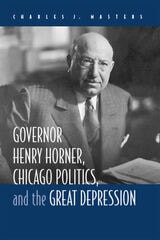
cover of Governor Henry Horner, Chicago Politics, and the Great Depression

Governor Henry Horner, Chicago Politics, and the Great Depression

Charles J. Masters

Southern Illinois University Press, 2007
Many have never heard of Governor Henry Horner of Illinois, yet his story is remarkable. Governor Henry Horner, Chicago Politics, and the Great Depression focuses on Horner’s career in law and politics from 1915 to 1940, while examining the economic and political dynamics of Illinois during the darkest period in American history. This principled governor managed to maintain his political integrity in a climate where honesty was a liability, says author Charles J. Masters, but the few historians who include Horner in their narratives offer contradictory and dismissive characterizations of him. Masters corrects the public record and reintroduces Horner to political lore as a man who brazenly fought both the Chicago Democratic machine that worked to plot his downfall and Roosevelt’s White House to steadfastly do right by the people of Illinois.
In this first book-length treatment of Horner in over thirty-five years, Masters traces the politician’s career, the history and politics of Chicago, and the effects of the Great Depression in Illinois. The volume details Horner’s life as a lawyer, probate judge, and two-term Democratic governor of Illinois. Horner’s relationships with President Franklin D. Roosevelt and such political players as Michael “Hinky Dink” Kenna, “Bathhouse” John Coughlin, and Chicago mayors Carter Harrison, Anton Cermak, and Ed Kelly are set against a backdrop of assassination, political sniping, court-packing schemes, Prohibition, and the New Deal.
Governor Henry Horner, Chicago Politics, and the Great Depression examines the governor’s management of the political and economic challenges of the state when millions of Americans were jobless, homeless, and hungry. The severely divergent economic and political positions of the state’s northern industrial and southern agrarian interests made the period even darker. Masters shows how Horner stemmed foreclosures, dealt with bank closings, placated unpaid teachers, soothed massive labor unrest, fed the hungry, and confronted the ever-present threat of revolution. While Hitler’s Germany was spreading Nazism throughout Europe, some Americans were questioning the fundamental order of their own political system, suggesting that socialism, communism, or Nazism could offer a better way. Masters addresses how Horner, Illinois’ first Jewish governor, dealt with these challenges to the U.S. political system.
A story long absent from the historical record, GovernorHenry Horner, Chicago Politics, and the Great Depression offers a portrait of the man, his style of governance, his successes, and his failures. The volume, with eight illustrations, effectively reevaluates Horner’s historical reputation and role in Illinois politics in the midst of the worst economic depression in our nation’s history.
[more]
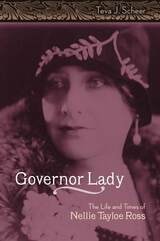
cover of Governor Lady: The Life and Times of Nellie Tayloe Ross

Governor Lady

The Life and Times of Nellie Tayloe Ross

Teva J. Scheer

University of Missouri Press, 2005
Governor Lady is the fascinating story of one of the most famous political women of her generation. Nellie Tayloe Ross was elected governor of Wyoming in 1924—just four years after American women won the vote—and she went on to be nominated for U.S. vice president in 1928, named vice chairman of the Democratic National Committee the same year, and appointed the first female director of the Mint in 1932. Ross launched her career when her husband, William Bradford Ross, the preceding governor, died, leaving her widowed with four sons and no means of supporting them. She was an ironic choice to be such a pioneer in women’s rights, since she claimed her entire life that she had no interest in feminism. Nevertheless, she believed in equal opportunity and advancement in merit irrespective of gender—core feminist values. The dichotomy between Ross’s career and life choices, and her stated priorities of wife and mother, is a critical contradiction, making her an intriguing woman.
Exhaustively researched and powerfully written, Governor Lady chronicles the challenges and barriers that a woman with no job experience, higher education, or training faced on the way to becoming a confident and effective public administrator. In addition to the discrimination and resentment she faced from some of her male associates, she also aroused the enmity of Eleanor Roosevelt, whom she displaced at the DNC.
Born exactly one hundred years after the signing of the Declaration of Independence, Ross lived to celebrate the nation’s bicentennial, so her long and remarkable life precisely spanned the second U.S. century. She was reared in the Victorian era, when upper- and middle-class women were expected to be domestic, decorative, and submissive, but she died as the women’s movement was creating a multitude of opportunities for young women of the 1970s. Nellie’s story will be of great interest to anyone curious about women’s history and biography. The contemporary American career woman will especially identify with Ross’s struggle to balance her career, family, and active personal life.
[more]
cover of Governor Richard Ogilvie: In the Interest of the State

Governor Richard Ogilvie

In the Interest of the State

Taylor Pensoneau

Southern Illinois University Press, 2009

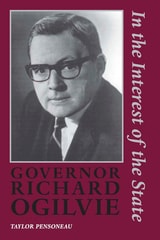
Although serious scandal erupted in Illinois Governor Richard Ogilvie’s administration— eight hundred thousand dollars mysteriously appearing in Secretary of State Paul Powell’s shoe boxes and other hiding places, the downfall of two Supreme Court justices for questionable stock dealings, corruption surrounding the Illinois State Fair— Ogilvie’s accomplishments, as Taylor Pensoneau demonstrates, rank him among the best governors in Illinois history.

Perhaps the most important of Ogilvie’s accomplishments during his single term in office (1969–1973) was the passage of the state’s first income tax in 1969. Supporting the income tax took political courage on the part of the new governor, but in doing so he saved the financially crippled state from economic disaster. He also looked far into the future; at a time when few politicians expressed concern with the environment, Ogilvie created an exemplary and hard-hitting antipollution program. He was in office during the Illinois Constitutional Convention in 1970 and was instrumental in the widespread restructuring of Illinois government.

Viewing Ogilvie as a pivotal figure in Illinois politics during a time of great social and political turmoil, Pensoneau provides a complete political biography. He sheds light on Ogilvie’s military heroics, his political career, and the Illinois elections of 1968, 1970, and 1972.
[more]
cover of Gramsci in the World

Gramsci in the World

Roberto M. Dainotto and Fredric Jameson, editors

Duke University Press, 2020

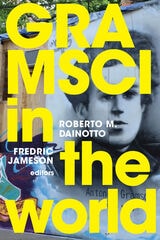
Antonio Gramsci's Prison Notebooks have offered concepts, categories, and political solutions that have been applied in a variety of social and political contexts, from postwar Italy to the insurgencies of the Arab Spring. The contributors to Gramsci in the World examine the diverse receptions and uses of Gramscian thought, highlighting its possibilities and limits for understanding and changing the world. Among other topics, they explore Gramsci's importance to Caribbean anticolonial thinkers like Stuart Hall, his presence in decolonial indigenous movements in the Andes, and his relevance to understanding the Chinese Left. The contributors consider why Gramsci has had relatively little impact in the United States while also showing how he was a major force in pushing Marxism beyond Europe—especially into the Arab world and other regions of the Global South. Rather than taking one interpretive position on Gramsci, the contributors demonstrate the ongoing relevance of his ideas to revolutionary theory and praxis.

Contributors. Alberto Burgio, Cesare Casarino, Maria Elisa Cevasco, Kate Crehan, Roberto M. Dainotto, Michael Denning, Harry Harootunian, Fredric Jameson, R. A. Judy, Patrizia Manduchi, Andrea Scapolo, Peter D. Thomas, Catherine Walsh, Pu Wang, Cosimo Zene
[more]
cover of Guy Debord: Revolution in the Service of Poetry

Guy Debord

Revolution in the Service of Poetry

Vincent Kaufmann

University of Minnesota Press, 2010

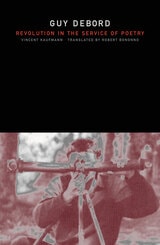
Writer, artist, filmmaker, provocateur, revolutionary, and impresario of the Situationist International, Guy Debord shunned the apparatus of publicity he dissected so brilliantly in his most influential work, The Society of the Spectacle. In this ambitious and innovative biography, Vincent Kaufmann places Debord's very hostility toward the inquisitive, biographical gaze at the center of an investigation into his subject's diverse output-from his earliest films to his landmark works of social theory and political provocation-and the poetic sensibility that informed both his work and his life.

Instead of providing a conventional day-to-day account of Debord's life, Kaufmann deftly locates his subject within the historical and intellectual context of the radical social, political, and artistic movements in which he participated. He traces Debord's development as an intellectual: his involvement with the lettrist movement in the early 1950s, his central role in the Situationist International from 1957 to 1971 and in the events of May 1968, and the productive and frequently misunderstood period between the dissolution of the situationists and his suicide, during which time Debord clarified the rules of his war against inauthenticity.

As Kaufmann makes clear, for Debord political thought and action were inseparable from aesthetics and poetic expression. Whether envisioning the recovery of a lost, protocommunist age of authenticity and transparency in The Society of the Spectacle or critically assessing the possibility of revolution against postmodern capitalism two decades later, Debord advocated and practiced an art of defiance, a concurrently martial and melancholic poetics. Avoiding the mythologies about Debord that both admirers and critics have cultivated, Kaufmann provides a groundbreaking and generous assessment of Debord and his uncompromising struggle against a corrupt civilization.
[more]