Results by title
87 books match the query 'Political Freedom' and 2 start with g
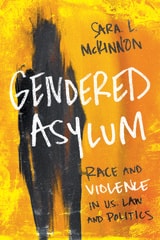
Gendered Asylum
Race and Violence in U.S. Law and PoliticsSara L. McKinnon
University of Illinois Press, 2016
Sara L. McKinnon exposes racialized rhetorics of violence in politics and charts the development of gender as a category in American asylum law. Starting with the late 1980s, when gender-based requests first emerged in case law, McKinnon analyzes gender- and sexuality-related cases against the backdrop of national and transnational politics. Her focus falls on cases as diverse as Guatemalan and Salvadoran women sexually abused during the Dirty Wars and transgender asylum seekers from around the world fleeing brutally violent situations. She reviews the claims, evidence, testimony, and message strategies that unfolded in these legal arguments and decisions, and illuminates how legal decisions turned gender into a political construct vulnerable to American national and global interests. She also explores myriad related aspects of the process, including how subjects are racialized and the effects of that racialization, and the consequences of policies that position gender as a signifier for women via normative assumptions about sex and heterosexuality.
Wide-ranging and rich with human detail, Gendered Asylum uses feminist, immigration, and legal studies to engage one of the hotly debated issues of our time.
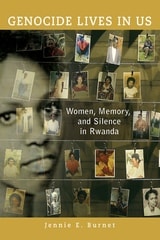
Genocide Lives in Us
Women, Memory, and Silence in RwandaJennie E. Burnet
University of Wisconsin Press, 2012
In the aftermath of the 1994 genocide, Rwandan women faced the impossible—resurrecting their lives amidst unthinkable devastation. Haunted by memories of lost loved ones and of their own experiences of violence, women rebuilt their lives from “less than nothing.” Neither passive victims nor innate peacemakers, they traversed dangerous emotional and political terrain to emerge as leaders in Rwanda today. This clear and engaging ethnography of survival tackles three interrelated phenomena—memory, silence, and justice—and probes the contradictory roles women played in postgenocide reconciliation.
Based on more than a decade of intensive fieldwork, Genocide Lives in Us provides a unique grassroots perspective on a postconflict society. Anthropologist Jennie E. Burnet relates with sensitivity the heart-wrenching survival stories of ordinary Rwandan women and uncovers political and historical themes in their personal narratives. She shows that women’s leading role in Rwanda’s renaissance resulted from several factors: the dire postgenocide situation that forced women into new roles; advocacy by the Rwandan women’s movement; and the inclusion of women in the postgenocide government.
Honorable Mention, Aidoo-Snyder Book Prize, Women’s Caucus of the African Studies Association