207 books match the query 'Political participation' and 5 start with g
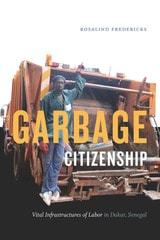
cover of Garbage Citizenship: Vital Infrastructures of Labor in Dakar, Senegal

Garbage Citizenship

Vital Infrastructures of Labor in Dakar, Senegal

Rosalind Fredericks

Duke University Press, 2018
Over the last twenty-five years, garbage infrastructure in Dakar, Senegal, has taken center stage in the struggles over government, the value of labor, and the dignity of the working poor. Through strikes and public dumping, Dakar's streets have been periodically inundated with household garbage as the city's trash collectors and ordinary residents protest urban austerity. Often drawing on discourses of Islamic piety, garbage activists have provided a powerful language to critique a neoliberal mode of governing-through-disposability and assert rights to fair labor. In Garbage Citizenship Rosalind Fredericks traces Dakar's volatile trash politics to recalibrate how we understand urban infrastructure by emphasizing its material, social, and affective elements. She shows how labor is a key component of infrastructural systems and how Dakar's residents use infrastructures as a vital tool for forging collective identities and mobilizing political action. Fleshing out the materiality of trash and degraded labor, Fredericks illuminates the myriad ways waste can be a potent tool of urban control and rebellion.
[more]
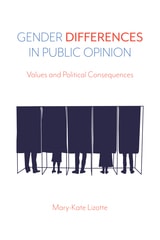
cover of Gender Differences in Public Opinion: Values and Political Consequences

Gender Differences in Public Opinion

Values and Political Consequences

Mary-Kate Lizotte

Temple University Press, 2020

In this era in which more women are running for public office—and when there is increased activism among women—understanding gender differences on political issues has become critical. In her cogent study, Mary-Kate Lizotte argues that assessing the gender gap in public support for policies through a values lens provides insight into American politics today. There is ample evidence that men and women differ in their value endorsements—even when taking into account factors such as education, class, race, income, and party identification.

In Gender Differences in Public Opinion, Lizotte utilizes nationally representative data, mainly from the American National Election Study, to study these gender gaps, the explanatory power of values, and the political consequences of these differences. She examines the gender differences in several policy areas such as equal rights, gun control, the death penalty, and the environment, as well as social welfare issues. The result is an insightful and revealing study of how men and women vary in their policy positions and political attitudes.
[more]
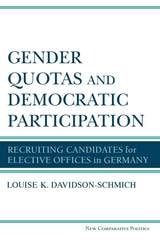
cover of Gender Quotas and Democratic Participation: Recruiting Candidates for Elective Offices in Germany

Gender Quotas and Democratic Participation

Recruiting Candidates for Elective Offices in Germany

Louise K. Davidson-Schmich

University of Michigan Press, 2016

Since the 1970s, quotas for female political candidates in elections have proliferated worldwide. Beyond increasing the numbers of women in high-level elected bodies and, thereby, women’s political representation, advocates claim that quotas foster gender-equal participation in democracy and create female role models. According to this reasoning, quotas also overcome barriers to women’s political participation, especially discriminatory practices in the selection of electoral candidates. Though such claims have persuaded policy makers to adopt quotas, little empirical evidence exists to verify their effects.

In Gender Quotas and Democratic Participation, Louise K. Davidson-Schmich employs a pathbreaking research design to assess the effects of gender quotas on all phases of political recruitment. Drawing on interviews with, and an original survey of, potential candidates in Germany, she investigates the extent to which quotas and corresponding increases in women’s descriptive representation have resulted in similar percentages of men and women joining political parties, aspiring to elected office, pursuing ballot nominations, and securing selection as candidates. She also examines the effect of quotas on discriminatory selection procedures.  Ultimately, Davidson-Schmich argues, quotas’ intended benefits have been only partially realized. Quotas give women greater presence in powerful elected bodies not by encouraging female citizens to pursue political office at rates similar to men’s, but by improving the odds that the limited number of politically ambitious women who do join parties will be elected. She concludes with concrete, original policy recommendations for increasing women’s political participation.

[more]
cover of Gestures of Concern

Gestures of Concern

Chris Ingraham

Duke University Press, 2020
In Gestures of Concern Chris Ingraham shows that while gestures such as sending a “Get Well” card may not be instrumentally effective, they do exert an intrinsically affective force on a field of social relations. From liking, sharing, posting, or swiping to watching a TED Talk or wearing an “I Voted” sticker, such gestures operate as much through affective registers as they do through overt symbolic action. Ingraham demonstrates that gestures of concern are central to establishing the necessary conditions for larger social or political change because they give the everyday aesthetic and rhetorical practices of public life the capacity to attain some socially legible momentum. Rather than supporting the notion that vociferous public communication is the best means for political and social change, Ingraham advances the idea that concerned gestures can help to build the affective communities that orient us to one another with an imaginable future in mind. Ultimately, he shows how acts that many may consider trivial or banal are integral to establishing those background conditions capable of fostering more inclusive social or political change.
[more]
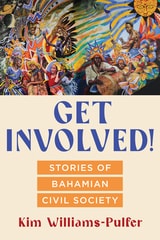
cover of Get Involved!: Stories of Bahamian Civil Society

Get Involved!

Stories of Bahamian Civil Society

Kim Williams-Pulfer

Rutgers University Press, 2024

Philanthropy is commonly depicted as a universal practice and is either valued for supporting community transformation or critiqued for limiting social justice. However, dominant definitions and even popular connotations tend to privilege wealthy Western approaches. Using the Caribbean as a rich site of observance and concentrating on the island nation-state of The Bahamas, Get Involved! uncovers the hidden and under-documented activities of “philanthropy from below,” revealing a broader conception of philanthropy and civil society, especially within Black and other historically marginalized populations. Kim Williams-Pulfer draws on narrative analysis from enslavement to the current post-post-colonial moment, depicting the repertoires and practices of primarily Afro-Bahamians through the stories emerging from history (including the transnational observations of Zora Neale Hurston, social movements, and political and social institution building), the arts (from Junkanoo, literature, and visual practices), to the lived experiences of contemporary civil society leaders. Get Involved! shows the long history and continued significance of civil society and philanthropic engagement in The Bahamas, the circum-Caribbean, and the wider African Diaspora.

Junkanoo is the national cultural festival of The Bahamas.  It fosters a sense of community pride, identity, companionship, spirituality and unity. Watch a video about Junknoo:
https://www.youtube.com/watch?v=tnMpMesNb1Q&t=14s
[more]