Results by title
58 books match the query 'Pop Vocal' and 3 start with g

Genre in Popular Music
Fabian Holt
University of Chicago Press, 2007
The popularity of the motion picture soundtrack O Brother, Where Art Thou? brought an extraordinary amount of attention to bluegrass, but it also drew its share of criticism from some aficionados who felt the album’s inclusion of more modern tracks misrepresented the genre. This soundtrack, these purists argued, wasn’t bluegrass, but “roots music,” a new and, indeed, more overarching category concocted by journalists and marketers. Why is it that popular music genres like these and others are so passionately contested? And how is it that these genres emerge, coalesce, change, and die out?
In Genre in Popular Music, Fabian Holt provides new understanding as to why we debate music categories, and why those terms are unstable and always shifting. To tackle the full complexity of genres in popular music, Holt embarks on a wide-ranging and ambitious collection of case studies. Here he examines not only the different reactions to O Brother, but also the impact of rock and roll’s explosion in the 1950s and 1960s on country music and jazz, and how the jazz and indie music scenes in Chicago have intermingled to expand the borders of their respective genres. Throughout, Holt finds that genres are an integral part of musical culture—fundamental both to musical practice and experience and to the social organization of musical life.
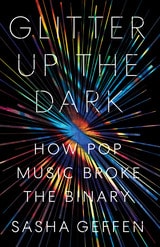
Glitter Up the Dark
How Pop Music Broke the BinaryBy Sasha Geffen
University of Texas Press, 2020
Why has music so often served as an accomplice to transcendent expressions of gender? Why did the query "is he musical?" become code, in the twentieth century, for "is he gay?" Why is music so inherently queer? For Sasha Geffen, the answers lie, in part, in music’s intrinsic quality of subliminal expression, which, through paradox and contradiction, allows rigid gender roles to fall away in a sensual and ambiguous exchange between performer and listener. Glitter Up the Dark traces the history of this gender fluidity in pop music from the early twentieth century to the present day.
Starting with early blues and the Beatles and continuing with performers such as David Bowie, Prince, Missy Elliot, and Frank Ocean, Geffen explores how artists have used music, fashion, language, and technology to break out of the confines mandated by gender essentialism and establish the voice as the primary expression of gender transgression. From glam rock and punk to disco, techno, and hip-hop, music helped set the stage for today’s conversations about trans rights and recognition of nonbinary and third-gender identities. Glitter Up the Dark takes a long look back at the path that led here.
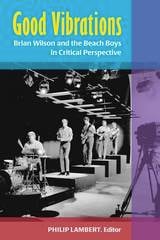
Good Vibrations
Brian Wilson and the Beach Boys in Critical PerspectivePhilip Lambert, Editor
University of Michigan Press, 2016
The book joins a growing body of literature on the popular music of the 1960s, in general, and on Brian Wilson and the Beach Boys in particular. But Good Vibrations extends the investigation further and deeper than it has gone before, not only offering new understanding and insights into individual songs and albums, but also providing close examination of compositional techniques and reflections on the group’s place in American popular culture.