214 books match the query 'Presidents & Heads of State' and 5 start with g
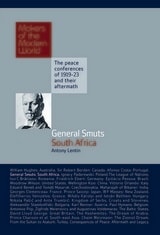
cover of General Smuts: South Africa

General Smuts

South Africa

Antony Lentin

Haus Publishing, 2009

Jan Smuts was one of the key figures behind the creation of the League of Nations; Wilson was inspired by his ideas, including the mandates scheme. He pleaded for a magnanimous peace, warning that the treaty of Versailles would lead to another war.
[more]
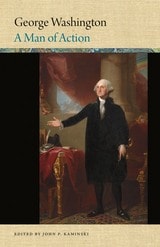
cover of George Washington: A Man of Action

George Washington

A Man of Action

John P. Kaminski

Wisconsin Historical Society Press, 2017

Perhaps no other person could ever achieve the preeminent position in American history and culture occupied by George Washington. Born in 1732, Washington’s life–long commitment to self-improvement and discipline helped him become a legend in his own lifetime. Whether as a statesman, military man, or America’s first president, Washington created a legacy that has scarcely diminished in over two centuries. Yet the passage of time and the superlatives reserved for Washington have knit together and made it difficult to find the real man. Historian and editor John P. Kaminski has amassed an extraordinary body of quotations by and about George Washington that brings us closer to the essence of this great leader. This collection paints an intricate picture of the man who Henry 'Lighthorse' Lee of Virginia eulogized as: "First in war, first in peace, first in the hearts of his countrymen."
[more]
cover of Georges Clemenceau: France

Georges Clemenceau

France

David Watson

Haus Publishing, 2010

The Anglo-Saxon view of Georges Clemenceau (1841-1929) is based on John Maynard Keynes's misjudged caricature, that he had imposed a treaty that was harsh and oppressive of Germany. French critics' view, however, is that he had been too lenient, and left Germany in a position to challenge the treaty. In fact the treaty was a just settlement, and it could have been maintained. The failure was not in the terms of the treaty but in the subsequent failure to insist on maintaining them in the face of German resistance.
[more]
cover of Gerald R. Ford: An Honorable Life

Gerald R. Ford

An Honorable Life

James Cannon

University of Michigan Press, 2013

“Not since Harry Truman succeeded Franklin D. Roosevelt twenty-nine years earlier had the American people known so little about a man who had stepped forward from obscurity to take the oath of office as President of the United States.”
—from Chapter 4

This is a comprehensive narrative account of the life of Gerald Ford written by one of his closest advisers, James Cannon. Written with unique insight and benefiting from personal interviews with President Ford in his last years, Gerald R. Ford: An Honorable Lifeis James Cannon’s final look at the simple and honest man from the Midwest.

[more]
cover of Grant at Vicksburg: The General and the Siege

Grant at Vicksburg

The General and the Siege

Michael B. Ballard

Southern Illinois University Press, 2013

On May 22, 1863, after two failed attempts to take the city of Vicksburg by assault, Major General Ulysses S. Grant declared in a letter to the commander of the Union fleet on the Mississippi River that “the nature of the ground about Vicksburg is such that it can only be taken by a siege.” The 47-day siege of Vicksburg orchestrated by Grant resulted in the eventual surrender of the city and fulfilled a major strategic goal for the Union: command of the Mississippi River for the remainder of the war. In this revealing volume, Michael B. Ballard offers the first in-depth exploration of Grant’s thoughts and actions during this critical operation, providing a never-before-seen portrait of the general in the midst of one of his most notable achievements.

After an overview of Grant’s early Civil War career from his first battle through the early stages of the attacks on Vicksburg, Ballard describes in detail how Grant conducted the siege, examining his military decisions, placement of troops, strategy and tactics, engineering objectives, and relationships with other officers.  Grant’s worried obsession with a perceived danger of a rear attack by Joseph Johnston’s Confederate army, Ballard shows, affected his decision making, and shows how threats of Confederate action occupied more of Grant’s time than did the siege itself.  

In addition, Ballard soundly dispels a false story about Grant’s alleged drinking binge early in the siege that has been taken as truthful by many historians, examines how racism in Grant’s army impacted the lives of freed black people and slaves in the Vicksburg area, and explores Grant’s strained relationship with John McClernand, a politically appointed general from Illinois. The book concludes with the surrender of Vicksburg on July 4, 1863, the expulsion of Johnston and his army from the region, and demonstrates the impact of the siege on the outcome on the short and long-terms of Grant’s military career.

By analyzing Grant’s personality during the siege and how he dealt with myriad issues as both a general and an administrator, Grant at Vicksburg offers a revealing rendering of the legendary general. 

[more]