Results by title
597 books match the query 'Psychological aspects' and 17 start with g
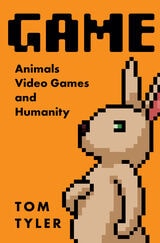
Game
Animals, Video Games, and HumanityTom Tyler
University of Minnesota Press, 2022
A playful reflection on animals and video games, and what each can teach us about the other
Video games conjure new worlds for those who play them, human or otherwise: they’ve been played by cats, orangutans, pigs, and penguins, and they let gamers experience life from the perspective of a pet dog, a predator or a prey animal, or even a pathogen. In Game, author Tom Tyler provides the first sustained consideration of video games and animals and demonstrates how thinking about animals and games together can prompt fresh thinking about both.
Game comprises thirteen short essays, each of which examines a particular video game, franchise, aspect of gameplay, or production in which animals are featured, allowing us to reflect on conventional understandings of humans, animals, and the relationships between them. Tyler contemplates the significance of animals who insert themselves into video games, as protagonists, opponents, and brute resources, but also as ciphers, subjects, and subversive guides to new ways of thinking. These animals encourage us to reconsider how we understand games, contesting established ideas about winning and losing, difficulty settings, accessibility, playing badly, virtuality, vitality and vulnerability, and much more.
Written in a playful style, Game draws from a dizzying array of sources, from children’s television, sitcoms, and regional newspapers to medieval fables, Shakespearean tragedy, and Edwardian comedy; from primatology, entomology, and hunting and fishing manuals to theological tracts and philosophical treatises. By examining video games through the lens of animals and animality, Tyler leads us to a greater humility regarding the nature and status of the human creature, and a greater sensitivity in dealings with other animals.

Gandhi
The Traditional Roots of CharismaSusanne Hoeber Rudolph and Lloyd I. Rudolph
University of Chicago Press, 1983

Gangs on Trial
Challenging Stereotypes and Demonization in the CourtsJohn M. Hagedorn
Temple University Press, 2022
John Hagedorn, who has long been an expert witness in gang-related court cases, claims that what transpires in the trials of gang members is a far cry from what we would consider justice. In Gangs on Trial, he recounts his decades of experience to show how stereotypes are used against gang members on trial and why that is harmful. Hagedorn uses real-life stories to explain how implicit bias often replaces evidence and how the demonization of gang members undermines fairness. Moreover, a “them and us” mentality leads to snap judgments that ignore the complexity of gang life in America.
Gangs on Trial dispels myths about gangs and recommends tactics for lawyers, mitigation specialists, and expert witnesses as well as offering insights for jurors. Hagedorn describes how minds are subconsciously “primed” when a defendant is identified as a gang member, and discusses the “backfire effect,” which occurs when jurors hear arguments that run counter to their beliefs. He also reveals how attributional errors, prejudice, and racism impact sentences of nonwhite defendants.
Hagedorn argues that dehumanization is the psychological foundation of mass incarceration. Gangs on Trial advocates for practical sentencing reforms and humanizing justice.
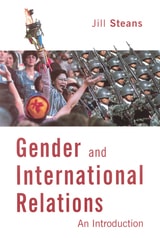
Gender and International Relations
An IntroductionSteans, Jill
Rutgers University Press, 1998
Until relatively recently, little had been written about gender issues in international relations despite the increased importance of the study of gender in other areas of the social sciences. Gender and International Relations fills that gap, providing a clear and accessible guide to the study of gender issues, feminist theories, and international relations. Steans illustrates how gender is central to nationalisms and political identity, the state, citizenship and conceptions of political community, security, and global political economy and development. Drawing on feminist scholarship from across the social sciences, she demonstrates the uses of feminism as critique. She also introduces readers to contemporary theoretical debates in international relations using concrete concerns and easily understandable issues to ground the discussion.
The book does not construct a single feminist theory of international relations nor does it advance a particular perspective of how gender can best be understood in an international or global context. Rather, the book argues that feminist theories have collectively produced insights crucial to the study of international relations and that these insights can be used to challenge conventional approaches to the discipline.

Gender and International Relations
An IntroductionSteans, Jill
Rutgers University Press, 1998
Until relatively recently, little had been written about gender issues in international relations despite the increased importance of the study of gender in other areas of the social sciences. Gender and International Relations fills that gap, providing a clear and accessible guide to the study of gender issues, feminist theories, and international relations. Steans illustrates how gender is central to nationalisms and political identity, the state, citizenship and conceptions of political community, security, and global political economy and development. Drawing on feminist scholarship from across the social sciences, she demonstrates the uses of feminism as critique. She also introduces readers to contemporary theoretical debates in international relations using concrete concerns and easily understandable issues to ground the discussion.
The book does not construct a single feminist theory of international relations nor does it advance a particular perspective of how gender can best be understood in an international or global context. Rather, the book argues that feminist theories have collectively produced insights crucial to the study of international relations and that these insights can be used to challenge conventional approaches to the discipline.

Gender and the Boundaries of Dress in Contemporary Peru
By Blenda Femenías
University of Texas Press, 2005
Set in Arequipa during Peru's recent years of crisis, this ethnography reveals how dress creates gendered bodies. It explores why people wear clothes, why people make art, and why those things matter in a war-torn land. Blenda Femenías argues that women's clothes are key symbols of gender identity and resistance to racism.
Moving between metropolitan Arequipa and rural Caylloma Province, the central characters are the Quechua- and Spanish-speaking maize farmers and alpaca herders of the Colca Valley. Their identification as Indians, whites, and mestizos emerges through locally produced garments called bordados. Because the artists who create these beautiful objects are also producers who carve an economic foothold, family workshops are vital in a nation where jobs are as scarce as peace. But ambiguity permeates all practices shaping bordados' significance. Femenías traces contemporary political and ritual applications, not only Caylloma's long-standing and violent ethnic conflicts, to the historical importance of cloth since Inca times.
This is the only book about expressive culture in an Andean nation that centers on gender. In this feminist contribution to ethnography, based on twenty years' experience with Peru, including two years of intensive fieldwork, Femenías reflects on the ways gender shapes relationships among subjects, research, and representation.
Genres of Listening
An Ethnography of Psychoanalysis in Buenos AiresXochitl Marsilli-Vargas
Duke University Press, 2022
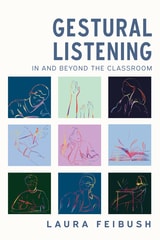
Gestural Listening In and Beyond the Classroom
Laura Feibush
Utah State University Press, 2026
Attuned to the subtle choreographies of the classroom, Gestural Listening In and Beyond the Classroom investigates how students and instructors show that they are listening to each other—and, sometimes, that they are not. While rhetorical scholarship traditionally focuses on speaking and writing, listening can also be understood as a rhetorical force that makes things happen. Listening has the power to move, bring about, cause, and catalyze. This conductive aspect of listening is its embodied manifestation—termed “gestural listening.”
Laura Feibush first traces the roots of embodied listening through cultural and rhetorical history and then uses findings from a classroom study to inform an insightful discussion of respect, resistance, and self-regulation as the key dynamics that characterize listening in contemporary educational spaces. She reveals how the gestures of listening refract across identity categories in ways that have surprising effects on how classroom participants respond to one another. This accessibly written book attends to hands and faces, nodding and note-taking, and the presence of phones and laptops, as well as other forms of nonverbal backchanneling, such as where people sit, when they interrupt, and when they engage in impactful quietness.
The power of gestural listening is not limited to the classroom. Its quiet yet profound influence can elucidate many sites of interaction: in-person and virtual academic settings as well as those far beyond the educational space, such as scenes of protest, worship, and performance. Gestural Listening In and Beyond the Classroom shows how, when understood as possessing its own repertoire of impressive and expressive capacities, listening emerges as a fascinating site of study and offers exercises, activities, and other materials to help educators, counselors, and all those engaging in communicative work enact a new awareness of gestural listening as a rhetorical force.

Gestures
Vilém Flusser
University of Minnesota Press, 2014
Throughout his career, the influential new media theorist Vilém Flusser kept the idea of gesture in mind: that people express their being in the world through a sweeping range of movements. He reconsiders familiar actions—from speaking and painting to smoking and telephoning—in terms of particular movement, opening a surprising new perspective on the ways we share and preserve meaning. A gesture may or may not be linked to specialized apparatus, though its form crucially affects the person who makes it.
These essays, published here as a collection in English for the first time, were written over roughly a half century and reflect both an eclectic array of interests and a durable commitment to phenomenological thought. Defining gesture as “a movement of the body or of a tool attached to the body for which there is no satisfactory causal explanation,” Flusser moves around the topic from diverse points of view, angles, and distances: at times he zooms in on a modest, ordinary movement such as taking a photograph, shaving, or listening to music; at others, he pulls back to look at something as vast and varied as human “making,” embracing everything from the fashioning of simple tools to mass manufacturing. But whatever the gesture, Flusser analyzes it as the expression of a particular form of consciousness, that is, as a particular relationship between the world and the one who gestures.

Getting Away from It All
Vacations and IdentityKaren Stein
Temple University Press, 2019
Vacations are a delimited period during which social rules and responsibilities are eased, removed, or shifted, and people have increased autonomy over what they choose to do. Recent trends in the travel industry emphasize the appeal of vacations for voluntary identity changes—when bankers can become bikers for a week or when “Momcations” allow mothers to leave their families behind. But how do our vacations allow us to shape our identity?
Getting Away from It All is a study of individuality and flexibility and the intersection of self-definition and social constraint. Karen Stein interviews vacationers about their travels and down time, focusing on “identity transitions.” She shows how objects, settings, temporal environments and social interactions limit or facilitate identity shifts, and how we arrange our vacations to achieve the shifts we desire. Stein also looks at the behavior, values, attitudes, and worldview of individuals to illuminate how people engage in either identity work or identity play.
Vacations say a lot about individuals. They signal class and economic standing and reveal aspirations and goals. Getting Away from It All insists that vacations are about more than just taking time off to relax and rejuvenate—they are about having some time to work on the person one wants to be.

Ghosts
Death’S Double And The Phenomena Of TheatreAlice Rayner
University of Minnesota Press, 2006
In Ghosts, Alice Rayner examines theatre as a memorial practice that is haunted by the presence of loss, looking at how aspects of stagecraft turn familiar elements into something uncanny. Citing examples from the works of Shakespeare, Beckett, and Suzan-Lori Parks as well as the films Vertigo, Gaslight, and The Sixth Sense, she begins by describing time as it is employed by theatre with multiple aspects of presence, duration, and passage. Suggesting that objects connect past to present through the sense of touch, she explores how props are suspended backstage between motion and meaning. Her final chapters consider the curtain as theatre’s means for attempting to divide real and imaginary worlds.
If ghosts hover where secrets—secrets of the past, secrets from oneself, secrets of life and death—are kept, then, according to Rayner, “theatre is where ghosts best make their appearances and let communities and individuals know that we live amid secrets hiding in plain sight.”
Alice Rayner is associate professor of drama at Stanford University and author of, most recently, To Act, To Do, To Perform: Drama and the Phenomenology of Action.
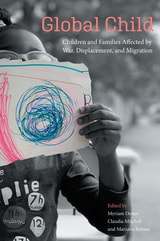
Global Child
Children and Families Affected by War, Displacement, and MigrationMyriam Denov
Rutgers University Press, 2023

God in the Machine
Video Games as Spiritual PursuitLiel Leibovitz
Templeton Press, 2014
Yet video games remain relatively unexplored by both scholars and pundits alike. Few have advanced beyond outmoded and futile attempts to tie gameplay to violent behavior. With this rumor now thoroughly and repeatedly disproven, it is time to delve deeper. Just as the Museum of Modern Art in Manhattan recently acquired fourteen games as part of its permanent collection, so too must we seek to add a serious consideration of virtual worlds to the pantheon of philosophical inquiry.
In God in the Machine, author Liel Leibovitz leads a fascinating tour of the emerging virtual landscape and its many dazzling vistas from which we are offered new vantage points on age-old theological and philosophical questions. Free will vs. determinism, the importance of ritual, transcendence through mastery, notions of the self, justice and sin, life, death, and resurrection all come into play in the video games that some critics so quickly write off as mind-numbing wastes of time. When one looks closely at how these games are designed, their inherent logic, and their cognitive effects on players, it becomes clear that playing these games creates a state of awareness vastly different from when we watch television or read a book. Indeed, the gameplay is a far more dynamic process that draws on various faculties of mind and body to evoke sensations that might more commonly be associated with religious experience. Getting swept away in an engaging game can be a profoundly spiritual activity. It is not to think, but rather to be, a logic that sustained our ancestors for millennia as they looked heavenward for answers.
As more and more of us look “screenward,” it is crucial to investigate these games for their vast potential as fine instruments of moral training. Anyone seeking a concise and well-reasoned introduction to the subject would do well to start with God in the Machine. By illuminating both where video game storytelling is now and where it currently butts up against certain inherent limitations, Liebovitz intriguingly implies how the field and, in turn, our experiences might continue to evolve and advance in the coming years.

Gone Primitive
Savage Intellects, Modern LivesMarianna Torgovnick
University of Chicago Press, 1990
fears, and longings that have produced Western views of the
primitive. Crossing an extraordinary range of fields
(anthropology, psychology, literature, art, and popular
culture), Gone Primitive will engage not just
specialists but anyone who has ever worn Native American
jewelry, thrilled to Indiana Jones, or considered buying an
African mask.
"A superb book; and—in a way that goes beyond what
being good as a book usually implies—it is a kind of gift to
its own culture, a guide to the perplexed. It is lucid,
usually fair, laced with a certain feminist mockery and
animated by some surprising sympathies."—Arthur C. Danto,
New York Times Book Review
"An impassioned exploration of the deep waters beneath Western primitivism. . . . Torgovnick's readings are deliberately, rewardingly provocative."—Scott L. Malcomson, Voice Literary Supplement
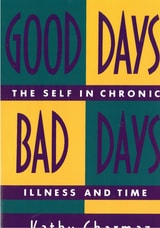
Good Days, Bad Days
The Self and Chronic Illness in TimeKathy C Charmaz
Rutgers University Press, 1993
Illness provides a mirror that allows sufferers to see themselves and to become more introspective. As they struggle for control over illness and control over time, they also struggle to control the central images of the self. For example, the chronically ill may situate their self-concepts in the past, present, or future. Charmaz examines under what conditions they situate their self-concepts in each of those timeframes. People may say they live one day at a time. They may bracket certain experiences, such as a heart attack, as timemarkers or turning points in the past. Or they may look ahead to recovering their health. Or ahead to death.
Charmaz artfully combines near jargon-free analysis with moving stories about how people have experienced illness, usually told in the sufferers' own words. She enters the world of the chronically ill, and brings us into it.
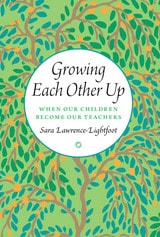
Growing Each Other Up
When Our Children Become Our TeachersSara Lawrence-Lightfoot
University of Chicago Press, 2016
With Growing Each Other Up, Macarthur Prize–winning sociologist and educator Sara Lawrence-Lightfoot offers an intimately detailed, emotionally powerful account of that experience. Building her book on a series of in-depth interviews with parents around the country, she offers a counterpoint to the usual parental development literature that mostly concerns the adjustment of parents to their babies’ rhythms and the ways parents weather the storms of their teenage progeny. The focus here is on the lessons emerging adult children, ages 15 to 35, teach their parents. How are our perspectives as parents shaped by our children? What lessons do we take from them and incorporate into our worldviews? Just how much do we learn—often despite our own emotionally fraught resistance—from what they have seen of life that we, perhaps, never experienced? From these parent portraits emerges the shape of an education composed by young adult children—an education built on witness, growing, intimacy, and acceptance.
Growing Each Other Up is rich in the voices of actual parents telling their own stories of raising children and their children raising them; watching that fundamental connection shift over time. Parents and children of all ages will recognize themselves in these evocative and moving accounts and look at their own growing up in a revelatory new light.

Growth Machines
On the Hollow Joys of Consumption in the Desert of Economic LifeMark Joseph Stelzner
University of Chicago Press, 2026
A provocative look at America’s compulsion to consume and our obsession’s surprising—and strange—origins.
In a capitalist society, people sell their labor to purchase staples like food, shelter, and anxiety medication. That’s the equation of everyday economic life that we’ve always been told is true. Except, is it really that simple anymore? No matter how unmaterialistic you may think you are, odds are that deep within is a drive to consume because it feels good: books you won’t read, clothes you won’t like and might wear even less, a replacement phone whose novelty runs out as quickly as its upgrade hits the market. But what drives this impulse?
In Growth Machines, Mark Joseph Stelzner shows how today’s consumers are now programmed by a US economy intent on infinite growth to work for goods they’ve been convinced they need and conditioned to want. Stelzner establishes the gaps between economic thinking and economic reality, arguing that consumption is no longer just a reflection of needs, but rather, it reflects a need for transaction—in many cases, a treat we seek out because it feels good. We work not only to be able to consume the essentials for living, but also to consume for consumption's sake. Yet such consumption doesn’t make us happier. Stelzner traces this strange nature of consumption to an environmental source: an economy that demands growth. To keep its economy pumping, the US must keep Americans consuming. This makes Stelzner’s book an uncomfortable reflection on how we internalize our economy. To be an American is to consume; to consume is what makes America.