Results by title
322 books match the query 'Regional' and 16 start with g
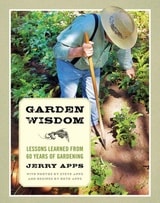
Garden Wisdom
Lessons Learned from 60 Years of GardeningJerry Apps
Wisconsin Historical Society Press, 2012
Step into the garden with writer and rural historian Jerry Apps. In this treasure trove of tips, recollections, and recipes, Jerry combines his hard-earned advice for garden success with a discussion of how tending a garden leads to a deeper understanding of nature and the land. From planning and planting to fending off critters and weeds, he walks us through the gardening year, imbuing his story with humor and passion and once again reminding us that working even a small piece of land provides many rewards.
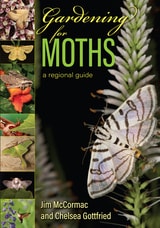
Gardening for Moths
A Regional GuideJim McCormac
Ohio University Press, 2023
This guide to moths, native plants, and their environmental roles is an indispensable resource for gardeners, conservationists, and nature enthusiasts across the midwestern United States.
Gardening for Moths is the first book to show midwestern gardeners and naturalists why they should attract specific moth species to their properties and how to do it. The book’s stunning color photographs and intriguing facts reveal the fascinating world of these insects, inspiring readers to incorporate moth-loving native plants into their landscapes. The authors emphasize the importance of moths and their caterpillars to ecological food webs, widening the book’s appeal to birders and bat lovers as well.
The book consists of three main sections, beginning with a thorough overview of moths, including their
- population decline and conservation,
- importance in ecosystems,
- relationship with native plants, and
- predators and defenses
In the next section the authors profile about 140 plant species, providing brief background, natural history, habitat, and growing notes for each along with lists of potential moths the plants may attract.
The third section highlights approximately 150 moth species, ordered taxonomically. These accounts include interesting facts about the life history of both the caterpillar and adult moth of each species. Each account also features a list of the species’ common host plants.
Throughout the volume, inset text boxes provide additional fascinating moth facts. Beautiful photographs (most by the authors) illustrate every included plant and moth species. Select references, online resources, and quick reference tables round out this valuable resource.
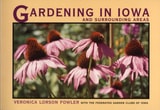
Gardening in Iowa and Surrounding Areas
Veronica Lorson Fowler
University of Iowa Press, 1997
On the East Coast, so the story goes, newcomers are asked where they come from; on the West Coast they are asked what they do for a living; in Iowa people ask them, “How's your garden doing?” Maybe this is not a true story, but it does epitomize the importance of gardening for Iowans, blessed as they are with the rich glacial soil so hospitable to corn and soybeans. Rural and urban Iowans alike start planning next summer's garden in midwinter, when their plots are still snow-covered and deep-frozen; by state fair time their trees, shrubs, vegetables—including the ubiquitous zucchini—and flowers are thriving. Veronica Fowler's month-by-month guide to gardening in Iowa is a concise, valuable resource for all novice and experienced gardeners.
Beginning in January, Fowler presents a monthly checklist to allow gardeners to prioritize seasonal tasks. Her winter chapters focus on garden design, cold-weather gardening, and starting plants from seeds; in spring she moves into soil preparation, shopping for plants, wildflower and rose cultivation, and lawn care basics; summer brings landscaping, flowers for cutting, and organic gardening; and fall involves cold frames, winter-harvest vegetables, forcing bulbs and perennials, trees and shrubs, and ground covers and vines best suited for Iowa's climate as well as information on mail-order suppliers, gardens to visit, where to go for help, and garden club memberships. Tips from some of the more than two thousand members of the Federated Garden Clubs of Iowa round out this plentiful harvest of useful advice.
On a day in February when the wind chill is, well, chilling and the forecast calls for more of the same, the arrival of the first garden catalog of the season brings warmth to any gardener. Veronica Fowler's accessible, information-packed book will become part of every gardener's life both indoors and out.
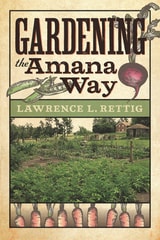
Gardening the Amana Way
Lawrence L. Rettig
University of Iowa Press, 2013
Each of the seven villages in Amana relied on the food prepared in its communal kitchens, and each kitchen depended on its communal garden for most of the dishes served (the kitchens in Rettig’s hometown produced more than four hundred gallons of sauerkraut in 1900). Rettig begins by describing the evolution of communal gardening in old Amana, focusing especially on planting, harvesting, and storing vegetables from asparagus to egg lettuce to turnips. With the passing of the old order in 1932, the number of the society’s large vegetable gardens and orchards dwindled, but Larry Rettig and his wife, Wilma, still grow some of the colonies’ heirloom varieties in their fourth-generation South Amana vegetable garden. In 1980 they founded a seed bank to preserve them for future generations.
Rettig’s chapters on modern vegetable and flower gardening in today’s Amana Colonies showcase his Cottage-in-the-Meadow Gardens, now listed with the Smithsonian in its Archives of American Gardens. Old intermingles with new across his gardens: heirloom lettuce keeps company with the latest cucumber variety, a hundred-year-old rose arches over the newest daylilies and heucheras, and ancient grapevines intertwine with newly planted wisteria, all adding up to a rich array of colorful plantings.
Rettig extends his gardening advice into the kitchen and workroom. He shares family recipes for any number of traditional dishes, including radish salad, dumpling soup, Amana pickled ham, apple bread, eleven-minute meat loaf, and strawberry rhubarb pie. Moving into the workroom, he shows us how to make hammered botanical prints, Della Robbia centerpieces, holiday wreaths, a gnome home, and a waterless fountain. Touring his gardens, with their historic and unusual plants, will make gardeners everywhere want to reproduce the groupings and varieties that surround Larry and Wilma Rettig’s 1900 red brick house.
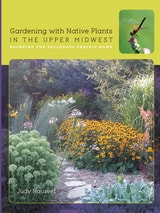
Gardening with Native Plants in the Upper Midwest
Bringing the Tallgrass Prairie HomeJudy Nauseef
University of Iowa Press, 2016
Nauseef emphasizes the need for careful planning and design to create comfortable, low-maintenance spaces that bring homeowners outside. Her designs solve problems such as a lack of privacy, shade, or sun; plan for water use; replace troublesome nonnative plants with native plants that attract pollinators; and enable homeowners to enjoy living sustainably on their land. Colorful photographs of projects around the Midwest show the wide range of possibilities, from newly created gardens using only native plants to traditional gardens that mix nonnative with native species. Whether you have a city yard, a suburban lot, or a rural acreage, there are ideas here for you, along with examples of well-designed landscapes in which native plants enhance paths, patios, pergolas, and steps.
Providing information on planting and maintaining native plants and prairies as well as seed and plant sources, organizations, and public arboretum and prairie sites, this book enables every gardener to master a new palette of plants and landforms. However small our personal landscapes, together they can slow the loss of many species of plants and wildlife and bring native flowers and grasses back where they belong. Ecologists, landscape architects and designers, master gardeners, landscape contractors, teachers, and home gardeners—everyone dedicated to conserving and improving our environment—will benefit from Nauseef’s approach.
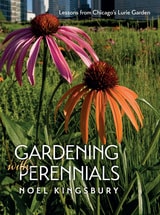
Gardening with Perennials
Lessons from Chicago's Lurie GardenNoel Kingsbury
University of Chicago Press, 2014
With Gardening with Perennials horticulturalist and garden writer Noel Kingsbury brings a global perspective to the Lurie oasis through a wonderful introduction to the world of perennial gardening. He shows how perennials have much to offer home gardeners, from sustainability—perennials require less water than their annual counterparts—to continuity, as perennials’ longevity makes them a dependable staple.
Kingsbury also explains why Lurie is a perfect case study for gardeners of all locales. The plants represented in this urban oasis were chosen specifically for reliability and longevity. The majority will thrive on a wide range of soils and across a wide climatic range. These plants also can thrive with minimal irrigation, and without fertilizers or chemical control of pests and diseases. Including a special emphasis on plants that flourish in sun, and featuring many species native to the Midwest region, Gardening with Perennials will inspire gardeners around the world to try Chicago-style sustainable gardening.

Glacier National Park
A Culmination of GiantsGeorge Bristol
University of Nevada Press, 2017
First there were tribes of Native Americans whose deep regard for nature left the landscape intact. They were followed by Euro-American explorers and settlers who may have been awed by the new lands, but began to move wildlife to near extinction. Fortunately for the area that would become Glacier, some began to recognize that laying siege to nature and its bounties would lead to wastelands.
Bristol recounts how a renewed conservation ethic fostered by such leaders as Emerson, Thoreau, Olmstead, Muir, and Teddy Roosevelt took hold. Their disciples were Grinnell, Hill, Mather, Albright, and Franklin Roosevelt, and they would not only take up the call but rally for the cause. These giants would create and preserve a park landscape to accommodate visitors and wilderness alike.
Golden Wings & Hairy Toes
Encounters with New England’s Most Imperiled WildlifeTodd McLeish
University Press of New England, 2009

Good Water
Kevin Holdsworth
University Press of Colorado, 2016
In essays that combine memoir with biography of place, Kevin Holdsworth creates a public history of the land he calls home: Good Water, Utah. The high desert of south-central Utah is at the heart of the stories he tells here—about the people, the “survivors and casualties” of the small, remote town—and is at the heart of his own story.
Holdsworth also explores history at a personal level: how Native American history is preserved by local park officials; how Mormon settlers adapted to remote, rugged places; how small communities attract and retain those less likely to thrive closer to population centers; and how he became involved in local politics. He confronts the issues of land use and misuse in the West, from the lack of water to greed and corruption over natural resources, but also considers life’s simple pleasures like the value of scenery and the importance of occasionally tossing a horseshoe.
Good Water’s depiction of modern-day Utah and exploration of friendships and bonding on the Western landscape will fascinate and entice readers in the West and beyond.

Gothic Pride
The Story of Building a Great Cathedral in NewarkRegan, Brian
Rutgers University Press, 2012
Calling upon a wealth of primary sources, Brian Regan describes in a compelling narrative the cathedral’s almost century-long history. He traces the project to its origins in the late 1850s and the great expectations held by the project’s prime movers—all passionate about Gothic architecture and immensely proud of Newark—that never wavered despite numerous setbacks and challenges. Construction did not begin until 1898 and, when completed in 1954, the cathedral became New Jersey’s largest church—and the most expensive Catholic church ever built in America. During Pope John Paul II’s visit to the United States in 1995, he celebrated evening prayer at the Cathedral. On that occasion, the Cathedral of the Sacred Heart was elevated to a basilica to become the Cathedral Basilica of the Sacred Heart.
Meticulously researched, Gothic Pride brings to life the people who built, contributed to, and worshipped in Sacred Heart, recalling such remarkable personalities as George Hobart Doane, Jeremiah O’Rourke, Gonippo Raggi, and Archbishop Thomas Walsh. In many ways, the cathedral’s story is a lens that lets us look at the history of Newark itself—its rise as an industrial city and its urban culture in the nineteenth century; its transformation in the twentieth century; its immigrants and the profound effects of their cultures, especially their religion, on American life; and the power of architecture to serve as a symbol of community values and pride..

Governors' Mansions of the South
Ann Liberman & Photos by Alise O'Brien
University of Missouri Press, 2008
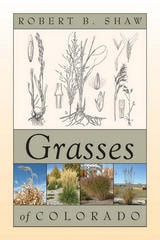
Grasses of Colorado
Robert B. Shaw
University Press of Colorado, 2008
Colorado's elevation range of more than 11,000 feet creates a wide variety of habitats that supports a spectacular diversity of grasses. With 335 known species, Colorado has one of the most diverse and extensive grass floras in the United States.
Comprehensive coverage, useful keys, and detailed species descriptions in Grasses of Colorado will make this volume the standard reference for years to come. Robert B. Shaw provides overviews of Colorado's physiography and ecoregions and introduces the grass plant in plain, enjoyable text. He includes a checklist of Colorado grasses, a bibliography, and a glossary of terms that may be unfamiliar to nonspecialists. Line drawings, state distribution maps, and habitat notes for each species enable accurate plant identification, familiarity with regional ecogeography, and increased understanding of plant ecology of the Rocky Mountains.
A monumental accomplishment certain to become the standard work on the subject, Grasses of Colorado synthesizes existing literature and incorporates recent scientific findings to offer a complete, current reference.
Growing Fruit in the Upper Midwest
Donald Gordon
University of Minnesota Press, 1997
The standard guide to fruit-growing success.
Despite the harsh climate that prevails in the Upper Midwest, even amateur gardeners can successfully grow fruit when armed with some basic information. Focusing on Minnesota, Wisconsin, Iowa, South Dakota, and North Dakota, Growing Fruit in the Upper Midwest is a practical how-to guide to the cultivation of a wide variety of fruit including apples, pears, plums, apricots, strawberries, blueberries, cherries, grapes, currants, gooseberries, and brambles.
To assist readers ranging from home gardeners to small commercial growers, Don Gordon covers site selection, soil types, pruning, fertilization, harvesting, pests, and preventing winter injury as well as describing literally hundreds of excellent species for this region. Many technical aspects of pruning and planting are accompanied with illustrations. Growing Fruit in the Upper Midwest includes maps that indicate the fruit hardiness zones for each state, augmented by an easy-to-use guide to cultivar selection. The introduction is a basic botany lesson, covering plant classifications, growth and development. The section on apple growing, by far the most widely adapted fruit species in this region, will help growers decide which types of trees will thrive on their land. Gordon also provides an overview of interesting and overlooked historic and economic aspects of fruit production across the Upper Midwest. This practical guide is essential reading for home gardeners, small commercial growers, and anyone who has considered this rewarding and fascinating hobby. “The concise information about plant care will assist even the most inexperienced gardener. This book is an excellent reference tool, and I would recommend it highly to anyone growing fruit in Minnesota, Wisconsin, Iowa, North Dakota or South Dakota.” Rochester Post Bulletin
Guide To The Trees Of Utah
Michael Kuhns
Utah State University Press, 1998
For any tree enthusiast, be it homeowner, landscaper, recreationist, traveler, or student, who has needed a comprehensive, user-friendly guide to the trees of Utah and the Intermountain West, this new guide is the answer.
Tree specialist Michael Kuhns, through extensive research, has compiled a comprehensive list of virtually every native and introduced tree species from the eastern slope of the Rockies westward to the Sierra Nevada, and from north-central Oregon, the Salmon River region, and Yellowstone southward to the Grand Canyon and northern New Mexico. Included in the guide are simple and easy-to-use identification and classification keys, which are accompanied by hundreds of illustrations that introduce basic information on tree anatomy, climate/hardiness zones, and the individual species.
Accessible and informative, this book is a welcome addition to the library of any reader wanting basic information on the vast inventory of trees in this region.

Guide to Chicago's Twenty-First-Century Architecture
Chicago Architecture Center and John Hill
University of Illinois Press, 2021
Chicago's wealth of architectural treasures makes it one of the world's majestic cityscapes. Published in collaboration with the Chicago Architecture Center, this easy-to-use guide invites you to discover the new era of twenty-first-century architecture in the Windy City via two hundred architecturally significant buildings and spaces in the city and suburbs. Features include:
- Entries organized by neighborhood
- Maps with easy-to-locate landmarks and mass transit options
- Background on each entry, including the design architect, name and address, description, and other essential information
- Sidebars on additional sites and projects
- A detailed supplemental section with a glossary, selected bibliography, and indexes by architect, building name, and building type
Up-to-date and illustrated with almost four hundred color photos, the Guide to Chicago's Twenty-First-Century Architecture takes travelers and locals on a journey into an ever-changing architectural mecca.

Gunflint Falling
Blowdown in the Boundary WatersCary J. Griffith
University of Minnesota Press, 2023
Stories from survivors of the Boundary Waters Canoe Area Wilderness’s epochal weather disaster
On July 4, 1999, in the Boundary Waters Canoe Area Wilderness (BWCAW), a bizarre confluence of meteorological events resulted in the most damaging blowdown in the region’s history. Originating over the Dakotas, the midsummer windstorm developed amid unusually high heat and water-saturated forests and moved steadily east, bearing down on Fargo, North Dakota, and damaging land as it crossed the Minnesota border. Gunflint Falling tells the story of this devastating storm from the perspectives of those who were on the ground before, during, and after the catastrophic event—from first-time visitors to the north woods to returning paddlers to Forest Service Rangers.
The pre-dawn forecasts from the National Weather Service in Duluth for that Sunday of the holiday weekend predicted the day would be “warm and humid. Partly sunny with a thirty percent chance of thunderstorms.” But as the afternoon and evening settled over the Boundary Waters, the first eyewitness accounts began to tell a dramatic and terrifying story. Five friends camping on Lake Polly watched in wonder as the sky turned green and the winds began to whip. They scrambled to pull canoes on shore and secure tarps when a tree snapped and struck one of them in the head, rendering her unconscious. Three women enjoying their last day of a camping trip near the end of the Gunflint Trail took shelter in their tent as winds increased. Water drenched the nylon walls as trees crashed around them, one flattening the tent and pinning a woman beneath its weight. A family vacationing at their cabin dodged falling trees and strained against straight-line winds as they sprinted from the cabin to the safest place they knew: a crawl space underneath it. They watched in awe as trees snapped and toppled, their twisted root balls torn out of the water-logged earth—as they prayed their cabin would hold.
By the time the storm began to subside, falling trees had injured approximately sixty people, and most needed to be medevacked to safety. Amazingly, no one died. The historic storm laid down timber that would later blaze in the Ham Lake fire of 2007, ultimately reshaping the region’s forests in ways we have yet to fully understand.