Results by title
192 books match the query 'Regional & Cultural' and 4 start with g
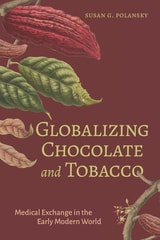
Globalizing Chocolate and Tobacco
Medical Exchange in the Early Modern WorldSusan G. Polansky
Bucknell University Press, 2026
This groundbreaking volume explores two early and opposing Spanish medical perspectives on chocolate and other New World substances. In the early 1600s, doctors Bartolomé Marradón and Antonio Colmenero de Ledesma returned from travels to the Americas with starkly different views: Marradón cautioned against tobacco and offered only limited approval of chocolate, while Colmenero vigorously defended chocolate’s health benefits. Their writings, translated and circulated across Europe, helped transform chocolate from a medicinal drink into a global commodity. Featuring the first bilingual edition of Marradón’s Dialogue (1618)—in full Spanish and English—and a new bilingual presentation of Colmenero’s influential Curious Treatise (1631), this book provides rare insight into early modern medical thought, cultural exchange, and the globalization of taste. Essential for readers of food history, early modern medicine, and transatlantic interchange, it uniquely reveals how debates over health, culture, and commerce brewed in a cup of chocolate.
Published by Bucknell University Press. Distributed worldwide by Rutgers University Press.
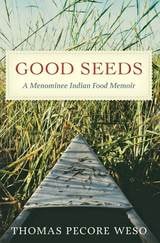
Good Seeds
A Menominee Indian Food MemoirThomas Pecore Weso
Wisconsin Historical Society Press, 2027
To the Menominee people, the "good seeds” of life are the manomin, or wild rice, that also gives the tribe its name. In this unique food memoir, Tribal member Thomas Pecore Weso takes readers on a cook’s journey through Wisconsin’s North Woods tribal lands, connecting Menominee food—beaver, trout, blackberry, wild rice, maple sugar, partridge—to the colorful individuals who taught him Indigenous values and traditions. Featuring more than forty recipes, Good Seeds keeps those traditions alive for future generations.
With a rare perspective as a Native American anthropologist and artist, Weso mixes a poignant personal story with the seeds of Menominee cooking traditions. He tells of the foods and the people who helped shape the person he became. His grandfather Moon was a medicine man, whose morning prayers formed the foundation for all the day’s meals. His grandmother Jennie “made fire” each morning in a wood-burning stove and oversaw huge breakfasts of wild game, fish, and fruit pies. His uncles taught him to hunt bear, deer, squirrels, raccoons, and skunks for the daily larder. Along with authentic family recipes, Weso recalls favorite foods served at the Menominee fair and at local diners.
In Good Seeds, adventurous cooks will gain insight and inspiration from Weso’s recipes, and readers of all stripes will appreciate the often-humorous stories about reservation life during the mid-twentieth century.

Grounding Practice
Dancing Haiti on Tè GliseDasha A. Chapman
University of Michigan Press, 2027
Grounding Practice: Dancing Haiti on Tè Glise tracks the responsive physical techniques Haitian dancers devised for navigating precarity, making place, and igniting repair in the decade following the 2010 earthquake. Via the concept “grounding practice,” which connotes the powerful community building and placemaking made possible by the teaching and practice of Haitian folkloric dance, this interdisciplinary study illustrates how the embodied labor of revitalizing traditions took on increasing relevance as vital reparative worldmaking amidst instability, or tè glise–—Haitian Creole for sliding land or slippery ground.
The dancers in Grounding Practice regenerate understandings of Haitian dance’s potential for fomenting decolonial consciousness, meaningfully sustaining African-derived culture, birthing new social relations, activating the queer potentials of tradition, and ultimately making place. Through ethnography and vivid descriptions, Dasha A. Chapman’s attention to embodied knowledge illuminates how movement practice operates as a site of theorization—wherein not just subjectivity, but also concepts of sovereignty, relation, and futurity, are articulated through the body. Paying homage to important forebears yet moving us beyond static narratives, this study brings our understanding of Haitian dance—and Haiti—through expansive landscapes into the contemporary.
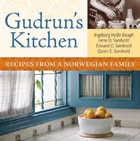
Gudrun’s Kitchen
Recipes from a Norwegian FamilyIrene O. Sandvold
Wisconsin Historical Society Press, 2011
The youngest of a large Norwegian immigrant family, Gudrun Thue Sandvold was known for her beaming blue eyes and a reserve that gave way to laughter whenever she got together with her sisters. She took immeasurable pride in her children and grandchildren, kept an exquisite home, and turned the most mundane occasion into a party. And to all who knew her, Gudrun’s cooking was the stuff of legend.
Part cookbook, part immigrant story, and part family memoir, Gudrun's Kitchen features hundreds of Gudrun Sandvold’s recipes for comfort food from a time when families and friends gathered at the table and connected with one another every single day. But this book is much more than a guide to Norwegian culinary traditions; it is an important contribution to immigrant history and a vital documentation of our nation’s multicultural heritage.