Results by title
346 books match the query 'Relations' and 7 start with g

Generation Palestine
Voices from the Boycott, Divestment and Sanctions MovementEdited by Rich Wiles
Pluto Press, 2013
The unique model of apartheid, colonisation and military occupation that Israel imposes on the Palestinians, along with myriad violations of international law, have made Palestine the moral cause of a generation. Yet many people continue to ask, ‘what can we do?’
Generation Palestine helps to answer this question by bringing together Palestinian and international activists in the Boycott, Divestment and Sanctions (BDS) movement. The movement aims to pressure Israel until it complies with International Law, mirroring the model that was successfully utilised against South African apartheid.
With essays written by a wide selection of contributors, Generation Palestine follows the BDS movement’s model of inclusivity and collaboration. Contributors include Archbishop Desmond Tutu, Ken Loach, Iain Banks, Ronnie Kasrils, Professor Richard Falk, Ilan Pappe, Omar Barghouti, Ramzy Baroud and Archbishop Attallah Hannah, alongside other internationally acclaimed artists, writers, academics and grassroots activists.
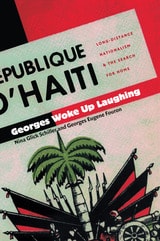
Georges Woke Up Laughing
Long-Distance Nationalism and the Search for HomeNina Glick Schiller and Georges Eugene Fouron
Duke University Press, 2001
According to a long-standing myth, once emigrants leave their homelands—particularly if they emigrate to the United States—they sever old nationalistic ties, assimilate, and happily live the American dream. In fact, many migrants remain intimately and integrally tied to their ancestral homeland, sometimes even after they become legal citizens of another country. In Georges Woke Up Laughing the authors reveal the realities and dilemmas that underlie the efforts of long-distance nationalists to redefine citizenship, race, nationality, and political loyalty. Through discussions of the history and economics that link the United States with countries around the world, Glick Schiller and Fouron highlight the forces that shape emigrants’ experiences of government and citizenship and create a transborder citizenry. Arguing that governments of many countries today have almost no power to implement policies that will assist their citizens, the authors provide insights into the ongoing sociological, anthropological, and political effects of globalization.
Georges Woke up Laughing will entertain and inform those who are concerned about the rights of people and the power of their governments within the globalizing economy.
“In my dream I was young and in Haiti with my friends, laughing, joking, and having a wonderful time. I was walking down the main street of my hometown of Aux Cayes. The sun was shining, the streets were clean, and the port was bustling with ships. At first I was laughing because of the feeling of happiness that stayed with me, even after I woke up. I tried to explain my wonderful dream to my wife, Rolande. Then I laughed again but this time not from joy. I had been dreaming of a Haiti that never was.”—from Georges Woke Up Laughing

Germany's Wild East
Constructing Poland as Colonial SpaceKristin Kopp
University of Michigan Press, 2012
While conventional definitions locate colonial space overseas, Kristin Kopp argues that it was possible to understand both distant continents and adjacent Eastern Europe as parts of the same global periphery dependent upon Western European civilizing efforts. However, proximity to the source of aid translated to greater benefits for Eastern Europe than for more distant regions.
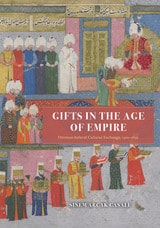
Gifts in the Age of Empire
Ottoman-Safavid Cultural Exchange, 1500–1639Sinem Arcak Casale
University of Chicago Press, 2023
When the Safavid dynasty, founded in 1501, built a state that championed Iranian identity and Twelver Shi'ism, it prompted the more established Ottoman Empire to align itself definitively with Sunni legalism. The political, religious, and military conflicts that arose have since been widely studied, but little attention has been paid to their diplomatic relationship. Sinem Arcak Casale here sets out to explore these two major Muslim empires through a surprising lens: gifts. Countless treasures—such as intricate carpets, gilded silver cups, and ivory-tusk knives—flowed from the Safavid to the Ottoman Empire throughout the sixteenth century. While only a handful now survive, records of these gifts exist in court chronicles, treasury records, poems, epistolary documents, ambassadorial reports, and travel narratives. Tracing this elaborate archive, Casale treats gifts as representative of the complicated Ottoman-Safavid coexistence, demonstrating how their rivalry was shaped as much by culture and aesthetics as it was by religious or military conflict. Gifts in the Age of Empire explores how gifts were no mere accessories to diplomacy but functioned as a mechanism of competitive interaction between these early modern Muslim courts.
Global Perspectives on the United States
Pro-Americanism, Anti-Americanism, and the Discourses BetweenEdited by Virginia R. Dominguez and Jane C. Desmond
University of Illinois Press, 2017
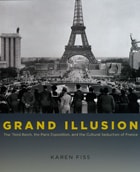
Grand Illusion
The Third Reich, the Paris Exposition, and the Cultural Seduction of FranceKaren Fiss
University of Chicago Press, 2009
Franco-German cultural exchange reached its height at the 1937 Paris World’s Fair, where the Third Reich worked to promote an illusion of friendship between the two countries. Through the prism of this decisive event, Grand Illusion examines the overlooked relationships among Nazi elites and French intellectuals. Their interaction, Karen Fiss argues, profoundly influenced cultural production and normalized aspects of fascist ideology in 1930s France, laying the groundwork for the country’s eventual collaboration with its German occupiers.
Tracing related developments across fine arts, film, architecture, and mass pageantry, Fiss illuminates the role of National Socialist propaganda in the French decision to ignore Hitler’s war preparations and pursue an untenable policy of appeasement. France’s receptiveness toward Nazi culture, Fiss contends, was rooted in its troubled identity and deep-seated insecurities. With their government in crisis, French intellectuals from both the left and the right demanded a new national culture that could rival those of the totalitarian states. By examining how this cultural exchange shifted toward political collaboration, Grand Illusion casts new light on the power of art to influence history.
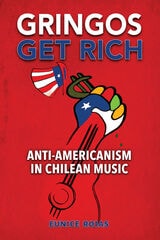
Gringos Get Rich
Anti-Americanism in Chilean MusicEunice Rojas
University of Alabama Press, 2024
Documents counterimperialism in Chilean music since the 1960s
Gringos Get Rich: Anti-Americanism in Chilean Music examines anti-Americanism in Latin America as manifested in Chilean music in recent history. From a folk-based movement in the 1960s and early 1970s to underground punk rock groups during the Pinochet regime, to socially conscious hip-hop artists of postdictatorship Chile, Chilean music has followed several left-leaning transnational musical trends to grapple with Chile’s fluctuating relationship with the United States. Eunice Rojas’s innovative analysis introduces US readers to a wide swath of Chilean musicians and their powerful protest songs and provides a representative and long view of the negative influences of the United States in Latin America.
Much of the criticism of the United States in Chile’s music centers on the perception of the United States as a heavy-handed source of capitalist imperialism that is exploitative of and threatening to Chile’s poor and working-class public and to Chilean cultural independence and integrity. Rojas incorporates Antonio Gramsci’s theories about the difficulties of struggles for cultural power within elitist capitalist systems to explore anti-Americanism and anti-capitalist music. Ultimately, Rojas shows how the music from various genres, time periods, and political systems attempts to act as a counterhegemonic alternative to Chile’s political, cultural, and economic status quo.
Rojas’s insight is timely with recent political trends toward the right in the Americas. There is also increased interest in and acceptance of popular song lyrics as literary texts. The book will appeal to Latin Americanists, ethnomusicologists, scholars of popular culture and international relations, students, and general readers.
.