Results by title
110 books match the query 'Romanticism' and 3 start with g
Genre, Race, and the Production of Subjectivity in German Romanticism
Stephanie Galasso
Northwestern University Press, 2024
Exposes German Romanticism’s entanglements of aesthetic philosophy with racialized models of humanity
Late Enlightenment philosophers and writers like Herder, Goethe, and Schiller broke with conventions of form and genre to prioritize an idealized, and racially coded, universality. Newly translated literatures from colonial contexts served as the basis for their evaluations of how to contribute to a distinctly “German” national literary tradition, one that valorized modernity and freedom and thus fortified crucial determinants of modern concepts of whiteness. Through close readings of both canonical and less-studied Romantic texts, Stephanie Galasso examines the intimately entwined histories of racialized subjectivity and aesthetic theory and shows how literary genre is both symptomatic and generative of the cultural violence that underpinned the colonial project.
Poetic expression and its generic conventions continue to exert pressure on the framing and reception of the stories that can be told about interpersonal and structural experiences of oppression. Genre, Race, and the Production of Subjectivity in German Romanticism explores how white subjectivity is guarded by symbolic and material forms of violence.
[more]

Goya and the Mystery of Reading
Luis Martín-Estudillo
Vanderbilt University Press, 2023
Spanish artist Francisco de Goya (1746–1828) lived through an era of profound societal change. One of the transformations that he engaged passionately was the unprecedented growth both in the number of readers and in the quantity and diversity of texts available. He documented and questioned this reading revolution in some of his most captivating paintings, prints, and drawings.
Goya and the Mystery of Reading explores the critical impact this transition had on the work of an artist who aimed not to copy the world around him, but to see it anew—to read it. Goya's creations offer a sustained reflection on the implications of reading, which he depicted as an ambiguous, often mysterious activity: one which could lead to knowledge or ecstasy, to self-fulfillment or self-destruction, to piety or perdition. At the same time, he used reading to elicit new possibilities of interpretation. This book reveals for the first time the historical, intellectual, and artistic underpinnings of reading as one of the pillars of his art.
This book is the recipient of the 2023 Norman L. and Roselea J. Goldberg Prize from Vanderbilt University Press for the best book in the area of art or medicine.
[more]
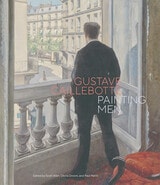
Gustave Caillebotte
Painting MenScott Allan
J. Paul Getty Trust, The, 2024
This richly illustrated volume paints a complex portrait of Caillebotte, masculinity, and identity in late nineteenth-century France.
More than any other French Impressionist, painter Gustave Caillebotte (1848–1894) observed and depicted the many men in his life, including his brothers and friends, employees, and the workers and bourgeois in his Parisian neighborhood. Male subjects feature prominently in some of his best-known works, such as The Floor Scrapers, Man at His Bath, Young Man at His Window, Boating Party, and Paris Street, Rainy Day. The originality of his paintings of men is fully explored for the first time in this catalogue, published to accompany a major international exhibition co-organized by the J. Paul Getty Museum, Musée d’Orsay, and the Art Institute of Chicago.
Alongside paintings, drawings, and photographs, as well as an appendix featuring maps and new biographical research that sheds light on Caillebotte’s social network, this volume includes historically grounded thematic essays by curators and leading scholars. By exploring the complex and varied facets of Caillebotte’s identity—as son, brother, soldier, bachelor, amateur, sportsman, and so on—these essays pose questions of identity, leaving space for ambiguous and fluid expressions of gender and masculinity—for both Caillebotte and the larger late nineteenth-century French world.
This volume is published to accompany an exhibition on view at the Musée d’Orsay from October 8, 2024, to January 19, 2025, J. Paul Getty Museum at the Getty Center from March 25 to May 25, 2025, and The Art Institute of Chicago from June 29 to October 5, 2025.
[more]