Results by title
4127 books match the query 'Science' and 144 start with g
Gaian Systems
Lynn Margulis, Neocybernetics, and the End of the AnthropoceneBruce Clarke
University of Minnesota Press, 2020
A groundbreaking look at Gaia theory’s intersections with neocybernetic systems theory
Often seen as an outlier in science, Gaia has run a long and varied course since its formulation in the 1970s by atmospheric chemist James Lovelock and microbiologist Lynn Margulis. Gaian Systems is a pioneering exploration of the dynamic and complex evolution of Gaia’s many variants, with special attention to Margulis’s foundational role in these developments.
Bruce Clarke assesses the different dialects of systems theory brought to bear on Gaia discourse. Focusing in particular on Margulis’s work—including multiple pieces of her unpublished Gaia correspondence—he shows how her research and that of Lovelock was concurrent and conceptually parallel with the new discourse of self-referential systems that emerged within neocybernetic systems theory. The recent Gaia writings of Donna Haraway, Isabelle Stengers, and Bruno Latour contest its cybernetic status. Clarke engages Latour on the issue of Gaia’s systems description and extends his own systems-theoretical synthesis under what he terms “metabiotic Gaia.” This study illuminates current issues in neighboring theoretical conversations—from biopolitics and the immunitary paradigm to NASA astrobiology and the Anthropocene. Along the way, he points to science fiction as a vehicle of Gaian thought.
Delving into many issues not previously treated in accounts of Gaia, Gaian Systems describes the history of a theory that has the potential to help us survive an environmental crisis of our own making.

Galileo's Idol
Gianfrancesco Sagredo and the Politics of KnowledgeNick Wilding
University of Chicago Press, 2014
Nick Wilding uses as wide a variety of sources as possible—paintings, ornamental woodcuts, epistolary hoaxes, intercepted letters, murder case files, and others—to challenge the picture of early modern science as pious, serious, and ecumenical. Through his analysis of the figure of Sagredo, Wilding offers a fresh perspective on Galileo as well as new questions and techniques for the study of science. The result is a book that turns our attention from actors as individuals to shifting collective subjects, often operating under false identities; from a world made of sturdy print to one of frail instruments and mistranscribed manuscripts; from a complacent Europe to an emerging system of complex geopolitics and globalizing information systems; and from an epistemology based on the stolid problem of eternal truths to one generated through and in the service of playful, politically engaged, and cunning schemes.

Galileo's Instruments of Credit
Telescopes, Images, SecrecyMario Biagioli
University of Chicago Press, 2006
Galileo's Instruments of Credit proposes radical new interpretations of several key episodes of Galileo's career, including his early telescopic discoveries of 1610, the dispute over sunspots, and the conflict with the Holy Office over the relationship between Copernicanism and Scripture. Galileo's tactics during this time shifted as rapidly as his circumstances, argues Mario Biagioli, and the pace of these changes forced him to respond swiftly to the opportunities and risks posed by unforeseen inventions, further discoveries, and the interventions of his opponents.
Focusing on the aspects of Galileo's scientific life that extend beyond the framework of court culture and patronage, Biagioli offers a revisionist account of the different systems of exchanges, communication, and credibility at work in various phases of Galileo's career. Galileo's Instruments of Credit will find grateful readers among scholars of science studies, historical epistemology, visual studies, Galilean science, and late Renaissance astronomy.
Galileo, Courtier
The Practice of Science in the Culture of AbsolutismMario Biagioli
University of Chicago Press, 1993
Galileo, Courtier is a fascinating cultural and social history of science highlighting the workings of power, patronage, and credibility in the development of science.

Galileo, Science and the Church
Jerome J. Langford
University of Michigan Press, 1992
Jerome J. Langford's Galileo, Science, and the Church is widely recognized as a classic, balanced account of Galileo Galilei’s legendary 1633 confrontation with the Roman Catholic Inquisition. Moving past the overly polarized arguments of traditional polemicists and apologists, Langford contextualizes the "Galileo Affair" within its proper 17th-century historical, theological, and philosophical milieu. The book meticulously explores how the clash was less a fundamental war between science and faith, and more a complex dispute over scriptural interpretation, ecclesiastical authority, and the academic rigidities of Aristotelian philosophy. Through objective research, Langford demonstrates that this momentous historical drama still serves as a timeless case study on the enduring friction between institutional authority and the freedom of individual thought and expression.
Gardeners of Eden
Rediscovering Our Importance to NatureDan Dagget
University of Nevada Press, 2005
Dagget recommends a new kind of environmentalism based on management, science, evolution, and holism, and served by humans who enrich the environment even as they benefit from it. His new environmentalism offers hopeful solutions to the current ecological crisis and a new purpose for our human energies and ideals. This book is essential reading for anyone concerned with the earth and anyone seeking a viable way for our burgeoning human population to continue to live upon it.

Gardening with Perennials
Lessons from Chicago's Lurie GardenNoel Kingsbury
University of Chicago Press, 2014
With Gardening with Perennials horticulturalist and garden writer Noel Kingsbury brings a global perspective to the Lurie oasis through a wonderful introduction to the world of perennial gardening. He shows how perennials have much to offer home gardeners, from sustainability—perennials require less water than their annual counterparts—to continuity, as perennials’ longevity makes them a dependable staple.
Kingsbury also explains why Lurie is a perfect case study for gardeners of all locales. The plants represented in this urban oasis were chosen specifically for reliability and longevity. The majority will thrive on a wide range of soils and across a wide climatic range. These plants also can thrive with minimal irrigation, and without fertilizers or chemical control of pests and diseases. Including a special emphasis on plants that flourish in sun, and featuring many species native to the Midwest region, Gardening with Perennials will inspire gardeners around the world to try Chicago-style sustainable gardening.
Gathering Moss
A Natural and Cultural History of MossesRobin Wall Kimmerer
Oregon State University Press, 2003
Winner of the 2005 John Burroughs Medal Award for Natural History Writing
Living at the limits of our ordinary perception, mosses are a common but largely unnoticed element of the natural world. Gathering Moss is a beautifully written mix of science and personal reflection that invites readers to explore and learn from the elegantly simple lives of mosses.
In this series of linked personal essays, Robin Wall Kimmerer leads general readers and scientists alike to an understanding of how mosses live and how their lives are intertwined with the lives of countless other beings. Kimmerer explains the biology of mosses clearly and artfully, while at the same time reflecting on what these fascinating organisms have to teach us.
Drawing on her diverse experiences as a scientist, mother, teacher, and writer of Native American heritage, Kimmerer explains the stories of mosses in scientific terms as well as in the framework of indigenous ways of knowing. In her book, the natural history and cultural relationships of mosses become a powerful metaphor for ways of living in the world.

Gator!
The Making of America’s Iconic Reptile, from First Encounters to Florida ManMark V. Barrow, Jr.
University of Chicago Press, 2026
What this intriguing—and unsettling—apex predator reveals about Americans’ attempts to control and connect with the natural world.
Both a flesh-and-blood critter and the stuff of legend, the alligator inspires as much awe as it does fear. While this apex predator survives mainly on fish, birds, snakes, turtles, and small mammals, it will consume almost anything, including pets, livestock, and—in rare cases—humans. Though dreaded as a man-eater, the alligator has also been cast as a lucrative commodity, a popular roadside attraction, a prized hunting trophy, and even an unlikely household pet.
Gator! tells the riveting story of this iconic predator. Historian Mark V. Barrow, Jr.—a native of Florida, a state famous for its alligators—traces the reptile’s ancient lineage from the age of the dinosaurs to its current status as a cherished mascot and regional icon. He explores its role as a surrogate species, offering vital clues about the health of ecosystems, as well as its profound cultural weight as a totem for Indigenous communities, a mythical sewer-dweller in New York lore, and a disturbing tool of racial oppression used to dehumanize African Americans. Once over-hunted, the alligator has long been celebrated as a triumph of the federal Endangered Species Act. Barrow delves into the nuances of this comeback, one that offers both a cautionary tale of market-driven exploitation and a conservation success story.
An entertaining history of one of North America’s most charismatic animals, Gator! explores how this reptile became a Florida emblem and a national enigma, transforming humans and alligators in the process.

Gehennical Fire
The Lives of George Starkey, an American Alchemist in the Scientific RevolutionWilliam R. Newman
University of Chicago Press, 2002
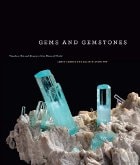
Gems and Gemstones
Timeless Natural Beauty of the Mineral WorldLance Grande and Allison Augustyn
University of Chicago Press, 2009
Gems are objects of wealth, icons of beauty, and emblems of the very best of everything. They are kept as signs of prestige or power. Given as tokens of love and affection, they also come in a kaleidoscopic array of hues and can be either mineral or organic. Gems can command a person’s gaze in the way they play with light and express rich color. And they can evoke feelings of passion, greed, mystery, and warmth.
For millennia, gems have played an important role in human culture: they have significant value, both financially and within folklore and mythology. But just what are gems, exactly? This lavishly illustrated volume—the most ambitious publication of its kind—provides a general introduction to gems and natural gemstones, conveying their timeless beauty and exploring similarities among different species and varieties. Gems and Gemstones features nearly 300 color images of the cut gems, precious and semiprecious stones, gem-quality mineral specimens, and fine jewelry to be unveiled in a new Grainger Hall of Gems at The Field Museum in Chicago this October. The book and exhibition’s overarching theme will be the relationship between finished gems and their natural origin: while beautiful as faceted and polished pieces of jewelry, gems are often just as lovely—or even more so—as gemstones in their natural state. For example, an aquamarine or emerald as originally found in a mine with its natural crystal faces can be as stunning as any cut and polished gem prepared for a ring, bracelet, or charm.
Thoughtful of both ancient and modern times, Gems and Gemstones also includes fun-filled facts and anecdotes that broaden the historical portrait of each specimen. When Harry Winston, for instance, donated the Hope Diamond to the Smithsonian in 1958, he sent it through the U.S. mail wrapped in plain brown paper. And for anyone who has ever marveled at the innovations of top jewelry designers, Gems and Gemstones features a dazzling array of polished stones, gold objects, and creations from around the world. Diamonds, sapphires, rubies, amethysts, pearls, topaz, amber—every major gem gets its due in what will be an invaluable source on the subject for years to come.
Gems and Gemstones is the basis for the iPad app, available in the Apple iTunes App Store, Gems and Jewels.
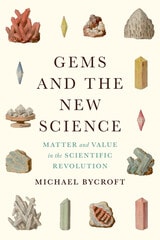
Gems and the New Science
Matter and Value in the Scientific RevolutionMichael Bycroft
University of Chicago Press, 2026
In Gems and the New Science, Michael Bycroft argues that gems were connected to major developments in the “new science” between the sixteenth and nineteenth centuries. As he explains, precious and semiprecious stones were at the center of dramatic shifts in natural knowledge in early modern Europe. They were used to investigate luminescence, electricity, combustion, chemical composition, and more. They were collected by naturalists; measured by mathematicians; and rubbed, burned, and dissolved by experimental philosophers. This led to the demise of the traditional way of classifying gems—which grouped them by transparency, color, and locality—and the turn to density, refraction, chemistry, and crystallography as more reliable guides for sorting these substances.
The science of gems shows that material evaluation was as important as material production in the history of science. It also shows the value of seeing science as the product of the interaction between different material worlds. The book begins by bringing these insights to bear on five themes of the Scientific Revolution. Each of the subsequent chapters deals with a major episode in early modern science, from the expansion of natural history in the sixteenth century to the emergence of applied science early in the nineteenth century. This important work is not only the first book-length history of the science of gems but also a fresh interpretation of the Scientific Revolution and an argument for using a new form of materialism to understand the evolution of science.

Gender Differences in Science Careers
The Project Access StudyGerhard Sonnert and Gerald Holton
Rutgers University Press, 1995
What determines successful careers in the field of science? What are the early indicators of later failures. And specifically, how do women scientists' career paths differ from men's? While it is easy to theorize about these questions, those who go to the trouble of an extensive empirical study find an increasingly complex picture.
Using the largest database of its kind (699 questionnaires and 200 face-to-face conversations), the authors investigate the career paths of recipients of prestigious postdoctoral fellowships--scientists, engineers, and mathematicians. They outline a theoretical framework for understanding the causes of gender disparities among scientists, test the hypothesis of a gender- specific "glass ceiling," and provide a wealth of pertinent statistical information.
Gender Differences in Science Careers reveals that, as institutional laws changed, patterns of discrimination and exclusion become more subtle. Despite the decline of rigid gender-role socialization, many social practices persist that lead, on average and often in counterintuitive ways, to the accumulation of disadvantages for women scientists. This book is directed to scholars in the social sciences, aspiring and practicing scientists, and administrators interested in equity issues.

Gender and the Science of Difference
Cultural Politics of Contemporary Science and MedicineFisher, Jill A
Rutgers University Press, 2011
How does contemporary science contribute to our understanding about what it means to be women or men? What are the social implications of scientific claims about differences between "male" and "female" brains, hormones, and genes? How does culture influence scientific and medical research and its findings about human sexuality, especially so-called normal and deviant desires and behaviors? Gender and the Science of Difference examines how contemporary science shapes and is shaped by gender ideals and images.
Prior scholarship has illustrated how past cultures of science were infused with patriarchal norms and values that influenced the kinds of research that was conducted and the interpretation of findings about differences between men and women. This interdisciplinary volume presents empirical inquiries into today's science, including examples of gendered scientific inquiry and medical interventions and research. It analyzes how scientific and medical knowledge produces gender norms through an emphasis on sex differences, and includes both U.S. and non-U.S. cases and examples.

Genentech
The Beginnings of BiotechSally Smith Hughes
University of Chicago Press, 2011
Genera Palmarum
The Evolution and Classification of PalmsJohn Dransfield, Natalie W. Uhl, Conny B. Asmussen, William J. Baker, Madeline Harley, and Carl Lewis
Royal Botanic Gardens, Kew, 2008
In this new edition, genus treatments now include complete descriptions, nomenclature, and etymology, as well as discussions of diversity, distribution, phylogeny, morphology, uses and ecology. All genera are fully illustrated with full-color photographs alongside analytic illustrations, distribution maps, and even electron micrographs of pollen. An updated introduction provides readers with essential background information via authoratative essays on the structure of palms, their chemistry, their history, and much more.
Fully revised for a new generation of researchers and gardening enthusiasts, Genera Palmarum continues to be the gold-standard reference work on palms.
General Cytology
A Textbook of Cellular Structure and Function for Students of Biology and MedicineEdited by Edmund Vincent Cowdry
University of Chicago Press, 1924
This volume was, at the time of publication, the largest and most comprehensive book on the subject of cytology, a branch of zoology which had grown considerably in the years before 1924. It was written by the foremost cytologists in the United States, including Robert Chambers, Edwin G. Conklin, Edmund V. Cowdry, Merle H. Jacobs, Ernest E. Just, Margaret R. Lewis, Warren H. Lewis, Frank R. Lillie, Ralph S. Lillie, Clarence E. McClung, Albert P. Mathews, Thomas H. Morgan, and Edmund B. Wilson.
General Relativity
Robert. M. Wald
University of Chicago Press, 1984
Robert M. Wald's book has been a staple of physics teaching for decades. It offers straightforward, rigorous analyses of current understandings of all the central questions and problems of the field, giving each the complexity it requires while making every effort to keep the whole accessible to a student who is embarking on the study of this subject for the first time.
General Relativity from A to B
Robert Geroch
University of Chicago Press, 1981
"An imaginative and convincing new presentation of Einstein's theory of general relativity. . . . The treatment is masterful, continual emphasis being placed on careful discussion and motivation, with the aim of showing how physicists think and develop their ideas."—Choice

Generic Tree Flora of Madagascar
George E. Schatz
Royal Botanic Gardens, Kew, 2001
Genes in Development
Re-reading the Molecular ParadigmEva M. Neumann-Held and Christoph Rehmann-Sutter, eds.
Duke University Press, 2006
Contributors discuss alternatives to the programmatic view of dna, including the developmental systems approach, methodical culturalism, the molecular process concept of the gene, the hermeneutic theory of description, and process structuralist biology. None of the approaches cast doubt on the notion that dna is tremendously important to biological life on earth; rather, contributors examine different ideas of how dna should be represented, evaluated, and explained. Just as ideas about genetic codes have reached far beyond the realm of science, the reconceptualizations of genetic theory in this volume have broad implications for ethics, philosophy, and the social sciences.
Contributors. Thomas Bürglin, Brian C. Goodwin, James Griesemer, Paul Griffiths, Jesper Hoffmeyer, Evelyn Fox Keller, Gerd B. Müller, Eva M. Neumann-Held, Stuart A. Newman, Susan Oyama, Christoph Rehmann-Sutter, Sahotra Sarkar, Jackie Leach Scully, Gerry Webster, Ulrich Wolf
Genesis Redux
Essays in the History and Philosophy of Artificial LifeEdited by Jessica Riskin
University of Chicago Press, 2007
Since antiquity, philosophers and engineers have tried to take life’s measure by reproducing it. Aiming to reenact Creation, at least in part, these experimenters have hoped to understand the links between body and spirit, matter and mind, mechanism and consciousness. Genesis Redux examines moments from this centuries-long experimental tradition: efforts to simulate life in machinery, to synthesize life out of material parts, and to understand living beings by comparison with inanimate mechanisms.
Jessica Riskin collects seventeen essays from distinguished scholars in several fields. These studies offer an unexpected and far-reaching result: attempts to create artificial life have rarely been driven by an impulse to reduce life and mind to machinery. On the contrary, designers of synthetic creatures have generally assumed a role for something nonmechanical. The history of artificial life is thus also a history of theories of soul and intellect.
Taking a historical approach to a modern quandary, Genesis Redux is essential reading for historians and philosophers of science and technology, scientists and engineers working in artificial life and intelligence, and anyone engaged in evaluating these world-changing projects.
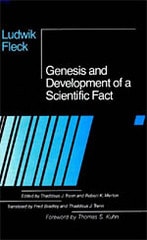
Genesis and Development of a Scientific Fact
Ludwik Fleck
University of Chicago Press, 1981
"To many scientists just as to many historians and philosophers of science facts are things that simply are the case: they are discovered through properly passive observation of natural reality. To such views Fleck replies that facts are invented, not discovered. Moreover, the appearance of scientific facts as discovered things is itself a social construction, a made thing. A work of transparent brilliance, one of the most significant contributions toward a thoroughly sociological account of scientific knowledge."—Steven Shapin, Science

Genetic Perspectives in Biology and Medicine
Edward Garber
University of Chicago Press, 1985

Genetic Witness
Science, Law, and Controversy in the Making of DNA ProfilingJay D. Aronson
Rutgers University Press, 2007
Yet, this promise took ten turbulent years to be fulfilled. In Genetic Witness, Jay D. Aronson uncovers the dramatic early history of DNA profiling that has been obscured by the technique’s recent success. He demonstrates that robust quality control and quality assurance measures were initially nonexistent, interpretation of test results was based more on assumption than empirical evidence, and the technique was susceptible to error at every stage. Most of these issues came to light only through defense challenges to what prosecutors claimed to be an infallible technology. Although this process was fraught with controversy, inefficiency, and personal antagonism, the quality of DNA evidence improved dramatically as a result. Aronson argues, however, that the dream of a perfect identification technology remains unrealized.

Genetics and the Social Behaviour of the Dog
John Paul Scott and John L. Fuller
University of Chicago Press, 1974
Scott and Fuller’s classic study of dog behavior gathers into one volume the authoritative information that came from their twenty years of research at the Jackson Laboratory. Central to their book is the role heredity plays in the development of behavior. Giving puppies an environment designed on the principles of a well-run school, Scott and Fuller tested five breeds representing the major dog groups and carried out a Mendelian experiment with two of the most different breeds: the basenji and the cocker spaniel.
They found that heredity affects almost every trait tested; that sex affects aggressiveness and the dominance order, but not trainability and problem-solving; that emotional traits profoundly influence performance; that, although breeds differ widely in emotional and motivational characteristics, none shows distinct superiority in problem solving; and that detailed statistical analyses indicate a highly complex pathway between primary gene action and its final effect on behavior.
Included is important information on:
• rearing methods
• the origin and history of dog breeds
• basic behavior patterns
• the physiological and behavioral development of puppies

Genetics, Disability, and Deafness
John Vickrey Van Cleve
Gallaudet University Press, 2004
Pulitzer Prize-winning author Louis Menand begins this wide-ranging volume with an essay that extols diversity and warns of the dangers of modifying the human genome. Nora Groce reviews the ways that societies have defined disability and creates an interpretive framework for discussing the relationship between culture and disability.
In essays devoted to historical perspective, Brian H. Greenwald comments upon the real “toll” taken by A. G. Bell’s insistence upon oralism, while Joseph J. Murray weighs the nineteenth-century debate over whether deaf-deaf marriages should be encouraged. John S. Schuchman’s chilling account of deafness and eugenics in the Nazi era adds wrenching reinforcement to the impetus to include disabled people in genetics debates.
Mark Willis offers an intensely personal reflection on the complexities of genetic alteration, addressing both his heart condition and his blindness in surprisingly different ways. Anna Middleton extends Willis’s concepts in her discussion of couples currently considering the use of genetic knowledge and technology to select for or against a gene that causes deafness.
In the part on the science of genetics, Orit Dagan, Karen B. Avraham, Kathleen S. Arnos, and Arti Pandya clarify the choices presented by genetic engineering, and geneticist Walter E. Nance emphasizes the importance of science in offering individuals knowledge from which they can fashion their own decisions. In the concluding section, Christopher Krentz raises moral questions about the ever-continuing search for human perfection, and Michael Bérubé argues that disability should be considered democratically to ensure full participation of disabled people in all decisions that might affect them.

Genomes and What to Make of Them
Barry Barnes and John Dupré
University of Chicago Press, 2008
For the nonscientist, the claims and counterclaims are dizzying—what does it really mean to understand the genome? Barry Barnes and John Dupré offer an answer to that question and much more in Genomes and What to Make of Them, a clear and lively account of the genomic revolution and its promise. The book opens with a brief history of the science of genetics and genomics, from Mendel to Watson and Crick and all the way up to Craig Venter; from there the authors delve into the use of genomics in determining evolutionary paths—and what it can tell us, for example, about how far we really have come from our ape ancestors. Barnes and Dupré then consider both the power and risks of genetics, from the economic potential of plant genomes to overblown claims that certain human genes can be directly tied to such traits as intelligence or homosexuality. Ultimately, the authors argue, we are now living with a new knowledge as powerful in its way as nuclear physics, and the stark choices that face us—between biological warfare and gene therapy, a new eugenics or a new agricultural revolution—will demand the full engagement of both scientists and citizens.
Written in straightforward language but without denying the complexity of the issues, Genomes and What to Make of Them is both an up-to-date primer and a blueprint for the future.
Genomic Imprinting and Kinship
Haig, David
Rutgers University Press, 2001
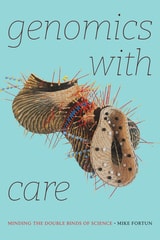
Genomics with Care
Minding the Double Binds of ScienceMike Fortun
Duke University Press, 2023
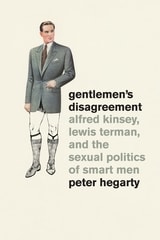
Gentlemen's Disagreement
Alfred Kinsey, Lewis Terman, and the Sexual Politics of Smart MenPeter Hegarty
University of Chicago Press, 2013
Gentry's Rio Mayo Plants
The Tropical Deciduous Forest and Environs of Northwest MexicoRevised and Edited by Paul S. Martin, David Yetman, Mark Fishbein, Phil Jenkins, Thomas R. Van Devender, and Rebecca K. Wilson
University of Arizona Press, 1998
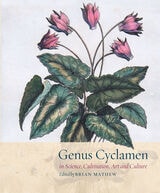
Genus Cyclamen
In Science, Cultivation, Art and CultureEdited by Brian Mathew
Royal Botanic Gardens, Kew, 2013
Genus Cyclamen is a celebration of this remarkable plant. Its science-based emphasis on botany and cultivation is complemented by sections on art and history, including twenty-five newly commissioned paintings and over seven hundred photographs. It provides a wealth of information, including taxonomic descriptions, flowering periods, distribution, and habitat, all based on the deep knowledge and practical experiences of the Cyclamen Society and other cyclamen experts. This book will find a wide audience of growers, gardeners, botanists, and enthusiasts, thanks to its all-encompassing coverage of the cyclamen and its informative, but accessible style.
Genus Sorbus
mountain ash and other rowansHugh McAllister
Royal Botanic Gardens, Kew, 2005
Genus Utricularia
a taxonomic monographP. G. Taylor
Royal Botanic Gardens, Kew, 1989
Geocultural Power
China's Quest to Revive the Silk Roads for the Twenty-First CenturyTim Winter
University of Chicago Press, 2019
Geocultural Power explores this question by considering how China is couching its strategy for building trade, foreign relations, and energy and political security in an evocative topography of history. Until now Belt and Road has been discussed as a geopolitical and geoeconomic project. This book introduces geocultural power to the analysis of international affairs. Tim Winter highlights how many countries—including Iran, Sri Lanka, Kenya, Malaysia, Indonesia, Pakistan, and others—are revisiting their histories to find points of diplomatic and cultural connection. Through the revived Silk Roads, China becomes the new author of Eurasian history and the architect of the bridge between East and West. In a diplomatic dance of forgetting, episodes of violence, invasion, and bloodshed are left behind for a language of history and heritage that crosses borders in ways that further the trade ambitions of an increasingly networked China-driven economy.
Geoengineering, Persuasion, and the Climate Crisis
A Geologic RhetoricEhren Helmut Pflugfelder
University of Alabama Press, 2023
A rhetorical exploration of an underexamined side of climate change—the ongoing research into and development of geoengineering strategies
Geoengineering, Persuasion, and the Climate Crisis: A Geologic Rhetoric exposes the deeply worrying state of discourse over geoengineering—the intentional manipulation of the earth’s climate as means to halt or reverse global warming. These climate-altering projects, which range from cloud-whitening to carbon dioxide removal and from stratospheric aerosol injection to enhanced weathering, are all technological solutions to more complex geosocial problems.
Geoengineering represents one of the most alarming forms of deliberative discourse in the twenty-first century. Yet geoengineering could easily generate as much harm as the environmental traumas it seeks to cure. Complicating these deliberations is the scarcity of public discussion. Most deliberations transpire within policy groups, behind the closed doors of climate-oriented startups, between subject-matter experts at scientific conferences, or in the disciplinary jargon of research journals. Further, much of this conversation occurs primarily in the West.
Ehren Helmut Pflugfelder makes clear how the deliberative rhetorical strategies coming from geoengineering advocates have been largely deceptive, hegemonic, deterministic, and exploitative. In this volume, he investigates how geoengineering proponents marshal geologic actors into their arguments—and how current discourse could lead to a greater exploitation of the earth in the future.
Pflugfelder’s goal is to understand the structure, content, purpose, and effect of these discourses, raise the alarm about their deliberative directions, and help us rethink our approach to the climate. In highlighting both the inherent problems of the discourses and the ways geologic rhetoric can be made productive, he attempts to give “the geologic” a place at the table to better understand the roles that all earth systems continue to play in our lives, now and for years to come.
Geoffroy Saint-Hilaire
A Visionary NaturalistHerve Le Guyader
University of Chicago Press, 2003
This was a revolutionary idea—and one vigorously opposed by Geoffroy's colleague Georges Cuvier, a great anatomist and one of the giants of French science. In 1830, their long-running disagreement erupted into furious public debate. Geoffroy argued that all vertebrates shared the same basic body plan not just with each other but with insects as well. Cuvier strenuously disputed this idea, which he saw as tantamount to a belief in "transformism"—arguing instead that each species had its own special and permanent form.
With Geoffroy Saint-Hilaire, Hervé Le Guyader provides an analysis not only of that infamous debate but also of Geoffroy's bold intuitions about anatomy and development. Featuring Geoffroy's published version of the 1830 debates—translated into English for the first time—the book also illustrates how Geoffroy's prescient insights foreshadowed some of the most recent discoveries in evolutionary and developmental biology.
Geographies of Mars
Seeing and Knowing the Red PlanetK. Maria D. Lane
University of Chicago Press, 2011
A highly original exploration of geography’s spatial dimensions at the beginning of the twentieth century, offering a new view of the mapping of far-off worlds.
One of the first maps of Mars, published by an Italian astronomer in 1877, with its pattern of canals, fueled belief in intelligent life forms on the distant red planet—a hope that continued into the 1960s. Although the Martian canals have long since been dismissed as a famous error in the history of science, K. Maria D. Lane argues that there was nothing accidental about these early interpretations. Indeed, she argues, the construction of Mars as an incomprehensibly complex and engineered world both reflected and challenged dominant geopolitical themes during a time of major cultural, intellectual, political, and economic transition in the Western world.
Geographies of Mars telescopes in on a critical period in the development of the geographical imagination, when European imperialism was at its zenith and American expansionism had begun in earnest. Astronomers working in the new observatories of the American Southwest or in the remote heights of the South American Andes were inspired, Lane finds, by their own physical surroundings and used representations of the Earth’s arid landscapes to establish credibility for their observations of Mars. With this simple shift to the geographer’s point of view, Lane deftly explains some of the most perplexing stances on Mars taken by familiar protagonists such as Percival Lowell, Alfred Russel Wallace, and Lester Frank Ward.
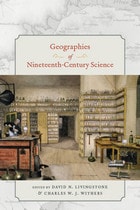
Geographies of Nineteenth-Century Science
Edited by David N. Livingstone and Charles W. J. Withers
University of Chicago Press, 2011
In Geographies of Nineteenth-Century Science, David N. Livingstone and Charles W. J. Withers gather essays that deftly navigate the spaces of science in this significant period and reveal how each is embedded in wider systems of meaning, authority, and identity. Chapters from a distinguished range of contributors explore the places of creation, the paths of knowledge transmission and reception, and the import of exchange networks at various scales. Studies range from the inspection of the places of London science, which show how different scientific sites operated different moral and epistemic economies, to the scrutiny of the ways in which the museum space of the Smithsonian Institution and the expansive space of the American West produced science and framed geographical understanding. This volume makes clear that the science of this era varied in its constitution and reputation in relation to place and personnel, in its nature by virtue of its different epistemic practices, in its audiences, and in the ways in which it was put to work.
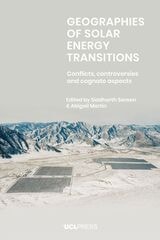
Geographies of Solar Energy Transitions
Conflicts, Controversies and Cognate AspectsEdited by Siddharth Sareen and Abigail Martin
University College London, 2024
Solar energy is the world’s largest growing source of power. Recently, this energy transition has produced a series of cognate challenges and conflicts in diverse geographies, yielding effects far beyond electricity generation. Geographies of Solar Energy Transitions illustrates how solar energy governance—both state-based and market-driven—is evolving to address these conflicts. Throughout the book, leading energy scholars examine relevant case studies, drawing necessary attention to the multitude of issues with solar power use, including formulating new place-specific solar energy visions and strategies, financing specific deployment scales, expanding and replacing electricity infrastructure, accessing land, resolving conflicts with competing land uses, incorporating charging technologies for transport and storage, adopting flexible energy production/consumption relationships, displacing fossil fuel energy production with renewables, enabling new energy ownership models, and addressing environmental and social injustices across the value chain of solar expansion.
Geographies of the Ear
The Cultural Politics of Sound in Contemporary BarcelonaTania Gentic
Duke University Press, 2025
Geography Unbound
French Geographic Science from Cassini to HumboldtAnne Marie Claire Godlewska
University of Chicago Press, 1999
Anne Godlewska examines this crisis, the often conservative reactions of geographers to it, and the work of researchers at the margins of the field who helped chart its future course. She tells her story partly through the lives and careers of individuals, from the deposed cabinet geographer Cassini IV to Volney, von Humboldt, and Letronne (innovators in human, physical, and historical geography), and partly through the institutions with which they were associated such as the Encyclopédie and the Jesuit and military colleges.
Geography Unbound presents an insightful portrait of a crucial period in the development of modern geography, whose unstable disciplinary status is still very much an issue today.
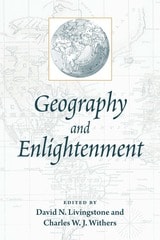
Geography and Enlightenment
Edited by David N. Livingstone and Charles W. J. Withers
University of Chicago Press, 1999
The first set of chapters charts the intellectual and geographical contexts in which Enlightenment ideas began to form, including both the sites in which knowledge was created and discussed and the different means used to investigate the globe. Detailed explorations of maps created during this period show how these new ways of representing the world and its peoples influenced conceptions of the nature and progress of human societies, while studies of the travels of people and ideas reveal the influence of far-flung places on Enlightenment science and scientific credibility. The final set of chapters emphasizes the role of particular local contexts in Enlightenment thought.
Contributors are Michael T. Bravo, Paul Carter, Denis Cosgrove, Stephen Daniels, Matthew Edney, Anne Marie Claire Godlewska, Peter Gould, Michael Heffernan, David N. Livingstone, Dorinda Outram, Chris Philo, Roy Porter, Nicolaas Rupke, Susanne Seymour, Charles Watkins, and Charles W. J. Withers.
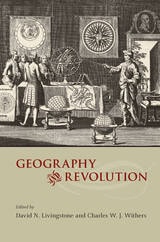
Geography and Revolution
Edited by David N. Livingstone and Charles W. J. Withers
University of Chicago Press, 2005
David N. Livingstone and Charles W. J. Withers assemble a set of essays that are themselves revolutionary in uncovering not only the geography of revolutions but the role of geography in revolutions. Here, scientific revolutions—Copernican, Newtonian, and Darwinian—ordinarily thought of as placeless, are revealed to be rooted in specific sites and spaces. Technical revolutions—the advent of print, time-keeping, and photography—emerge as inventions that transformed the world's order without homogenizing it. Political revolutions—in France, England, Germany, and the United States—are notable for their debates on the nature of political institutions and national identity.
Gathering insight from geographers, historians, and historians of science, Geography and Revolution is an invitation to take the where as seriously as the who and the when in examining the nature, shape, and location of revolutions.
Geography's Inner Worlds
Pervasive Themes in Contemporary American GeographyAbler, Ronald F
Rutgers University Press, 1992
Twenty-six leading American geographers meditate on the themes that unify contemporary geography. They emphasize the concepts and methods that run through all geography's sub-disciplines and give it a distinctive place among both the natural and social sciences.
Prepared under the sponsorship of the American Association of Geographers for the International Geographical Congress 1992, these insightful essays on the character of the discipline and its future will be required reading for every student of the field.
Geography's Quantitative Revolutions
Edward A. Ackerman and the Cold War Origins of Big DataElvin Wyly
West Virginia University Press, 2019
Do you have a smartphone? Billions of people on the planet now navigate their daily lives with the kind of advanced Global Positioning System capabilities once reserved for the most secretive elements of America’s military-industrial complex. But when so many people have access to the most powerful technologies humanity has ever devised for the precise determination of geographical coordinates, do we still need a specialized field of knowledge called geography?
Just as big data and artificial intelligence promise to automate occupations ranging from customer service and truck driving to stock trading and financial analysis, our age of algorithmic efficiency seems to eliminate the need for humans who call themselves geographers—at the precise moment when engaging with information about the peoples, places, and environments of a diverse world is more popular than ever before. How did we get here? This book traces the recent history of geography, information, and technology through the biography of Edward A. Ackerman, an important but forgotten figure in geography’s “quantitative revolution.” It argues that Ackerman’s work helped encode the hidden logics of a distorted philosophical heritage—a dangerous, cybernetic form of thought known as militant neo-Kantianism—into the network architectures of today’s pervasive worlds of surveillance capitalism.
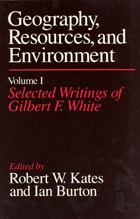
Geography, Resources and Environment, Volume 1
Selected Writings of Gilbert F. WhiteEdited by Robert W. Kates and Ian Burton
University of Chicago Press, 1986
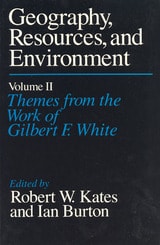
Geography, Resources and Environment, Volume 2
Themes from the Work of Gilbert F. WhiteEdited by Robert W. Kates and Ian Burton
University of Chicago Press, 1986
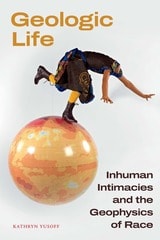
Geologic Life
Inhuman Intimacies and the Geophysics of RaceKathryn Yusoff
Duke University Press, 2024