Results by title
111 books match the query 'Science Fiction' and 3 start with g

George's Run
A Writer's Journey through the Twilight ZoneHenry Chamberlain
Rutgers University Press, 2023
Later in life, Johnson befriended comics journalist and artist Henry Chamberlain, and the two had long chats about his amazing life and career. Now Chamberlain pays tribute to his late friend in the graphic novel George’s Run, which brings Johnson’s creative milieu to life in vividly illustrated color panels. The result feels less like reading a conventional biography and more like sitting in on an intimate conversation between friends as they recollect key moments in pop culture history, as well as the colorful band of writers known as the “Rat Pack of Science Fiction.”
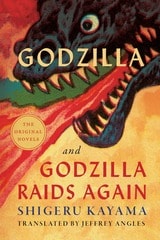
Godzilla and Godzilla Raids Again
Shigeru Kayama
University of Minnesota Press, 2023
The first English translations of the original novellas about the iconic kaijū Godzilla
Godzilla emerged from the sea to devastate Tokyo in the now-classic 1954 film, produced by Tōhō Studios and directed by Ishirō Honda, creating a global sensation and launching one of the world’s most successful movie and media franchises. Awakened and transformed by nuclear weapons testing, Godzilla serves as a terrifying metaphor for humanity’s shortsighted destructiveness: this was the intent of Shigeru Kayama, the science fiction writer who drafted the 1954 original film and its first sequel and, in 1955, published these novellas.
Although the Godzilla films have been analyzed in detail by cultural historians, film scholars, and generations of fans, Kayama’s two Godzilla novellas—both classics of Japanese young-adult science fiction—have never been available in English. This book finally provides English-speaking fans and critics the original texts with these first-ever English-language translations of Godzilla and Godzilla Raids Again. The novellas reveal valuable insights into Kayama’s vision for the Godzilla story, feature plots that differ from the films, and clearly display the author’s strong antinuclear, proenvironmental convictions.
Kayama’s fiction depicts Godzilla as engaging in guerrilla-style warfare against humanity, which has allowed the destruction of the natural world through its irresponsible, immoral perversion of science. As human activity continues to cause mass extinctions and rapid climatic change, Godzilla provides a fable for the Anthropocene, powerfully reminding us that nature will fight back against humanity’s onslaught in unpredictable and devastating ways.
Retail e-book files for this title are screen-reader friendly.
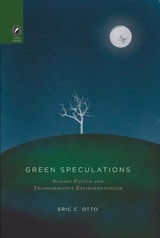
Green Speculations
Science Fiction and Transformative EnvironmentalismEric C. Otto
The Ohio State University Press, 2012