Results by title
546 books match the query 'Semiotics & Theory' and 7 start with g
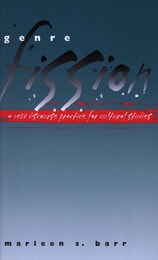
Genre Fission
A New Discourse Practice for Culture StudiesMarleen S. Barr
University of Iowa Press, 2000
Barr expands postmodern assumptions about cultural studies by suggesting that "genre fission" is occurring among discrete literary and cultural "types" of events--mainstream novels, science fiction, historical narratives, film, paintings, and museum displays. For her literary insights, Barr turns her attention to such mainstream authors as Saul Bellow, John Updike, Marge Piercy, and John Barth as well as science fiction writers Ursula Le Guin and Octavia Butler and Hispanic American writers Julia Alvarez, Ana Castillo, and Cristina García, among others.
Barr moves from literary to culture studies by addressing such phenomena from contemporary mass culture as the urban landscapes of New York and Los Angeles, Jackie Kennedy, the Star Trek industry, Lynn Redgrave, Amsterdam's red light district, Lorena Bobbitt, and the Apollo astronauts--to provide only a few of the relevant examples. Thus Genre Fission attains what Barr herself designates (in describing the art of Judy Chicago and Lee Bontecou) as "utopian interweavings of difference," crossing numerous boundaries in order to frame a larger territory for exploration.
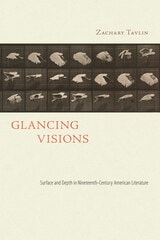
Glancing Visions
Surface and Depth in Nineteenth-Century American LiteratureZachary Tavlin
University of Alabama Press, 2023
How the “glance” rather than the “gaze” in nineteenth-century literature and art anticipates the turn to modernism
The sweeping vantages that typify American landscape painting from the nineteenth century by Thomas Cole and other members of the Hudson River School are often interpreted for their geopolitical connotations, as visual attempts to tame the wild, alleviating fears of a savage frontier through views that subdue the landscape to the eye. But many literary figures of the era display a purposeful disdain for the “possessive gaze,” signaling a preference for subtle glances, often informed by early photography, Impressionism, new techniques in portraiture, and, soon after, the dawn of cinema. The visual subjectivities and contingencies introduced by these media made room for a visual counternarrative, one informed by a mode of seeing that moves fast and lightly across the surface of things.
Tavlin probes Nathaniel Hawthorne’s theory of the imagination at a turning point in the history of photography, when momentary glances take on new narrative potentials. The poetry of Frances Ellen Watkins Harper toggles between gazes and glances, unsettling two competing forms of racialized seeing as they pertain to nineteenth-century Black life and racial hierarchies—the sentimental gaze and the slave trader’s glance—highlighting the life-and-death stakes of looking and looking away. Emily Dickinson’s syntactical oddities and her lifelong process of stitching and unstitching the poems that constitute her corpus all derive from a commitment to immanence associated with animal perception. Tavlin investigates, as well, Henry James’s vexed relationship to painterly Impressionism and William Carlos Williams’s imagist poetics as a response to early cinema’s use of the cut as the basis for a new visual grammar.
Each of these literary artists—via their own distinctive sensibilities and the artistic or technological counterparts that informed them—refuse the authoritative, all-possessive gaze in favor of the glance, a mode of seeing, thinking, and being that made way for the twentieth century’s twist on modernity. Glancing Visions will be of interest to scholars and teachers of American literature and literary history, visual culture, visual theory, aesthetic philosophy, and phenomenology.
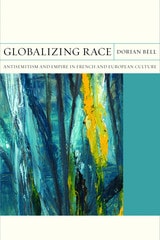
Globalizing Race
Antisemitism and Empire in French and European CultureDorian Bell
Northwestern University Press, 2018
Globalizing Race explores how intersections between French antisemitism and imperialism shaped the development of European racial thought. Ranging from the African misadventures of the antisemitic Marquis de Morès to the Parisian novels and newspapers of late nineteenth-century professional antisemites, Dorian Bell argues that France’s colonial expansion helped antisemitism take its modern, racializing form—and that, conversely, antisemitism influenced the elaboration of the imperial project itself.
Globalizing Race radiates from France to place authors like Guy de Maupassant and Émile Zola into sustained relation with thinkers from across the ideological spectrum, including Hannah Arendt, Friedrich Nietzsche, Frantz Fanon, Karl Marx, Max Horkheimer, and Theodor Adorno. Engaging with what has been called the “spatial turn” in social theory, the book offers new tools for thinking about how racisms interact across space and time. Among these is what Bell calls racial scalarity. Race, Bell argues, did not just become globalized when European racism and antisemitism accompanied imperial penetration into the farthest reaches of the world. Rather, race became most thoroughly global as a method for constructing and negotiating the different scales (national, global, etc.) necessary for the development of imperial capitalism.
As France, Europe, and the world confront a rising tide of Islamophobia, Globalizing Race also brings into fascinating focus how present-day French responses to Muslim antisemitism hark back to older, problematic modes of representing the European colonial periphery.
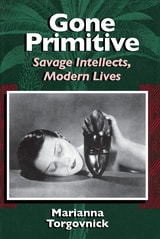
Gone Primitive
Savage Intellects, Modern LivesMarianna Torgovnick
University of Chicago Press, 1990
fears, and longings that have produced Western views of the
primitive. Crossing an extraordinary range of fields
(anthropology, psychology, literature, art, and popular
culture), Gone Primitive will engage not just
specialists but anyone who has ever worn Native American
jewelry, thrilled to Indiana Jones, or considered buying an
African mask.
"A superb book; and—in a way that goes beyond what
being good as a book usually implies—it is a kind of gift to
its own culture, a guide to the perplexed. It is lucid,
usually fair, laced with a certain feminist mockery and
animated by some surprising sympathies."—Arthur C. Danto,
New York Times Book Review
"An impassioned exploration of the deep waters beneath Western primitivism. . . . Torgovnick's readings are deliberately, rewardingly provocative."—Scott L. Malcomson, Voice Literary Supplement
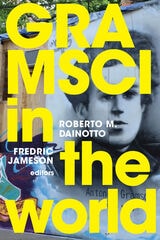
Gramsci in the World
Roberto M. Dainotto and Fredric Jameson, editors
Duke University Press, 2020
Contributors. Alberto Burgio, Cesare Casarino, Maria Elisa Cevasco, Kate Crehan, Roberto M. Dainotto, Michael Denning, Harry Harootunian, Fredric Jameson, R. A. Judy, Patrizia Manduchi, Andrea Scapolo, Peter D. Thomas, Catherine Walsh, Pu Wang, Cosimo Zene
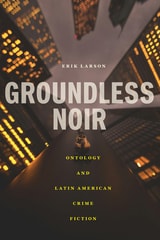
Groundless Noir
Ontology and Latin American Crime FictionErik Larson
Bucknell University Press, 2026
This philosophical study of Latin American noir fiction poses the question, What if precarity and uncertainty aren’t just themes of the genre but ways of being in the world? Emerging from a region immersed in violence, trauma, and political instability, the novela negra reveals not just disillusionment but a desire to adapt to, even dwell within, chaos. In the hands of writers like Ricardo Piglia, Roberto Bolaño, and Patricia Melo, savvy detectives and antiheroes navigate a world in which meaning constantly shifts and certainty is elusive. Blending literary analysis with philosophical inquiry, Larson draws on Heideggerian ontology to demonstrate how the noir novel becomes a mode of existence—grounded in its very groundlessness. Rather than offering resolution, these novels embody a paradoxical desire: to engage crisis while also adapting to it. In doing so, they become both ideological and pedagogical—existential fiction for an uncertain world.
Published by Bucknell University Press. Distributed worldwide by Rutgers University Press.
Guerrilla Theory
Political Concepts, Critical Digital HumanitiesMatthew Applegate
Northwestern University Press, 2019
In this penetrating study, Matthew Applegate uses the guerrilla to connect popular iterations of digital humanities’ practice to its political rhetoric and infrastructure. By doing so, he reorients DH’s conceptual lexicon around practices of collective becoming, mediated by claims to conflict, antagonism, and democratic will.
Applegate traces Michael Hardt and Antonio Negri’s radical democratic ingresses into network theory, the guerrilla’s role in its discourse, and concerns for the digital humanities’ own invocation of the figure. The book also connects post- and decolonial, feminist, and Marxist iterations of DH praxis to the aesthetic histories of movements such as Latin American Third Cinema and the documentary cinema of the Black Panther Party. Concluding with a meditation on contemporary political modalities inherent in DH’s disciplinary expansion, Guerrilla Theory challenges the current political scope of the digital humanities and thus its future institutional impact.