Results by title
127 books match the query 'Sexual behavior' and 6 start with g

G-Strings and Sympathy
Strip Club Regulars and Male DesireKatherine Frank
Duke University Press, 2002
Frank’s ethnography draws on her work as an exotic dancer in five clubs, as well as on her interviews with over thirty regular customers—middle-class men in their late-twenties to mid-fifties. Reflecting on the customers’ dual desires for intimacy and visibility, she explores their paradoxical longings for "authentic" interactions with the dancers, the ways these aspirations are expressed within the highly controlled and regulated strip clubs, and how they relate to beliefs and fantasies about social class and gender. She considers how regular visits to strip clubs are not necessarily antithetical to marriage or long-term heterosexual relationships, but are based on particular beliefs about marriage and monogamy that make these clubs desirable venues. Looking at the relative "classiness" of the clubs where she worked—ranging from the city’s most prestigious clubs to some of its dive bars—she reveals how the clubs are differentiated by reputations, dress codes, cover charges, locations, and clientele, and describes how these distinctions become meaningful and erotic for the customers. Interspersed throughout the book are three fictional interludes that provide an intimate look at Frank’s experiences as a stripper—from the outfits to the gestures, conversations, management, coworkers, and, of course, the customers.
Focusing on the experiences of the male clients, rather than those of the female sex workers, G-Strings and Sympathy provides a nuanced, lively, and tantalizing account of the stigmatized world of strip clubs.
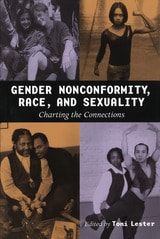
Gender Nonconformity, Race, and Sexuality
Charting the ConnectionsToni Lester
University of Wisconsin Press, 2002
How are culturally constructed stereotypes about appropriate sex-based behavior formed? If a person who is biologically female behaves in a stereotypically masculine manner, what are the social, political, and cultural forces that may police her behavior? And how will she manage her gendered image in response to that policing? Finally, how do race, ethnicity, or sexuality inform the way that sex-based roles are constructed, policed, or managed?
The chapters in this book address such questions from social science perspectives and then examine personal stories of reinvention and transformation, including discussions of the lives of dancers Isadora Duncan and Bill T. Jones, playwright Lorraine Hansberry, and surrealist artist Claude Cahun.Writers from fields as diverse as history, art, psychology, law, literature, sociology, and the activist community look at gender nonconformity from conceptual, theoretical, and empirical perspectives. They emphasize that gender nonconformists can be gay, lesbian, bisexual, transgender, or anyone else who does not fit a model of Caucasian heterosexual behavior characterized by binary masculine and feminine roles.

Gender and Sexuality in Modern Ireland
Anthony Bradley
University of Massachusetts Press, 1997

Gentlemen's Disagreement
Alfred Kinsey, Lewis Terman, and the Sexual Politics of Smart MenPeter Hegarty
University of Chicago Press, 2013

Gray Love
Stories About Dating and New Relationships After 60Rutgers University Press, 2023

Guardians of the Flutes, Volume 1
Idioms of MasculinityGilbert Herdt
University of Chicago Press, 1994