Results by title
862 books match the query 'Social History' and 13 start with g
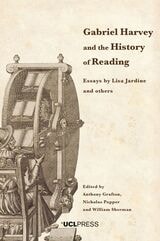
Gabriel Harvey and the History of Reading
Essays by Lisa Jardine and othersEdited by Anthony Grafton, Nicholas Popper, and William H. Sherman
University College London, 2024
Few articles in the humanities have had the impact of Lisa Jardine and Anthony Grafton’s seminal “Studied for Action,” a study of the reading practices of Elizabethan polymath and prolific annotator Gabriel Harvey. Their excavation of the setting, methods, and ambitions of Harvey’s encounters with his books ignited a new interdisciplinary field, the history of reading, which quickly became one of the most exciting corners of the scholarly cosmos. A generation inspired by the model of Harvey fanned out across the world’s libraries and archives, seeking to reveal the many creative, unexpected, and curious ways that individuals throughout history responded to texts, and how these interpretations, in turn, illuminate past worlds.
Three decades on, Harvey’s example and Jardine’s work remain central to cutting-edge scholarship in the history of reading. By uniting “Studied for Action” with new studies on Gabriel Harvey, some of which are published here for the first time, by Jardine, Grafton, and the scholars they have influenced, this collection provides a unique lens on the place of marginalia in textual, intellectual, and cultural history. The chapters capture subsequent work on Harvey and map the fields opened by Jardine and Grafton’s original article, collectively offering a posthumous tribute to Lisa Jardine and an authoritative overview of the History of Reading.
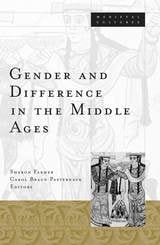
Gender and Difference in the Middle Ages
Sharon Farmer
University of Minnesota Press, 2002
Exposes complex intersections between genders and other identities in medieval cultures.
Nothing less than a rethinking of what we mean when we talk about "men" and "women" of the medieval period, this volume demonstrates how the idea of gender-in the Middle Ages no less than now-intersected in subtle and complex ways with other categories of difference. Responding to the insights of postcolonial and feminist theory, the authors show that medieval identities emerged through shifting paradigms-that fluidity, conflict, and contingency characterized not only gender, but also sexuality, social status, and religion. This view emerges through essays that delve into a wide variety of cultures and draw on a broad range of disciplinary and theoretical approaches. Scholars in the fields of history as well as literary and religious studies consider gendered hierarchies in western Christian, Jewish, Byzantine, and Islamic areas of the medieval world.
Contributors: Daniel Boyarin, U of California, Berkeley; Ruth Mazo Karras, U of Minnesota; Mathew Kuefler, San Diego State U; Martha Newman, U of Texas; Kathryn M. Ringrose, U of California, San Diego; Elizabeth Robertson, U of Colorado; Everett Rowson, U of Pennsylvania; Michael Uebel, U of Kentucky; Ulrike Wiethaus, Wake Forest U.
Gender, Emotions and Power, 1750–2020
Edited by Hannah Parker and Josh Doble
University of London Press, 2023
The fact that emotional expectations have gendered, racialized, and class-based components has only recently begun to be a topic of discussion in general society. This book tackles contemporary debates around the issue, considering the ways emotional expectations have been attained, stratified, and maintained by institutions, societies, media, and those with access to structural or personal power. The contributors draw upon a diverse set of case studies to present a chronologically and geographically broad intervention. The authors identify and explore connections between the depiction of twentieth-century transnational radical feminists, the settler colonies of southern Africa, post-unification Italy, Maoist China, the twentieth-century Soviet Union, and the medicalized spaces of the British Raj. Contributions also move across time from notions of eighteenth-century British masculinity through Victorian Britain to the Liverpool docks of the 1990s and contemporary Russia. Collectively, the volume’s authors seek to understand how the normalization of emotions as a range of gendered feelings forms the basis upon which notions of self and social identities are performed.
Generations Past
Youth in East African HistoryAndrew Burton
Ohio University Press, 2010
Contemporary Africa is demographically characterized above all else by its youthfulness. In East Africa the median age of the population is now a striking 17.5 years, and more than 65 percent of the population is age 24 or under. This situation has attracted growing scholarly attention, resulting in an important and rapidly expanding literature on the position of youth in African societies.
While the scholarship examining the contemporary role of youth in African societies is rich and growing, the historical dimension has been largely neglected in the literature thus far. Generations Past seeks to address this gap through a wide-ranging selection of essays that covers an array of youth-related themes in historical perspective. Thirteen chapters explore the historical dimensions of youth in nineteenth-, twentieth-, and twenty-first–century Ugandan, Tanzanian, and Kenyan societies. Key themes running through the book include the analytical utility of youth as a social category; intergenerational relations and the passage of time; youth as a social and political problem; sex and gender roles among East African youth; and youth as historical agents of change. The strong list of contributors includes prominent scholars of the region, and the collection encompasses a good geographical spread of all three East African countries.
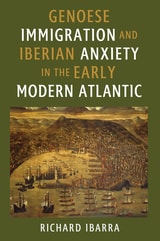
Genoese Immigration and Iberian Anxiety in the Early Modern Atlantic
Richard Ibarra
University of Delaware Press, 2027
This book explores the experiences of Genoese immigrants in the sixteenth-century Iberian Atlantic, focusing on how they navigated issues of identity and community membership across generations and transnational movement. Moving to cities like Seville, as well as Santo Domingo and Mexico City, Genoese families encountered both tremendous opportunities and significant challenges in establishing their lives, reaching a communal apogee—the “Genoese Century”—while they faced increasing Iberian anxieties. While some found ways to integrate into Iberian society through religious and charitable activities, retaining references to their Genoese past, others dissimulated or renounced their Genoese identity. Through a combination of notarial and inquisition records, litigation to prove nobility (hidalguía) and purity of blood (limpieza de sangre), literary narratives, and funerary monuments, Richard Ibarra provides insights into the changing identity claims of Genoese families and the broader attitudes toward foreigners in Iberian society that reached beyond perceived religious and ethnic difference.
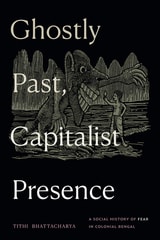
Ghostly Past, Capitalist Presence
A Social History of Fear in Colonial BengalTithi Bhattacharya
Duke University Press, 2024
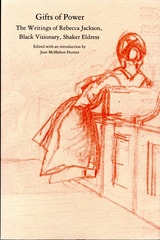
Gifts of Power
The Writings of Rebecca Jackson, Black Visionary, Shaker EldressJean M. Humez
University of Massachusetts Press, 1981
A free black woman in antebellum America, Rebecca Cox Jackson (1795–1871) was an independent itinerant preacher and religious visionary who founded a Shaker community in Philadelphia that survived her death by twenty-five years. Gifts of Power contains her complete extant writings, covering the period 1830 to 1864.
Global Perspectives on the United States
Pro-Americanism, Anti-Americanism, and the Discourses BetweenEdited by Virginia R. Dominguez and Jane C. Desmond
University of Illinois Press, 2017

Global Village
Dead Or Alive?Edited by Ray B. Browne and Marshall W. Fishwick
University of Wisconsin Press, 1999
The Global Village offers fifteen essays by leading scholars and thinkers who weigh the pros and cons and come up with individual conclusions as well as a consensus. Included are “Turning McLuhan on His Head” by James E. Grunig, “The Vanishing Global Village” by Ray B. Browne, and “Global Village—Writ Small” by Marshall Fishwick. This book speaks to concerns in journalism, media, popular culture, and communications.

Goya and the Mystery of Reading
Luis Martín-Estudillo
Vanderbilt University Press, 2023
Goya and the Mystery of Reading explores the critical impact this transition had on the work of an artist who aimed not to copy the world around him, but to see it anew—to read it. Goya's creations offer a sustained reflection on the implications of reading, which he depicted as an ambiguous, often mysterious activity: one which could lead to knowledge or ecstasy, to self-fulfillment or self-destruction, to piety or perdition. At the same time, he used reading to elicit new possibilities of interpretation. This book reveals for the first time the historical, intellectual, and artistic underpinnings of reading as one of the pillars of his art.
This book is the recipient of the 2023 Norman L. and Roselea J. Goldberg Prize from Vanderbilt University Press for the best book in the area of art or medicine.

Grant Castner
The Lost ArchiveNicholas P. Ciotola
Rutgers University Press, 2026
Castner’s glass plate negatives are a visual record of New Jersey’s social and cultural history. His many human subjects are rich and poor, young and old, Black and white. They are at work, at play, at home, and in the community. Castner also documented social change brought about by electricity, engineering, education, industry, and transportation. He captured the excitement of public amusements such as parades and fairs. He recorded the aftermath of floods, fires and other disasters. Castner also had a fondness for the outdoors. He used his camera to reflect on the beauty and tranquility that he found in the natural landscapes of New Jersey.
This book presents the collective work of Grant Castner, an amateur artist whose place in New Jersey history was, until now, completely unknown. His photographic negatives forever preserve pinpoint moments in the past. They are time machines to another era. Let this long lost archive transport you on a visual journey into a New Jersey of days gone by.

Grocery Activism
The Radical History of Food Cooperatives in MinnesotaCraig B. Upright
University of Minnesota Press, 2020
A key period in the history of food cooperatives that continues to influence how we purchase organic food today
Our notions of food co-ops generally don’t include images of baseball bat–wielding activists in the aisles. But in May 1975, this was the scene as a Marxist group known as the Co-op Organization took over the People’s Warehouse, a distribution center for more than a dozen small cooperative grocery stores in the Minneapolis area. The activist group’s goal: to curtail the sale of organic food. The People’s Warehouse quickly became one of the principal fronts in the political and social battle that Craig Upright explores in Grocery Activism. The story of the fraught relationship of new-wave cooperative grocery stores to the organic food industry, this book is an instructive case study in the history of activists intervening in capitalist markets to promote social change.
Focusing on Minnesota, a state with both a long history of cooperative enterprise and the largest number of surviving independent cooperative stores, Grocery Activism looks back to the 1970s, when the mission of these organizations shifted from political activism to the promotion of natural and organic foods. Why, Upright asks, did two movements—promoting cooperative enterprise and sustainable agriculture—come together at this juncture? He analyzes the nexus of social movements and economic sociology, examining how new-wave cooperatives have pursued social change by imbuing products they sell with social values. Rather than trying to explain the success or failure of any individual cooperative, his work shows how members of this fraternity of organizations supported one another in their mutual quest to maintain fiscal solvency, promote better food-purchasing habits, support sustainable agricultural practices, and extol the virtues of cooperative organizing. A foundational chapter in the history of organic food, Grocery Activism clarifies the critical importance of this period in transforming the politics and economics of the grocery store in America.
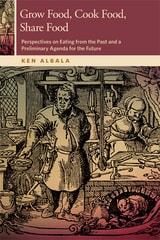
Grow Food, Cook Food, Share Food
Perspectives on Eating from the Past and a Preliminary Agenda for the FutureKen Albala
Oregon State University Press, 2013
Albala considers what the traditions we have needlessly lost have to offer us today: a serious appreciation for the generative power of the earth, the great pleasures of cooking food, and the joy of sharing food with family, friends, and even strangers. In Albala’s compelling book, obscure seventeenth-century Italian farmer-nobles, Roman statesmen, and quirky cheesemakers from the fifteenth and sixteenth centuries all offer lessons about our relationship with the food we eat.
A rare form of historical activism, Grow Food, Cook Food, Share Food is written for anyone who likes to eat, loves to cook, and knows how to throw a great dinner party.
An OSU Press Horning Visiting Scholars Publication.