Results by title
107 books match the query 'Socialism' and 3 start with g
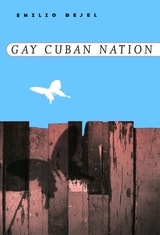
Gay Cuban Nation
Emilio Bejel
University of Chicago Press, 2001
With Gay Cuban Nation, Emilio Bejel looks at Cuba's markedly homoerotic culture through writings about homosexuality, placing them in the social and political contexts that led up to the Cuban Revolution. By reading against the grain of a wide variety of novels, short stories, autobiographies, newspaper articles, and films, Bejel maps out a fascinating argument about the way in which different attitudes toward power and nationalism struggle for an authoritative stance on homosexual issues. Through close readings of writers such as José Martí, Alfonso Hernández-Catá, Carlos Montenegro, José Lezama Lima, Leonardo Padura Fuentes, and Reinaldo Arenas, whose heartbreaking autobiography, Before Night Falls, has enjoyed renewed popularity, Gay Cuban Nation shows that the category of homosexuality is always lurking, ghostlike, in the shadows of nationalist discourse. The book stakes out Cuba's sexual battlefield, and will challenge the homophobia of both Castro's revolutionaries and Cuban exiles in the States.
[more]

Globalization and Its Discontents
The Rise of Postmodern SocialismsEdited by Roger Burbach, Boris Kagarlitsky, and Orlando Nunez
Pluto Press, 1997
[more]
Gramsci is Dead
Anarchist Currents in the Newest Social MovementsRichard J. F. Day
Pluto Press, 2005
Gramsci and the concept of hegemony cast a long shadow over radical political theory. Yet how far has this theory got us? Is it still central to feminism, anti-capitalism, anti-racism, anarchism, and other radical social movements today?
Unlike previous revolutionary movements, Day argues, most contemporary radical social movements do not strive to take control of the state. Instead, they attempt to develop new forms of self-organisation that can run in parallel with---or as alternatives to---existing forms of social, political, and economic organization. This is to say that they follow a logic of affinity rather than one of hegemony.
This book draws together a variety of different strands in political theory to weave together an innovative new approach to politics today. Rigorous and wide-ranging, Day introduces and interrogates key concepts. From Hegel's concept of recognition, through theories of hegemony and affinity to Hardt and Negri's reflections on Empire, Day maps academia's theoretical and philosophical concerns onto today's politics of the street.
Ideal for all students of political theory, Day's fresh approach combines Marxist, Anarchist and Post-structuralist theory to shed new light on the politics and practice of contemporary social movements.
[more]