Results by title
501 books match the query 'South' and 18 start with g
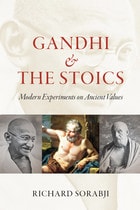
Gandhi and the Stoics
Modern Experiments on Ancient ValuesRichard Sorabji
University of Chicago Press, 2012
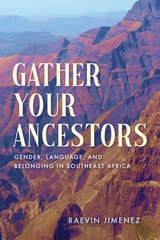
Gather Your Ancestors
Gender, Language, and Belonging in Southeast AfricaRaevin Jimenez
University of Wisconsin Press, 2026
Historically, southeasternmost Africa has been home to a large variety of speech communities, including Nguni, East Bantu, Khoi, and San—the legacy of a long and complicated history of migration, interaction, assimilation, and disaggregation between many peoples. With detailed, careful analysis, Raevin Jimenez guides readers through a thousand years of human movement, cultural contact, and social development in this region. Taking a historical linguistics approach, she sheds new light on this history by focusing on Nguni speakers’ use of gendered practices—including initiation, marriage, and avoidant speech known as hlónipha—to blend multilingual and diverse communities.
Use of gendered institutions inaugurated variable social spaces that could either elide or accommodate difference and thus enabled a multiplicity of community types. Contrary to previous assumptions about the roles of men and women in precolonial southeasternmost Africa, Jimenez shows that gender impacted life and social interactions across a large variety of important domains and became a way of forming, negotiating, and maintaining community. These developments shaped and remain visible in southeastern African speech communities today, and understanding them is vital to understanding the region’s long history and current linguistic society.

Gathering the Ashes
Amritlal Nagar
Seagull Books, 2016
Translated from Hindi for the first time by Mrinal Pande, Gathering the Ashes is a poignant look into history, enriched by Pande’s useful afterword and a reminiscence by Nagar’s son.

General Smuts
South AfricaAntony Lentin
Haus Publishing, 2009

Genetic Afterlives
Black Jewish Indigeneity in South AfricaNoah Tamarkin
Duke University Press, 2020
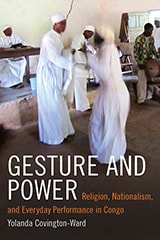
Gesture and Power
Religion, Nationalism, and Everyday Performance in CongoYolanda Covington-Ward
Duke University Press, 2016
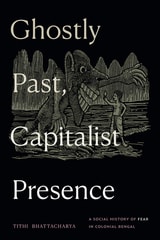
Ghostly Past, Capitalist Presence
A Social History of Fear in Colonial BengalTithi Bhattacharya
Duke University Press, 2024

Giving Back
Filipino America and the Politics of Diaspora GivingL. Joyce Zapanta Mariano
Temple University Press, 2021
Many Filipino Americans feel obligated to give charitably to their families, their communities, or social development projects and organizations back home. Their contributions provide relief to poor or vulnerable Filipinos, and address the forces that maintain poverty, vulnerability, and exploitative relationships in the Philippines. This philanthropy is a result of both economic globalization and the migration of Filipino professionals to the United States. But it is also central to the moral economies of Filipino migration, immigration, and diasporic return. Giving-related practices and concerns—and the bonds maintained through giving—infuse what it means to be Filipino in America.
Giving Back shows how integral this system is for understanding Filipino diaspora formation. Joyce Mariano “follows the money” to investigate the cultural, social, economic, and political conditions of diaspora giving. She takes an interdisciplinary approach to reveal how power operates through this charity and the ways the global economic and cultural dimensions of this practice reinforce racial subordination and neocolonialism. Giving Back explores how this charity can stabilize overlapping systems of inequality as well as the contradictions of corporate social responsibility programs in diaspora.

Global Cities of the South, Volume 22
Ashley Dawson and Brent Hayes Edwards, eds.
Duke University Press, 0
This special issue challenges postcolonial theorists to engage with urban studies and challenges urban analysts to turn their focus to the postcolonial societies where these cities have developed. Gathering well-known scholars in postcolonial theory and urban studies, the collection opens an interdisciplinary exchange through a series of case studies focused on cities in Africa and Asia. One essay argues that the world’s urban spaces are key to the continuance of inequity under capitalist globalization (exemplified by rapidly expanding urban slums), as well as to any possible resistance to that inequity. Another article considers the history and politics of Harlem from the perspective of a well-known academic, activist, and postcolonial theorist whose work here is interwoven with the photographic art of Alice Attie. A third reflects on the politics of representation of Hindu and Muslim populations in Mumbai, evaluating popular media including film and the cosmopolitan fiction of Salman Rushdie.
Contributors. Alice Attie, Mike Davis, Ashley Dawson, Brent Hayes Edwards, Brian Larkin, Rossana Reguillo, Gayatri Chakravorty Spivak, Rashmi Varma, Victor Vich
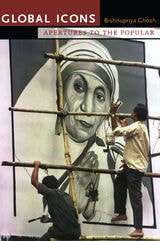
Global Icons
Apertures to the PopularBishnupriya Ghosh
Duke University Press, 2011

Gogo Breeze
Zambia’s Radio Elder and the Voices of Free SpeechHarri Englund
University of Chicago Press, 2018
Harri Englund provides a masterfully detailed study of this popular radio personality that addresses broad questions of free speech in Zambia and beyond. By drawing on ethnographic insights into political communication, Englund presents multivocal morality as an alternative to dominant Euro-American perspectives, displacing the simplistic notion of voice as individual personal property—an idea common in both policy and activist rhetoric. Instead, Englund focuses on the creativity and polyphony of Zambian radio while raising important questions about hierarchy, elderhood, and ethics in the public sphere.
A lively, engaging portrait of an extraordinary personality, Gogo Breeze will interest Africanists, scholars of radio and mass media, and anyone interested in the history and future of free speech.

Govan Mbeki
Colin Bundy
Ohio University Press, 2012
Govan Mbeki (1910–2001) was a core leader of the African National Congress, the Communist Party, and the armed wing of the ANC during the struggle against apartheid. Known as a hard-liner, Mbeki was a prolific writer and combined in a rare way the attributes of intellectual and activist, political theorist and practitioner. Sentenced to life in prison in 1964 along with Nelson Mandela and others, he was sent to the notorious Robben Island prison, where he continued to write even as tension grew between himself, Mandela, and other leaders over the future of the national liberation movement. As one of the greatest leaders of the antiapartheid movement, and the father of Thabo Mbeki, president of South Africa from 1999 to 2008, the elder Mbeki holds a unique position in South African politics and history.
This biography by noted historian Colin Bundy goes beyond the narrative details of his long life: it analyzes his thinking, expressed in his writings over fifty years. Bundy helps establish what is distinctive about Mbeki: as African nationalist and as committed Marxist—and more than any other leader of the liberation movement—he sought to link theory and practice, ideas and action.
Drawing on exclusive interviews Bundy did with Mbeki, careful analysis of his writings, and the range of scholarship about his life, this biography is personal, reflective, thoroughly researched, and eminently readable.

Governors' Mansions of the South
Ann Liberman & Photos by Alise O'Brien
University of Missouri Press, 2008

Grains of Gold
Tales of a Cosmopolitan TravelerGendun Chopel
University of Chicago Press, 2013

Green Lands for White Men
Desert Dystopias and the Environmental Origins of ApartheidMeredith McKittrick
University of Chicago Press, 2024
In 1918, South Africa’s climate seemed to be drying up. White farmers claimed that rainfall was dwindling, while nineteenth-century missionaries and explorers had found riverbeds, seashells, and other evidence of a verdant past deep in the Kalahari Desert. Government experts insisted, however, that the rains weren’t disappearing; the land, long susceptible to periodic drought, had been further degraded by settler farmers’ agricultural practices—an explanation that white South Africans rejected. So when the geologist Ernest Schwarz blamed the land itself, the farmers listened. Schwarz held that erosion and topography had created arid conditions, that rainfall was declining, and that agriculture was not to blame. As a solution, he proposed diverting two rivers to the Kalahari’s basins, creating a lush country where white South Africans could thrive. This plan, which became known as the Kalahari Thirstland Redemption Scheme, was rejected by most scientists. But it found support among white South Africans who worried that struggling farmers undermined an image of racial superiority.
Green Lands for White Men explores how white agriculturalists in southern Africa grappled with a parched and changing terrain as they sought to consolidate control over a Black population. Meredith McKittrick’s timely history of the Redemption Scheme reveals the environment to have been central to South African understandings of race. While Schwarz’s plan was never implemented, it enjoyed sufficient support to prompt government research into its feasibility, and years of debate. McKittrick shows how white farmers rallied around a plan that represented their interests over those of the South African state and delves into the reasons behind this schism between expert opinion and public perception. This backlash against the predominant scientific view, McKittrick argues, displayed the depth of popular mistrust in an expanding scientific elite.
A detailed look at the intersection of a settler society, climate change, white nationalism, and expert credibility, Green Lands for White Men examines the reverberations of a scheme that ultimately failed but influenced ideas about race and the environment in South Africa for decades to come.

Greener Pastures
Politics, Markets, and Community among a Migrant Pastoral PeopleArun Agrawal
Duke University Press, 1999
Agrawal analyzes the institutions developed by the shepherds to solve livelihood problems. First, by focusing on the relations of the shepherds with their landholder neighbors, he explains why the shepherds migrate. He shows that struggles between these two groups led to a sociopolitical squeeze on the access of shepherds to the fodder resources they need to feed their sheep. Then, in an examination of why the shepherds migrate in groups, he demonstrates how their migratory lives depend on market exchanges and points to the social and political forces that influence prices and determine profits. Finally, he looks at decision-making processes such as division of labor and the delegation of power. Politics is ubiquitous in the interactions of the shepherds with their neighbors and with state officials, in their exchanges in markets and with farmers, and in their internal relations as a community.
Interspersing the words of the Raikas themselves with a sophisticated deployment of political theory, Agrawal has produced a volume that will interest scholars in a broad range of academic disciplines, including Asian studies, political science, human ecology, anthropology, comparative politics, rural sociology, and environmental studies and policy.

Greetings from New Nashville
How a Sleepy Southern Town Became "It" CitySteve Haruch
Vanderbilt University Press, 2020
In that span of two decades, the boundaries of Nashville did not change. But something did. Or rather, many somethings changed, and kept changing, until many who lived in Nashville began to feel they no longer recognized their own city. And some began to feel it wasn't their own city at all anymore as they were pushed to its fringes by rising housing costs. Between 1998 and 2018, the population of Nashville grew by 150,000. On some level, Nashville has always packaged itself for consumption, but something clicked and suddenly everyone wanted a taste. But why Nashville? Why now? What made all this change possible?
This book is an attempt to understand those transformations, or, if not to understand them, exactly, then to at least grapple with the question: What happened?
Grounds of Engagement
Apartheid-Era African-American and South African WritingStephane Robolin
University of Illinois Press, 2019