Results by title
247 books match the query 'South Africa' and 7 start with g
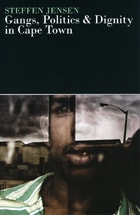
Gangs, Politics and Dignity in Cape Town
Steffen Jensen
University of Chicago Press, 2008
After nearly fifty years of rigid segregation, the demise of the apartheid regime in South Africa and the African National Congress’s relatively peaceful assumption of power in 1994 were hailed as a miracle. But a few years into the transition, this miracle appeared increasingly threatened by crime and violence. In this compelling ethnography, Steffen Jensen focuses on a single township in Cape Town in order to explore how residents have negotiated the intersecting forces of political change and violent crime.
Jensen spent years closely observing the actions of residents both male and female, young and old, as well as gang members, police officers, and local government officials. The poisonous legacy of apartheid also comes under Jensen’s lens, as he examines the lasting effects that an official policy of racist stereotyping has had on the residents’ conceptions of themselves and their neighbors. While Gangs, Politics, and Dignity in Cape Town brims with insights into ongoing debates over policing, gangs, and local politics, Jensen also shows how people in the townships maintain their dignity in the face of hardship and danger.
Gender, Religion, and Family Law
Theorizing Conflicts between Women’s Rights and Cultural TraditionsEdited by Lisa Fishbayn Joffe and Sylvia Neil
Brandeis University Press, 2012
General Smuts
South AfricaAntony Lentin
Haus Publishing, 2009
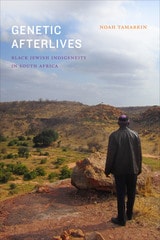
Genetic Afterlives
Black Jewish Indigeneity in South AfricaNoah Tamarkin
Duke University Press, 2020
God's Waiting Room
Racial Reckoning at Life's EndCasey Golomski
Rutgers University Press, 2025
Winner of the Elliott P. Skinner Award from the Association of Africanist Anthropology, part of the American Anthropological Association
Third Place in the Victor Turner Prize in Ethnographic Writing from the American Anthropological Association's Society for Humanistic Anthropology
Can older racists change their tune, or will they haunt us further once they're gone? Rich in mystery and life's lessons, God's Waiting Room considers what matters in the end for older white adults and the younger Black nurses who care for them. An innovation in creative nonfiction, Casey Golomski's story of his years of immersive research at a nursing home in South Africa, thirty years after the end of apartheid, is narrated as a one-day, room-by-room tour. The story is told in breathtakingly intimate and witty conversations with the home's residents and nurses, including the untold story of Nelson Mandela's Robben Island prison nurse, and readers learn how ageism, sexism, and racism intersect and impact health care both in South Africa and in the United States, as well as create conditions in which people primed to be enemies find grace despite the odds.
Course or Book Club Reading and Discussion Guide (https://dhjhkxawhe8q4.cloudfront.net/rup-wp-v2/wp-content/uploads/2025/02/04135941/gods-waiting-room_reading-questions.pdf)
For copyright reasons, this edition is not available in the South African Development Community and Kenya.

Govan Mbeki
Colin Bundy
Ohio University Press, 2012
Govan Mbeki (1910–2001) was a core leader of the African National Congress, the Communist Party, and the armed wing of the ANC during the struggle against apartheid. Known as a hard-liner, Mbeki was a prolific writer and combined in a rare way the attributes of intellectual and activist, political theorist and practitioner. Sentenced to life in prison in 1964 along with Nelson Mandela and others, he was sent to the notorious Robben Island prison, where he continued to write even as tension grew between himself, Mandela, and other leaders over the future of the national liberation movement. As one of the greatest leaders of the antiapartheid movement, and the father of Thabo Mbeki, president of South Africa from 1999 to 2008, the elder Mbeki holds a unique position in South African politics and history.
This biography by noted historian Colin Bundy goes beyond the narrative details of his long life: it analyzes his thinking, expressed in his writings over fifty years. Bundy helps establish what is distinctive about Mbeki: as African nationalist and as committed Marxist—and more than any other leader of the liberation movement—he sought to link theory and practice, ideas and action.
Drawing on exclusive interviews Bundy did with Mbeki, careful analysis of his writings, and the range of scholarship about his life, this biography is personal, reflective, thoroughly researched, and eminently readable.
Green Lands for White Men
Desert Dystopias and the Environmental Origins of ApartheidMeredith McKittrick
University of Chicago Press, 2024
In 1918, South Africa’s climate seemed to be drying up. White farmers claimed that rainfall was dwindling, while nineteenth-century missionaries and explorers had found riverbeds, seashells, and other evidence of a verdant past deep in the Kalahari Desert. Government experts insisted, however, that the rains weren’t disappearing; the land, long susceptible to periodic drought, had been further degraded by settler farmers’ agricultural practices—an explanation that white South Africans rejected. So when the geologist Ernest Schwarz blamed the land itself, the farmers listened. Schwarz held that erosion and topography had created arid conditions, that rainfall was declining, and that agriculture was not to blame. As a solution, he proposed diverting two rivers to the Kalahari’s basins, creating a lush country where white South Africans could thrive. This plan, which became known as the Kalahari Thirstland Redemption Scheme, was rejected by most scientists. But it found support among white South Africans who worried that struggling farmers undermined an image of racial superiority.
Green Lands for White Men explores how white agriculturalists in southern Africa grappled with a parched and changing terrain as they sought to consolidate control over a Black population. Meredith McKittrick’s timely history of the Redemption Scheme reveals the environment to have been central to South African understandings of race. While Schwarz’s plan was never implemented, it enjoyed sufficient support to prompt government research into its feasibility, and years of debate. McKittrick shows how white farmers rallied around a plan that represented their interests over those of the South African state and delves into the reasons behind this schism between expert opinion and public perception. This backlash against the predominant scientific view, McKittrick argues, displayed the depth of popular mistrust in an expanding scientific elite.
A detailed look at the intersection of a settler society, climate change, white nationalism, and expert credibility, Green Lands for White Men examines the reverberations of a scheme that ultimately failed but influenced ideas about race and the environment in South Africa for decades to come.