Results by title
370 books match the query 'Spain' and 12 start with g
Gender and Nation in the Spanish Modernist Novel
Roberta Johnson
Vanderbilt University Press, 2003
The book begins by tracing the history of public discourse on gender from the 1890s through the 1930s, a discourse that included the rise of feminism. Each chapter then analyzes works by female and male novelists that address key issues related to gender and nationalism: the concept of intrahistoria, or an essential Spanish soul; modernist uses of figures from the Spanish literary tradition, notably Don Quixote and Don Juan; biological theories of gender prevalent in the 1920s and 1930s; and the growth of an organized feminist movement that coincided with the burgeoning Republican movement.
This is the first book dealing with this period of Spanish literature to consider women novelists, such as Maria Martinez Sierra, Carmen de Burgos, and Concha Espina, alongside canonical male novelists, including Miguel de Unamuno, Ramon del Valle-Inclan, and Pio Baroja. With its contrasting conceptions of modernism, Johnson's work provides a compelling new model for bridging the gender divide in the study of Spanish fiction.
Generation X Rocks
Contemporary Peninsular Fiction, Film, and Rock CultureChristine Henseler
Vanderbilt University Press, 2007
Genoese Immigration and Iberian Anxiety in the Early Modern Atlantic
Richard Ibarra
University of Delaware Press, 2027
This book explores the experiences of Genoese immigrants in the sixteenth-century Iberian Atlantic, focusing on how they navigated issues of identity and community membership across generations and transnational movement. Moving to cities like Seville, as well as Santo Domingo and Mexico City, Genoese families encountered both tremendous opportunities and significant challenges in establishing their lives, reaching a communal apogee—the “Genoese Century”—while they faced increasing Iberian anxieties. While some found ways to integrate into Iberian society through religious and charitable activities, retaining references to their Genoese past, others dissimulated or renounced their Genoese identity. Through a combination of notarial and inquisition records, litigation to prove nobility (hidalguía) and purity of blood (limpieza de sangre), literary narratives, and funerary monuments, Richard Ibarra provides insights into the changing identity claims of Genoese families and the broader attitudes toward foreigners in Iberian society that reached beyond perceived religious and ethnic difference.
Geographies of the Ear
The Cultural Politics of Sound in Contemporary BarcelonaTania Gentic
Duke University Press, 2025
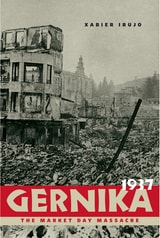
Gernika, 1937
The Market Day MassacreXabier Irujo
University of Nevada Press, 2015
To produce this detailed analysis of the political and military background of the attack and its subsequent international impact, Xabier Irujo examined archives and official government documents in several countries and conducted numerous interviews with Basques who survived. His account of the assault itself, based on eyewitness reports from both victims and attackers, vividly recalls the horror of that first example of the blitz bombing that served the Germans during the first years of World War II. He reveals the US and British governments’ reaction to the bombing and also discusses efforts to prosecute the perpetrators for war crimes. Irujo relates the ways in which the massacre has been remembered and commemorated in Gernika and throughout the worldwide Basque diaspora.
Gernika, 1937: The Market Day Massacre is an important contribution to the history of the Spanish Civil War and to our understanding of the military strategies and decisions that shaped this war and would later be employed by the Nazis during World War II.
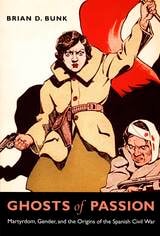
Ghosts of Passion
Martyrdom, Gender, and the Origins of the Spanish Civil WarBrian D. Bunk
Duke University Press, 2007
In commemorating the uprising, revolutionaries and conservatives used the same methods to promote radically different political agendas: they deployed religious imagery to characterize the political situation as a battle between good and evil, with the fate of the nation hanging in the balance, and exploited traditional gender stereotypes to portray themselves as the defenders of social order against chaos. The resulting atmosphere of polarization combined with increasing political violence to plunge the country into civil war.
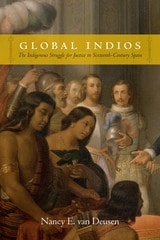
Global Indios
The Indigenous Struggle for Justice in Sixteenth-Century SpainNancy E. van Deusen
Duke University Press, 2015

Globalization and Nationalism
The Cases of Georgia and the Basque CountryNatalie Sabanadze
Central European University Press, 2010
This book argues for an original, unorthodox conception about the relationship between globalization and contemporary nationalism. While the prevailing view holds that nationalism and globalization are forces of clashing opposition, Sabanadze establishes that these tend to become allied forces. It acknowledges that nationalism does react against the rising globalization and represents a form of resistance against globalizing influences, but the Basque and Georgian cases prove that globalization and nationalism can be complementary rather than contradictory tendencies.
Nationalists have often served as promoters of globalization, seeking out globalizing influences and engaging with global actors out of their very nationalist interests. In the case of both Georgia and the Basque Country, there is little evidence suggesting the existence of strong, politically organized nationalist opposition to globalization.
Globalization and Nationalism discusses why, on a broader scale, different forms of nationalism develop differing attitudes towards globalization and engage in different relationships.
Good Faith and Truthful Ignorance
A Case of Transatlantic BigamyAlexandra Parma Cook and Noble David Cook
Duke University Press, 1991
So begins the labyrinthine legal tale and engrossing drama of an explorer and his two wives, skillfully reconstructed through the expert and original archival research of Alexandra Parma Cook and Noble David Cook. Drawing on the remarkable records from the trial, the narrative of Francisco’s adventures provides a window into daily life in sixteenth-century Spain, as well as the mentalité and experience of conquest and settlement of the New World. Told from the point of view of the conquerors, Francisco’s story reveals not only the lives of the middle class and minor nobility but also much about those at the lower rungs of the social order and relations between the sexes.
In the tradition of Carlo Ginzberg’s The Cheese and the Worms and Natalie Zemon Davis’ The Return of Martin Guerre, Good Faith and Truthful Ignorance illuminates an historical period—the world of sixteenth-century Spain and Peru—through the wonderful and unusual story of one man and his two wives.
Goya and the Mystery of Reading
Luis Martín-Estudillo
Vanderbilt University Press, 2023
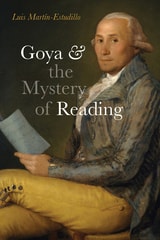
Goya and the Mystery of Reading explores the critical impact this transition had on the work of an artist who aimed not to copy the world around him, but to see it anew—to read it. Goya's creations offer a sustained reflection on the implications of reading, which he depicted as an ambiguous, often mysterious activity: one which could lead to knowledge or ecstasy, to self-fulfillment or self-destruction, to piety or perdition. At the same time, he used reading to elicit new possibilities of interpretation. This book reveals for the first time the historical, intellectual, and artistic underpinnings of reading as one of the pillars of his art.
This book is the recipient of the 2023 Norman L. and Roselea J. Goldberg Prize from Vanderbilt University Press for the best book in the area of art or medicine.
Grammar Lessons
Translating a Life in SpainMichele Morano
University of Iowa Press, 2007
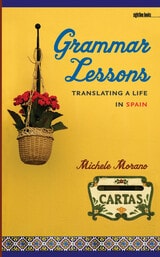
Morano focuses first on her year of living in Oviedo, in the early 1990s, a time spent immersing herself in a new culture and language while working through the relationship she had left behind with an emotionally dependent and suicidal man. Next, after subsequent trips to Spain, she explores the ways that travel sparks us to reconsider our personal histories in the context of larger historical legacies. Finally, she turns to the aftereffects of travel, to the constant negotiations involved in retelling and understanding the stories of our lives. Throughout she details one woman’s journey through vocabulary and verb tense toward a greater sense of her place in the world.
Grammar Lessons illustrates the difficulty and delight, humor and humility of living in a new language and of carrying that pivotal experience forward. Michele Morano’s beautifully constructed essays reveal the many grammars and many voices that we collect, and learn from, as we travel.

Guadalupe in New Spain
Sermons, 1731-1747Bartolome Felipe de Ita y Parra
Catholic University of America Press, 2027